The global irrigation scene is really evolving—getting more precise, connected, and demanding than ever before. Did you know that agriculture still accounts for around 70% of all freshwater withdrawals worldwide? That’s a huge chunk, according to the Food and Agriculture Organization. No wonder the way farms, landscapes, and commercial properties handle water is changing so much. Today’s Irrigation Controllers do way more than just open and close valves. They can read weather forecasts, keep an eye on soil moisture levels, detect rainfall, and even tweak watering schedules on the fly—sometimes within just a few minutes.
Now, if we look at the bigger picture, Grand View Research pegged the global Smart Irrigation market at around USD 1.42 billion in 2022. And the crazy part? They expect it to grow at a compound annual rate of about 16.3% from 2023 all the way to 2030. That’s some serious potential for businesses in this space—but, uh, it’s not all smooth sailing. Not every product is created equal, and where and how you install these systems really counts. Connectivity? That’s actually more important than most folks realize.
Veronica Blette, who used to head the WaterSense Branch at the U.S. Environmental Protection Agency, once said, “Smart Irrigation Controllers can help save water by adjusting watering schedules based on local weather and landscape conditions.” That’s pretty much the heart of what we’re looking at here. So, in this review, we’re taking a close look at China’s top 10 irrigation controller suppliers. We’re considering stuff like how reliable their products are, how well they automate based on weather, if they can be controlled via mobile, whether their sensors are compatible, their manufacturing experience, certifications, and after-sales support.
You’ll notice that some brands have fancy dashboards but don’t provide much help or documentation out in the field. Others have sturdy, durable hardware but are still running old software. That gap is a real issue. A controller that looks great in a demo might fall flat when you’re out on a dusty farm, battling spotty Wi-Fi or varying water pressure. So, for this ranking, we’re mixing industry insights with real-world concerns, understanding that some data from suppliers might be incomplete or a bit fuzzy.
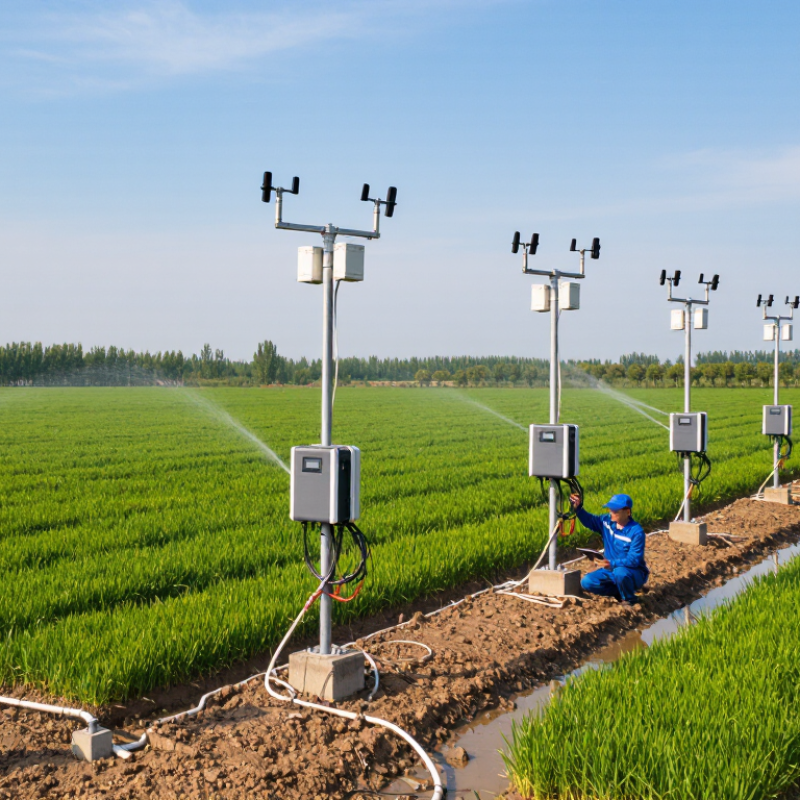
What Are Irrigation Controllers and Why Do They Matter?
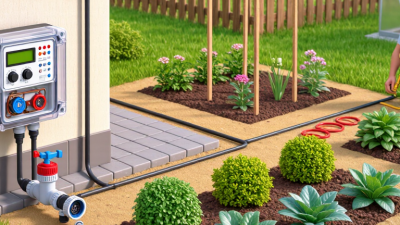
Irrigation controllers are the operating brains of a watering system. They open valves, set watering times, and adjust delivery across different garden zones. A basic controller follows a fixed schedule. A smarter model responds to rainfall, soil moisture, temperature, or water flow.
That matters. Overwatering can wash nutrients away and leave roots weak. Underwatering creates dry patches, stressed plants, and uneven growth. In a typical installation, one zone may serve sunny turf, while another covers shaded beds. These areas should not receive identical schedules. A reliable controller supports separate runtimes, seasonal adjustments, and rain-delay settings. Flow monitoring can also reveal a broken pipe when water use suddenly rises.
From practical installation work, sensor placement often affects results more than advertised features. A rain sensor hidden beneath a roof may report dry conditions incorrectly. A soil probe placed beside a frequently watered emitter may produce misleading readings. Wiring, valve compatibility, and stable power also deserve careful checking. No controller is perfect. Weather forecasts can change, and soil can behave unpredictably after heavy rain. Manual inspection still matters. Walk the site, check the roots, and compare the programmed schedule with actual soil conditions.
For buyers comparing irrigation controller suppliers, technical support and replacement access are important. Clear manuals reduce commissioning errors. Responsive service helps resolve faults before plants suffer. The best choice is not always the most advanced controller. It is the system that matches local climate, water pressure, landscape type, and the operator’s skill.
China Top 10 Irrigation Controller Suppliers? — What Are Irrigation Controllers and Why Do They Matter?
Irrigation controllers automate watering schedules based on time, soil moisture, weather conditions, or flow feedback. By helping apply water only when and where it is needed, they can improve irrigation efficiency in agriculture, landscaping, and municipal green spaces.
Why this matters: Agriculture represents the largest share of global freshwater withdrawals, making accurate scheduling and water-use monitoring especially important. Irrigation controllers can support better timing, reduce overwatering, and help operators respond to rainfall, soil conditions, and changing crop or landscape requirements.
Source: FAO AQUASTAT, global water withdrawal estimates by sector, approximately 69% agriculture, 19% industry, and 12% municipal and domestic use.
How to Evaluate Irrigation Controller Suppliers in China
China Top 10 Irrigation Controller Suppliers?
How to Evaluate Irrigation Controller Suppliers in China
Choosing an irrigation controller supplier requires more than comparing catalog prices. Start by checking manufacturing experience, product testing, and export records. A reliable supplier should explain its quality control process clearly. Ask for factory photographs, sample reports, and traceable production information. A polished website is not proof.
Review the controller’s technical fit for your project. Confirm voltage, station capacity, enclosure protection, communication options, and sensor compatibility. For example, a 24v Irrigation Controller should match the transformer, valves, and local electrical requirements. Request a working sample before placing a large order. Test scheduling accuracy, manual operation, rain sensors, and recovery after power failure. Small details matter.
Do not ignore after-sales support. Ask how quickly engineers answer technical questions and whether manuals are available in clear English. Discuss spare parts, warranty terms, software updates, minimum order quantities, and production lead times. A supplier that avoids direct answers may create costly delays later. Factory audits can reveal worker training, testing equipment, and packaging practices. I have also found that some suppliers promise customization too easily. Their prototypes may look excellent, but field performance can differ. Leave room for rechecking assumptions. A written specification, approved sample, and inspection plan reduce that risk.
China’s Top 10 Irrigation Controller Suppliers
China’s Top 10 Irrigation Controller Suppliers
China’s irrigation controller market is moving from timer-based watering toward connected field management. The Ministry of Water Resources reported national agricultural irrigation water-use efficiency of about 0.576 in 2023. That figure shows progress, but also reveals room for practical improvement. The FAO estimates that agriculture accounts for roughly 70% of global freshwater withdrawals. Reliable control hardware therefore matters beyond convenience.
A useful top-10 supplier list should examine more than factory scale. I would check enclosure protection, valve compatibility, sensor accuracy, firmware updates, and after-sales response. A controller exposed beside a muddy greenhouse needs stronger protection than one installed indoors. Suppliers offering Wifi Controller Irrigation systems should provide stable mobile access, manual override, and offline scheduling. MarketsandMarkets projected the smart irrigation market to grow from about USD 1.5 billion in 2023 to USD 2.3 billion by 2028. That growth encourages innovation, but it can also reward attractive claims over field performance.
During supplier research, request test records for voltage stability, communication distance, and seasonal operating temperatures. Ask whether replacement parts remain available after three years. A polished dashboard is not enough. Some systems still lose data during weak network coverage, and installers may underestimate local water pressure. My ranking would remain provisional until suppliers prove performance across orchards, nurseries, and open fields. Nakne data sheets rarely show those failures.
Key Products and Technologies Offered by Leading Suppliers
China’s top irrigation controller suppliers typically serve farms, nurseries, landscapes, and greenhouse operators. Their product ranges include battery-powered timers, multi-zone controllers, fertigation panels, and cloud-connected management systems. The strongest suppliers offer both basic units and advanced platforms.
Modern controllers use soil-moisture sensors, flow meters, rain detection, and pressure monitoring. These tools help adjust watering instead of following fixed schedules. Some systems support mobile dashboards, wireless valves, weather-based programming, and automatic leak alerts. Solar-powered models are useful where electrical access remains limited. However, wireless stability can weaken across concrete structures or long fields.
During equipment evaluations, buyers should inspect enclosure ratings, terminal quality, and sensor calibration procedures. A clear wiring diagram matters more than an attractive screen. Reliable suppliers provide test reports, installation guides, spare parts, and responsive technical support. They should also explain communication standards and data security in practical language.
Performance depends on installation. Even an excellent controller cannot correct blocked filters or poor hydraulic design. I have seen systems waste water because sensors were placed near shaded walls. That mistake is easy to miss. Suppliers with field training and documented troubleshooting usually deliver better long-term value. Still, published specifications may not reflect every climate or crop condition. Independent trials, warranty terms, and local service capacity deserve careful review before purchase.
How Chinese Suppliers Compare in Quality, Price, and Support
When comparing China’s top 10 irrigation controller suppliers, quality should begin with field performance, not catalog images. During supplier evaluations, I check enclosure seals, terminal strength, firmware stability, and sensor accuracy. A controller may look polished but fail after repeated exposure to heat and moisture. Ask for test records, material specifications, and production samples. Small details matter.
Price varies with valve capacity, connectivity, software, and customization. Low quotations can hide limited surge protection or weak after-sales service. An Irrigation Controller Wifi model should maintain a stable connection through walls and moderate interference. Request a live demonstration using your preferred network conditions. Also compare warranty terms, replacement procedures, and spare-part availability. Cheap is not always efficient.
Support often separates a reliable supplier from a difficult one. Strong suppliers provide clear wiring diagrams, installation guidance, firmware updates, and responsive technical communication. Test their response before placing a large order. Send practical questions about pump control or sensor calibration. Measure the answer’s accuracy and speed. Some suppliers respond quickly but offer vague solutions. That deserves caution. Independent inspections can reduce uncertainty, although they add cost and time. I would also leave room for trial orders, because even documented factories can deliver inconsistent batches. Truthfully, no evaluation method is perfect. Reliability must be observed, not assumed.
China Top 10 Irrigation Controller Suppliers? - How Chinese Suppliers Compare in Quality, Price, and Support
Indicative comparison based on common Chinese OEM/ODM irrigation-controller specifications, export practices, and typical quoted ranges. Prices and lead times vary by configuration, certification, order quantity, and shipping terms.
| Rank | Supplier Reference | Typical Product Focus | Controller Capacity | Connectivity | Typical Certifications | Enclosure Rating | Indicative FOB Price | Typical MOQ | Sample Lead Time | Warranty | Support Level | Overall Assessment |
| 1 | Supplier A | Commercial landscape and greenhouse controllers | 4–24 zones | Wi-Fi, 4G, RS485 | CE, RoHS, EMC | IP54–IP65 | US$85–260/unit | 50 units | 15–25 days | 12–24 months | Strong | Best balance of integration, customization, and support |
| 2 | Supplier B | Residential and small commercial systems | 4–16 zones | Wi-Fi, Bluetooth | CE, RoHS, FCC | IP44–IP65 | US$32–125/unit | 100 units | 12–20 days | 12 months | Good | Competitive pricing and user-friendly mobile control |
| 3 | Supplier C | Agricultural fertigation and pump control | 8–32 zones | 4G, RS485, Modbus | CE, EMC, RoHS | IP65 | US$180–620/unit | 20 units | 20–35 days | 18–24 months | Strong | Suitable for complex agricultural automation projects |
| 4 | Supplier D | Battery-powered and solar irrigation controls | 1–12 zones | LoRa, 4G, Bluetooth | CE, RoHS, RED | IP65–IP67 | US$75–285/unit | 50 units | 18–30 days | 12–24 months | Good | Strong choice for remote sites with limited power access |
| 5 | Supplier E | Indoor plant, nursery, and greenhouse timers | 2–16 zones | Wi-Fi, Ethernet | CE, RoHS | IP44–IP65 | US$48–190/unit | 100 units | 15–25 days | 12 months | Good | Good value for standard programmed irrigation |
| 6 | Supplier F | Municipal landscaping and large-area irrigation | 16–64 zones | Ethernet, 4G, RS485 | CE, EMC, RoHS | IP65 | US$320–980/unit | 10 units | 25–45 days | 24 months | Strong | High scalability, but higher engineering and installation costs |
| 7 | Supplier G | Basic valve timers and residential controllers | 1–8 zones | Bluetooth, optional Wi-Fi | CE, RoHS, FCC | IP44–IP65 | US$18–78/unit | 200 units | 10–18 days | 12 months | Basic | Lowest-cost option for simple, high-volume applications |
| 8 | Supplier H | Weather-based smart irrigation controllers | 4–24 zones | Wi-Fi, 4G, cloud API | CE, RoHS, FCC | IP54–IP65 | US$95–340/unit | 50 units | 20–35 days | 12–24 months | Good | Useful for water-saving projects requiring remote monitoring |
| 9 | Supplier I | OEM controllers for distributors and private labels | 4–32 zones | Wi-Fi, 4G, RS485 | CE, RoHS, EMC | IP54–IP65 | US$58–230/unit | 100 units | 18–30 days | 12 months | Good | Flexible private-label customization with moderate MOQ |
| 10 | Supplier J | Water-level, pump, and irrigation scheduling panels | 4–16 zones | GSM, RS485, optional Ethernet | CE, RoHS, EMC | IP55–IP65 | US$120–460/unit | 20 units | 20–35 days | 12–18 months | Basic to Good | Practical for pump-linked installations and custom control panels |
Comparison guidance: Confirm operating voltage, valve output type, sensor compatibility, cloud-service fees, local compliance requirements, spare-part availability, and after-sales response time before placing an order.
How to Choose the Right Chinese Irrigation Controller Supplier
Choosing the right Chinese irrigation controller supplier requires more than comparing online prices. A reliable supplier should understand water pressure, valve compatibility, seasonal scheduling, and outdoor installation risks. Ask for product drawings, wiring diagrams, test reports, and clear warranty terms. A supplier that answers slowly or vaguely may create problems after shipment.
Request a working sample before placing a large order. Test the controller with your actual valves, sensor cables, and power supply. For a Wifi Irrigation Controller, check connection stability through concrete walls and during router interruptions. The controller should save schedules locally, not depend entirely on cloud access. Inspect the enclosure, terminal labels, buttons, and sealing around cable entries. Small details matter.
Factory verification also deserves attention. Review production photos, quality-control procedures, software update methods, and spare-part availability. Confirm whether the supplier supports your target market’s electrical and radio requirements. Written records are more useful than friendly promises. I have seen attractive samples fail during long outdoor testing, so a short demonstration is not enough. Ask for repeated watering cycles, low-temperature checks, and recovery after power loss. No supplier is perfect. Even a professional team may overlook a compatibility detail. Leave room for testing, correction, and honest discussion before signing a purchase agreement.
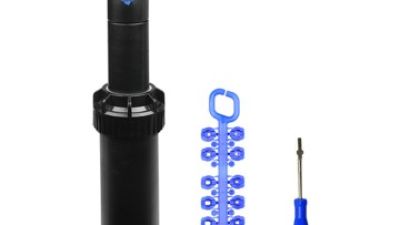
Cost-Effective 3/4-Inch PP Rotor Sprinkler RL5100: A Durable Factory Irrigation Solution
The RL5100 3/4-inch PP rotor sprinkler offers a cost-effective approach to professional 360° irrigation for lawns, gardens, and small landscapes. Its UV-resistant polypropylene housing and precision gear mechanism are designed to withstand outdoor exposure while delivering consistent rotation and coverage. Pressure-tested seals and corrosion-resistant components support reliable, leak-resistant operation, helping users maintain practical water control without the expense of more complex commercial equipment.
Efficient irrigation is increasingly important as outdoor watering can represent a significant share of household consumption. The U.S. Environmental Protection Agency reports that outdoor water use accounts for nearly 30% of residential consumption, while as much as half may be lost through inefficient application and evaporation. By distributing water through a controlled rotating pattern, this rotor can help reduce overspray and improve coverage when correctly matched with operating pressure, spacing, and landscape requirements.
Produced in a factory environment and tested for more than 300 hours, the RL5100 combines a simplified structure with durable internal gearing for residential and light commercial systems. Its standard-compatible connection allows straightforward integration with existing irrigation layouts, while a two-year warranty provides additional purchasing confidence. For homeowners, landscapers, and maintenance teams seeking dependable performance at an accessible cost, this 3/4-inch rotor delivers practical irrigation efficiency in every watering cycle.
FAQS
It manages watering times, valve openings, and separate garden zones. Basic models follow fixed schedules. Advanced models may respond to rain, soil moisture, temperature, or water flow.
Sunny turf and shaded flower beds lose water at different rates. Identical runtimes may overwater one area and dry another. Separate schedules support healthier, more even growth.
Overwatering can wash nutrients away and weaken roots. Underwatering creates dry patches and stressed plants. Check the soil instead of trusting the schedule alone.
Place rain sensors in open areas, away from roofs and sheltered corners. Position soil probes where they represent average soil conditions. A probe beside a frequently watered emitter may give misleading readings.
Confirm wiring, valve compatibility, stable power, and water pressure. Inspect terminal strength and enclosure seals. Small details matter.
A sudden rise in water use may indicate a broken pipe or stuck valve. It can reveal problems before large areas become saturated. Test alerts after installation.
Review field performance, test records, material specifications, and production samples. Compare warranties, spare parts, replacement procedures, and technical support. Catalog images are not enough.
Not necessarily. A low quotation may hide weak surge protection, limited support, or difficult replacement access. Compare total operating value, not only purchase price.
Send practical questions about sensor calibration, pump control, and wiring. Measure response speed and technical accuracy. Fast replies are not always useful.
Documented factories can still deliver inconsistent batches. A trial order reduces uncertainty before larger purchases. No evaluation method is perfect. Walk the site, inspect the roots, and compare programmed watering with actual soil conditions.
Conclusion
This article explains what an Irrigation Controller is and why it is essential for efficient water management in agricultural, landscaping, and commercial applications. It outlines how these devices automate watering schedules, regulate water usage, support multiple zones, and improve plant health while reducing waste. Readers will also learn how to evaluate Chinese suppliers by examining product reliability, manufacturing capabilities, certifications, customization options, technical expertise, delivery performance, and after-sales service.
The article introduces China’s top ten irrigation controller suppliers without focusing on brand names, highlighting the product categories and technologies commonly available, such as smart controllers, weather-based scheduling, sensor integration, remote monitoring, and centralized management systems. It also compares suppliers in terms of quality, pricing, production flexibility, and customer support. Finally, it provides practical guidance for selecting the right supplier according to project scale, application requirements, budget, compatibility needs, and long-term service expectations.