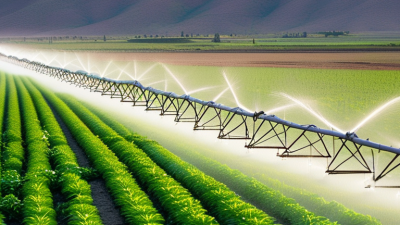
When it comes to China’s top irrigation head manufacturers for global buyers, there’s a pragmatic concern at play—water efficiency, not just the price tag. These Irrigation Heads are crucial because they control how evenly water is applied, the operating pressure, spray radius, and how well they cover crops. You know, even tiny design tweaks can make a huge difference, potentially affecting thousands of plants across an entire farm.
According to the UN’s 2024 World Water Development Report, agriculture gobbles up about 70% of the world's freshwater. The FAO’s AQUASTAT also highlights that boosting irrigation efficiency is key to cutting down water waste. No wonder international buyers are paying closer attention to Chinese manufacturers—they’re after steady flow rates, durable materials, reliable filters, and solid performance testing records.
Basically, quality has to be backed up by proof. A trustworthy manufacturer should be able to provide pressure-flow graphs, Nozzle specs, info about the materials used, and factory inspection reports. Buyers also need to check if these products meet relevant standards, like ISO 15886 for agricultural sprinklers, when that applies. And let’s not forget—field experience is huge. Something that looks great in a lab might not hold up well in real-world conditions with sediment, wind, hard water, or when maintenance isn’t perfect.
Chinese suppliers often slash costs by offering innovative engineering, flexible OEM options, and a wide range of components. But, just because they’re competitive on price doesn’t automatically mean they’re reliable. That’s something you really need to think through. Things like supplier audits, testing samples, warranty policies, and spare parts availability are critical. Good irrigation heads should distribute water evenly under real working conditions, not just in glossy sales photos.
This guide takes a close look at manufacturers that serve global markets—focusing on what they can actually offer in terms of product quality, production control, technical support, export savvy, and how well their solutions fit different applications. It’s not just about how big they are, but about proven performance and clear communication. Data and honesty about limitations really matter here.
What Irrigation Heads Are and How They Support Modern Agriculture
Irrigation heads are the working points of a water system. They convert pressure into controlled droplets or gentle streams. Common types include impact sprinklers, rotating heads, micro-sprinklers, and drip emitters. Each suits different crops, soil textures, and field sizes. A well-selected head can improve coverage while reducing runoff and soil erosion.
The UNESCO World Water Development Report 2024 states that agriculture accounts for about 70% of global freshwater withdrawals.
FAO data also estimates that irrigated agriculture uses roughly 20% of cultivated land but produces about 40% of global food.
These figures explain why irrigation heads matter in modern farming. Pressure regulation, uniform spacing, and filtration help deliver water near plant roots. In practical field inspections, blocked filters often cause uneven growth before equipment failure becomes obvious. Still, no head performs perfectly under every condition. Wind, hard water, and poor pressure balance can reduce efficiency. That limitation deserves more attention.
Tips:
Match the spray pattern to crop height and soil absorption. Test distribution with collection cups, not eyesight alone. Check flow rates before planting. Clean filters regularly, especially where surface water is used. Buyers should request pressure, flow, material, and durability test records from Chinese manufacturers. Reports are useful, but actual field trials remain essential.
Key Irrigation Head Types Offered by Chinese Manufacturers
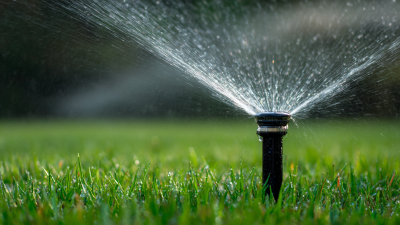
Chinese irrigation head manufacturers supply several practical types for global projects. Irrigation Spray Headssuit lawns, nurseries, and compact planting beds. They create a fine, adjustable pattern, but wind can distort coverage. Pop-up Spray Heads work below turf level and rise during operation. Impact sprinklers throw water farther across open fields. Their rotating arms remain useful where pressure fluctuates.
Gear-driven rotors offer smoother rotation and larger coverage zones. Micro-sprinklers deliver gentle water beneath trees, inside greenhouses, or around vegetable rows.
Bubbler heads release concentrated flow near tree roots. Each type needs a different pressure, spacing, and filtration plan.
FAO AQUASTAT reports that agriculture accounts for roughly 70% of global freshwater withdrawals. That figure makes nozzle selection more than a purchasing detail.
Tips:
Ask suppliers for flow-rate charts, pressure tests, material specifications, and replacement-part availability. Request samples before approving a large order. Check performance at your actual working pressure, not only the catalog rating. Field trials often reveal uneven arcs or blocked filters. I have seen oversized heads waste water beside narrow planting beds. Bigger is not always better. Chinese manufacturers can customize thread sizes, spray angles, and connection materials, yet buyers should verify testing records independently. Reported efficiency can change with wind, water quality, and installation height. A careful comparison should include liters per minute, coverage diameter, filtration needs, and expected maintenance intervals.
How to Evaluate China’s Irrigation Head Manufacturing Capabilities
China’s irrigation head manufacturing capability should be judged beyond catalog photos. Buyers need to inspect materials, tooling, testing, and production consistency. Common Irrigation Heads Types include impact, gear-drive, spray, micro-sprinkler, and adjustable models. Each type requires different pressure control and internal design.
A factory visit can reveal practical details. Check whether injection machines run steadily during long production cycles. Examine plastic parts for flash, cracks, and uneven wall thickness. For metal components, review machining accuracy, corrosion resistance, and surface treatment. Ask for flow-rate tests at several pressures, not only one laboratory result. A reliable supplier should provide batch records, inspection procedures, and traceable sampling data.
Field testing remains essential. Install samples in real soil, then observe spray distance, rotation, clogging, and seal performance. Test them after exposure to sunlight, fertilizer residue, and fluctuating water pressure. Export experience also matters, including packaging strength and technical documentation. A polished sample can mislead. No factory is flawless, including capable ones. Some suppliers may show strong assembly work but weak testing discipline. Others may offer excellent engineering yet struggle with delivery consistency. Buyers should compare repeated samples, audit corrective actions, and question results that look unusually perfect. Clear communication often exposes capability more accurately than a sales presentation.
Leading Regions and Supplier Profiles in China’s Irrigation Industry
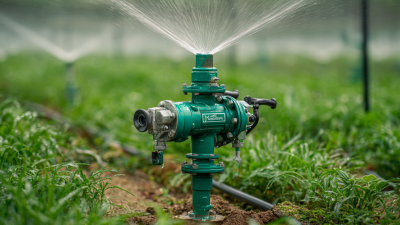
China’s irrigation industry is concentrated in several manufacturing regions. Zhejiang is known for compact valves, connectors, and plastic fittings. Guangdong suppliers often focus on automated controls and customized components. Jiangsu supports larger agricultural systems, including durable Irrigation Rotor Heads and pump-related equipment. Fujian also has experience with casting, machining, and water-management hardware.
Supplier profiles vary considerably. Some factories operate integrated molding, assembly, and pressure-testing lines. Others depend on subcontractors for springs, seals, or metal shafts. This difference affects consistency and lead times. A serious supplier should provide material specifications, flow-rate data, nozzle options, and test records. Buyers should also inspect sample performance under different water pressures. A rotor that works well in a showroom may struggle with sandy water.
Field experience matters here. Ask how the supplier handles seasonal orders, replacement parts, and packaging for humid transport. Photos are useful, but production records are stronger evidence. Some factories present impressive catalogs while offering limited engineering support. That gap deserves attention. Request a sample batch before approving large quantities. Check thread accuracy, spray coverage, rotation speed, and seal wear after repeated cycles. No supplier fits every project. Even reliable factories may need clearer documentation or better after-sales communication.
China’s Leading Irrigation Equipment Regions
Effective irrigated area provides a practical indicator of regional agricultural-water demand and the market environment for irrigation-head manufacturers. Figures are rounded estimates based on publicly reported provincial irrigation-area statistics and are shown in million mu.
Provinces such as Xinjiang, Henan, Shandong, Heilongjiang, Hebei, and Jiangsu represent important demand centers for sprinklers, drip-Irrigation Emitters, filters, valves, and related irrigation heads. For global buyers, supplier evaluation should also consider export experience, product standards, customization capability, testing facilities, and after-sales support.
Quality Standards, Customization, and Production Considerations
China’s irrigation head manufacturers serve projects ranging from greenhouse benches to large open fields. Quality starts with measurable performance. FAO AQUASTAT reports that agriculture accounts for about 70% of global freshwater withdrawals. Small flow errors therefore become expensive at scale.
Global buyers should request pressure-flow curves, spray uniformity results, and material certificates. ISO 9261provides performance requirements for agricultural irrigation emitters and emitting pipes. For Sprinkler Heads, buyers should also confirm nozzle output at several pressure points. A polished sample can still mislead. Field inspections should examine flash, thread damage, blocked passages, and seal compression.
Customization is valuable when it solves a real installation problem. Manufacturers can adjust nozzle geometry, connection threads, filtration features, colors, packaging, and printed markings. However, every mold change affects cost, timing, and maintenance. A pilot batch is safer than immediate mass production. Test it with the buyer’s water quality, pump pressure, and fertilizer routine. Hard water exposes weaknesses quickly. So does salty water.
Production reviews should include incoming-material checks, mold-control records, batch sampling, and final leak tests. UV-stabilized polymers may improve outdoor durability, but claims need accelerated-aging evidence. The International Organization for Standardization stresses consistent testing, yet factory practice may remain uneven. Buyers should request traceable reports, not attractive certificates alone. One practical weakness remains: suppliers may optimize laboratory results while overlooking installation mistakes. On-site training and clear adjustment marks can reduce that gap.
How Global Buyers Can Select and Work With Chinese Suppliers
Selecting Chinese suppliers of Sprinkler Irrigation Heads requires more than comparing unit prices. FAO AQUASTAT reports that agriculture accounts for about 70% of global freshwater withdrawals. This makes uniform application and leakage control practical purchasing priorities. Ask suppliers for flow-rate curves, pressure ranges, nozzle tolerances, material specifications, and test records. Request samples from the same production batch. Test them at your actual water pressure, not only at factory settings.
A reliable supplier should explain tooling, quality-control checkpoints, packaging, and replacement-part availability. ISO 15886 provides relevant requirements for agricultural irrigation sprinklers, including performance and durability considerations. Use these requirements when reviewing technical documents. Confirm export experience, factory capacity, inspection procedures, and conformity documents before signing. A video tour helps, but an independent inspection is stronger evidence. Keep records.
Do not accept vague claims such as “water saving” without measured data. A common buyer mistake is testing one perfect sample and approving the entire order. Include pressure, flow, spray radius, and blockage limits in the purchase contract. Clarify payment stages, delivery terms, carton protection, and remedies for nonconforming goods. Leave room for improvement; field water quality can expose weaknesses that laboratory tests miss. Pilot orders are slower, but they can reveal clogging, uneven coverage, or brittle plastic before a container-scale purchase.
Adjustable Full-Circle Bubblers: A Complete Guide to Efficient Irrigation Solutions from China Suppliers and Factories
Adjustable Full-Circle Bubblers: A Complete Guide to Efficient Irrigation Solutions from China Suppliers and Factories
Adjustable full-circle bubblers provide a gentle, uniform flow that spreads water around the base of trees and large shrubs. Unlike fast surface watering, this bubbling pattern is designed to deliver moisture gradually into the deep root zone, helping plants develop stronger root systems while reducing uneven distribution and unnecessary runoff. The flow rate can be calibrated in the field without tools, making it easy to adapt irrigation performance to different soil types, plant sizes, and landscape requirements.
Made from high-quality POM material, these bubblers offer excellent chemical resistance and dependable long-term durability in outdoor environments. Their universal compatibility with standard pop-up spray bodies supports flexible installation in residential gardens, commercial landscapes, parks, and other planting areas, while maintaining a discreet appearance. As a professional supplier and factory in China, we provide consistent manufacturing quality, CE and ISO9001 certification, and a three-year warranty for added confidence. This combination of durable construction, simple adjustment, and broad compatibility makes the solution practical for efficient tree and shrub irrigation projects.
FAQS
An irrigation head converts water pressure into controlled droplets or gentle streams. It is a working point in the irrigation system. Small part, large effect.
Spray heads suit lawns, nurseries, and compact beds. They create fine, adjustable patterns. Wind may still distort the coverage.
Impact sprinklers suit open fields and longer throwing distances. Their rotating arms can tolerate changing pressure. They may waste water near narrow beds.
Micro-sprinklers provide gentle water beneath trees, in greenhouses, and along vegetable rows. Bubblers release concentrated flow near tree roots. Placement matters greatly.
Place collection cups across the irrigated area. Compare the collected water after one operating cycle. Do not trust eyesight alone.
Filters reduce blockage risks, especially with surface water. Pressure regulation supports more even coverage. A blocked filter may appear as uneven crop growth.
Request flow-rate charts, pressure tests, material details, and durability records. Ask about replacement parts and connection sizes. Catalog ratings need field verification.
Match the spray pattern with crop height and soil absorption. Check flow rate, coverage diameter, working pressure, and filtration needs. Bigger is not always better.
Wind, hard water, poor pressure balance, and incorrect installation can reduce performance. Even a suitable head may perform poorly. This limitation deserves attention.
Yes, test samples at the actual working pressure. Look for uneven arcs, blocked filters, and excess water beside planting rows. Reports help, but field results matter more.
Conclusion
Irrigation Heads are essential components in modern agricultural systems, controlling how water is distributed across fields, greenhouses, gardens, and landscape projects. Chinese manufacturers offer a wide range of options, including spray heads, sprinkler heads, rotary heads, drip irrigation emitters, and adjustable or pressure-compensating models. These products can support different crop requirements, field sizes, water pressures, and installation methods while improving irrigation efficiency and reducing water waste.
For global buyers, evaluating China’s manufacturing capabilities involves reviewing material quality, production capacity, testing procedures, customization services, and compliance with applicable international standards. Major manufacturing regions provide diverse supplier resources, from specialized component producers to integrated irrigation equipment factories. Buyers should compare technical specifications, sample performance, quality-control systems, lead times, packaging, and communication practices before placing orders. Clear drawings, measurable requirements, inspections, and written agreements can help ensure consistent quality and reliable cooperation throughout the procurement process.