Leave Your Message
0%

Picking the right Sprinkler Irrigation Parts in 2026? It’s not just about finding the lowest price. You’ve got to match each piece to your soil, water pressure, crops, and climate. Get the nozzle wrong, and you’ll end up with dry strips right next to soggy patches. And that waste? You can see it.

FAO says agriculture pulls around 70% of global freshwater withdrawals. Their AQUASTAT data makes it pretty clear why irrigation efficiency isn’t just a nice idea—it’s a practical must. The Irrigation Association keeps pushing the same themes too: uniform water application, proper maintenance, and smart design. Dr. Charles M. Burt, a well-respected irrigation engineer, put it simply: “Uniformity is the foundation of efficient irrigation.” That idea should sit behind every purchase—filters, pressure regulators, risers, valves, pipes, Sprinkler Heads, all of it.

MarketsandMarkets research suggests the global irrigation equipment sector will keep growing through this decade. But growth doesn’t promise good performance. A high-end sprinkler can still fail if filtration is poor. A tough valve can waste water if pressure keeps bouncing around. Those details are easy to miss.

This guide looks at Sprinkler Irrigation Parts using field-tested criteria: flow rate, operating pressure, filtration level, material durability, how easy replacements are to find, and compatibility. It also looks at manufacturer docs and recognized technical standards. Small checks matter. Run a catch-can uniformity test. Check clogged screens after dusty days. Write down pressure at the farthest outlet.

There’s no perfect parts list. Local conditions have a way of exposing assumptions. The right choice is the one that performs consistently, uses water carefully, and can actually be maintained by real people.
How to Choose the Right Sprinkler Irrigation Parts in 2026

Define Your Irrigation Needs and Landscape Conditions

How to Choose the Right Sprinkler Irrigation Parts in 2026

Begin by defining the landscape, not by buying components. Measure lawn size, planting areas, slope, sunlight, soil texture, and available water pressure. Sandy soil drains quickly, while clay soil may create runoff around each sprinkler head. EPA WaterSense reports that Landscape Irrigation can represent nearly one-third of residential water use in the United States. That makes accurate zoning essential. I have seen systems fail because one zone mixed turf heads with low-flow planting emitters. They watered unevenly. Measure twice. Do not guess.

Your Irrigation Sprinkler System Parts should match each zone’s conditions. Select filters, pressure regulation, valves, pipes, and spray patterns according to flow rate and elevation changes. A narrow side yard may need adjustable heads, while a sloped bed may require shorter cycles and check valves. The FAO AQUASTAT database reports that agriculture accounts for about 70% of global freshwater withdrawals. Residential landscapes are different, but the pressure on water resources is real. EPA WaterSense guidance also supports weather-based or soil-moisture control to reduce unnecessary watering. Still, sensors are not magic. Poor placement can produce misleading readings. Test one zone with a catch-can check, inspect dry corners, and revise the layout after observing runoff, wind drift, and seasonal plant growth.

Compare Sprinkler Types for Different Coverage Requirements

How to Choose the Right Sprinkler Irrigation Parts in 2026

Coverage should guide every Irrigation Parts decision, not appearance alone. Fixed spray sprinklers suit narrow lawns, flower beds, and small rectangular areas. They release water quickly, so sandy soil may need shorter cycles. Rotary sprinklers throw slower streams across larger spaces. They reduce runoff on compacted ground, but require stronger pressure and careful spacing. Impact sprinklers cover wide, open lawns and tolerate dusty conditions. Their rotating arms can be noisy near homes.

Measure the area before selecting a sprinkler type. A 20-foot lawn may need overlapping spray patterns, while a long garden may benefit from rotary heads. Check actual water pressure with a gauge. Catalog distances can change after filters, valves, and elevation reduce flow. I once installed fixed sprays too close together. The grass stayed green, but water pooled beside the walkway. That mistake changed how I plan coverage.

Tips: Draw each sprinkler’s reach on paper. Keep head-to-head coverage where possible. Use adjustable nozzles near corners. Match precipitation rates within one zone. Inspect clogged screens monthly. Do not trust one test run. Watch the soil after irrigation, then adjust timing. Coverage is never perfectly uniform, especially with wind. A practical setup may still need seasonal changes, pressure checks, and small nozzle adjustments.

Select Compatible Pipes, Valves, Filters, and Connectors

How to Choose the Right Sprinkler Irrigation Parts in 2026

Selecting compatible Irrigation System Parts begins with water demand, pressure, and pipe size. FAO AQUASTAT reports that agriculture uses about 70% of global freshwater withdrawals. Small fitting errors can therefore create expensive waste. Measure static pressure first. Then test flow at the source. A 25 mm pipe may not deliver enough volume for several sprinklers operating together.

Choose pipes according to pressure rating, burial conditions, and local temperature changes. Match valves with the controller voltage, flow range, and pipe diameter. A valve that is too large may close poorly at low flow. That detail is easy to miss.

Filters need equal attention. The mesh rating should suit the smallest nozzle or emitter and the water source. Sand, algae, and organic debris require different filtration strategies. Never select a filter by appearance alone.

Connectors must match diameter, material, and thread standard. Avoid forcing a female thread onto an incompatible male fitting. It may hold briefly. Leaks often appear after pressure cycles. The U.S. Environmental Protection Agency’s WaterSense research notes that landscape irrigation can waste significant water through inefficient design, evaporation, and overspray. Pressure-regulating devices and correctly spaced sprinklers can reduce these losses.

I would still inspect every joint after one week. Soil movement, imperfect seals, and incorrect tightening can reveal weaknesses that calculations miss. Record operating pressure, filter cleaning intervals, and seasonal adjustments for reliable maintenance.

Calculate Water Pressure, Flow Rate, and Sprinkler Spacing

Choosing sprinkler irrigation parts in 2026 starts with measurements, not attractive fittings.

Measure dynamic pressure at the valve while water is running. Static pressure may look healthy but hide a weak supply. Check the farthest outlet too. It often tells the truth.

To estimate flow, collect water for a timed test. Gallons divided by seconds, multiplied by 60, gives gallons per minute. For one zone, add each sprinkler’s rated flow. Do not match the total exactly to the pipe capacity. Leave a practical margin for friction, filters, valves, and future changes.

A zone requiring 18 gallons per minute should not operate through a system rated for only 18.

Spacing needs equal attention. If a sprinkler throws six metres, place nearby heads about six metres apart for head-to-head coverage. Twelve metres leaves dry strips. Wind, slopes, and uneven pressure may require closer spacing. Check elevation carefully; rising one metre costs roughly 0.1 bar of pressure. The highest and farthest head should still meet its operating requirement.

I once trusted a neat grid and ignored a mild slope. The lower heads sprayed heavily, while the upper corner barely moved.

Field results are rarely perfect. Adjust spacing after testing catch cans across the area. Compare collected water, not spray appearance. A small pressure loss can change coverage more than expected.

Choose Durable Materials for Climate and Soil Conditions

Choosing Irrigation Systems Parts starts with climate and soil, not catalog appearance. The FAO’s 2021 SOLAW report states that irrigated agriculture produces about 40% of global food on roughly 20% of cultivated land. That productivity makes material failure expensive. In hot regions, ultraviolet exposure can embrittle exposed plastic. Select UV-resistant polymers, corrosion-resistant metals, and seals rated for local temperature swings. Coastal sites need extra caution because salt air attacks fittings quickly.

Soil chemistry matters just as much. The 2024 UN World Water Development Report notes that agriculture uses about 70% of global freshwater withdrawals. Efficient delivery is therefore practical, not decorative. Sandy soil drains quickly, so closely spaced emitters and stable pressure control may reduce dry patches. Clay soil holds water longer and may need slower application rates. Saline soil can damage sensitive components and restrict root uptake. USDA NRCS soil surveys can reveal texture, drainage, and salinity risks before installation.

Field experience has taught me to inspect buried joints twice. Small leaks hide under mulch. That mistake is easy to repeat. I once favored cheaper fittings for a temporary section, then replaced them after one harsh season. A better choice balances wall thickness, repair access, temperature resistance, and soil conditions. Check local water quality too. Sediment, iron, and dissolved salts can shorten filter and valve life, even when the parts appear well-made.

How to Choose the Right Sprinkler Irrigation Parts in 2026 - Choose Durable Materials for Climate and Soil Conditions

Irrigation Part Recommended Material Suitable Climate Conditions Soil or Water Considerations Key Durability Features Selection Guidance
Mainline and Submain Pipe UV-resistant polyethylene or PVC pressure pipe Hot, sunny, or seasonally cold regions Select wall strength according to operating pressure and buried depth; use higher-impact resistance in rocky soil Corrosion resistance, low internal friction, and resistance to sunlight when properly rated Use pressure-rated pipe and allow for thermal expansion in exposed installations
Laterals and Flexible Tubing Linear low-density polyethylene or agricultural polyethylene Warm climates and seasonal installations Use thicker tubing where soil contains stones, sharp roots, or heavy traffic Flexibility, puncture resistance, and easy installation around planting rows Bury or shield tubing in areas exposed to animals, machinery, or strong ultraviolet radiation
Sprinkler Risers UV-stabilized PVC, polyethylene, or galvanized steel for high-impact locations All climates; steel is useful where mechanical impact is common Avoid unprotected metal in saline or highly corrosive soils Rigidity, impact resistance, and compatibility with sprinkler connections Match thread type and diameter to the sprinkler body and lateral pipe
Sprinkler Bodies and Nozzles Engineering-grade plastic, stainless steel, or brass components Plastic for general use; metal for high-impact or high-temperature locations Filtered water is important where suspended particles may block small nozzle openings Stable spray pattern, resistance to wear, and tolerance of repeated pressure cycles Choose nozzle output according to crop spacing, soil intake rate, and available pressure
Filters and Screens Polypropylene housing with stainless-steel or durable polymer screen Suitable for hot, humid, and dry environments when rated for outdoor use Screen size should reflect water quality and the smallest downstream passage Removable screen, chemical resistance, and easy flushing or cleaning Install filtration before small-orifice sprinklers and inspect pressure loss regularly
Pressure Regulators Brass, stainless steel, or reinforced polymer Useful where pumps, elevation changes, or municipal supplies create pressure variation Select corrosion-resistant construction for reclaimed, mineral-rich, or saline water Stable downstream pressure and resistance to scale or corrosion Size the regulator for the required flow range; excessive undersizing can increase pressure loss
Valves and Valve Boxes Glass-reinforced polymer, PVC, brass, or stainless steel Polymer suits most buried systems; metal is preferred for severe mechanical or thermal conditions Use corrosion-resistant parts in acidic, saline, or poorly drained soil Reliable sealing, low maintenance, and protection from soil loads Install a correctly sized valve box with drainage and enough working space for servicing
Gaskets and O-Rings EPDM for water systems; chemically compatible elastomers where required EPDM performs well across typical outdoor temperature changes Check compatibility with fertilizers, disinfectants, reclaimed water, and treatment chemicals Resistance to weathering, water exposure, and repeated compression Replace hardened, cracked, flattened, or swollen seals during routine maintenance
Connectors and Fittings Polypropylene, acetal, PVC, brass, or stainless steel Use UV-stabilized fittings for exposed systems and impact-resistant fittings in active fields Choose materials that tolerate soil chemistry and the quality of irrigation water Secure joints, resistance to cracking, and compatibility with the selected pipe Match connection size, pressure rating, and thread standard; avoid overtightening plastic fittings

Selection should be verified against local water quality, operating pressure, temperature range, soil conditions, installation depth, and applicable irrigation standards.

Check Smart Controls, Maintenance Needs, and Replacement Parts

When choosing sprinkler irrigation parts in 2026, smart control should solve a real watering problem. A weather-responsive controller can adjust schedules after rain or during hotter weeks. Look for clear manual settings, reliable sensor input, and a backup schedule. Connectivity is useful, but signal loss must not stop basic irrigation. Test the controller from the valve box. That small check matters. I once trusted an automatic schedule too much, and one failed sensor left a planting bed dry.

Maintenance needs should influence every purchase. Choose filters, nozzles, valves, and seals that are easy to inspect and replace. Check filters regularly, especially after construction or heavy soil movement. Clean clogged nozzles instead of increasing pressure immediately. Excess pressure can create mist and uneven coverage. Watch for wet spots near valves. They may indicate a damaged seal or hidden leak. Keep a simple service record with dates, pressure readings, and replaced parts.

Replacement parts should match pipe size, flow rate, thread type, and electrical specifications. Keep spare seals, wire connectors, filters, and compatible nozzles in a dry container. Do not replace a valve only because it looks worn; test the wiring and water pressure first. Turn off water and power before repairs. After installation, run each zone for several minutes and check every connection. My earlier choices were sometimes too complicated. Simple parts proved easier to maintain, though not always perfect. A qualified irrigation professional can verify unusual pressure or wiring problems.

How to Choose the Right Sprinkler Irrigation Parts in 2026

Typical inspection intervals help compare smart controls, sprinkler components, and replacement parts when planning an irrigation maintenance schedule.

Smart controllers and soil-moisture or weather sensors should be checked regularly because incorrect scheduling can waste water quickly. Filters, nozzles, and sprinkler heads generally need more frequent attention than valves and controller hardware. The intervals shown are practical planning guidelines; local water quality, soil conditions, weather, and system usage may require more frequent maintenance.

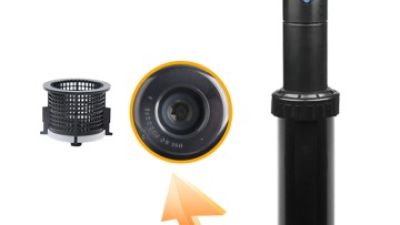
RAINLING RL5200S 3/4 ABS Rotor Sprinkler: Reliable Irrigation Solutions from China Suppliers and Factory

The RL5200S 3/4-inch ABS rotor sprinkler is a professional irrigation solution designed for dependable 360-degree coverage. Developed by experienced China suppliers and manufactured in a specialized factory, it features an integrated check valve that helps prevent low-head drainage and supports consistent water distribution. This makes it suitable for commercial landscapes, sports fields, parks, and other areas requiring stable hydraulic performance.

Built with industrial-grade ABS, the sprinkler housing offers strong resistance to ultraviolet exposure, daily wear, and demanding outdoor conditions. Its precision stainless-steel gear mechanism is engineered for smooth rotation and leak-free operation, while corrosion-resistant components and pressure-tested seals contribute to long-term reliability. A permanent lubrication system reduces maintenance requirements, and rigorous testing exceeding 500 operating hours supports dependable performance in professional applications.

The streamlined, heavy-duty design integrates easily with standard irrigation systems and helps improve water-use efficiency. With a three-year warranty provided by the factory, this rotor sprinkler offers irrigation professionals a practical combination of durability, precision, and stable operation across a wide range of watering environments.

FAQS

What should I measure before choosing sprinkler irrigation parts?

Measure static pressure, dynamic pressure, source flow, pipe diameter, and the farthest outlet. Running pressure matters more. Static readings can mislead.

How much flow should one irrigation zone require?

Add the rated flow of every sprinkler in the zone. Leave extra capacity for friction, filters, valves, and future changes. A zone needing 18 gallons per minute should not use an 18-gallon system.

How should I choose the correct pipe?

Match the pipe to pressure rating, burial depth, soil movement, and local temperatures. A 25 mm pipe may struggle with several sprinklers. I would check the farthest outlet before installation.

How do I select compatible valves?

Match the valve with controller voltage, flow range, pipe diameter, and system pressure. An oversized valve may close poorly at low flow. That detail is easy to miss.

What filter should I use for irrigation water?

Choose the mesh rating according to the smallest nozzle or emitter. Sand, algae, and organic debris need different filtration approaches. Do not choose by appearance alone.

How should sprinkler spacing be planned?

Use head-to-head coverage whenever possible. If a sprinkler throws six metres, nearby heads may need roughly six-metre spacing. Twelve metres can leave dry strips. Wind and slopes may require closer spacing.

Which materials suit hot, coastal, or difficult soil conditions?

Use UV-resistant polymers, corrosion-resistant metals, and seals rated for local temperature changes. Salt air can attack fittings quickly. Sandy soil may need closer emitters, while clay soil needs slower application.

How can I check whether the installed system works properly?

Test catch cans across the area and compare collected water. Inspect every joint after one week. Look under mulch. Small leaks can remain hidden. Record pressure, filter cleaning, and seasonal adjustments for maintenance.

Conclusion

Choosing the right Sprinkler Irrigation Parts begins with understanding your landscape, soil, plant types, sunlight, and available water supply. Assess whether you need fixed, rotating, drip-compatible, or adjustable sprinklers based on the required coverage and watering patterns. Then select pipes, valves, filters, connectors, and fittings that work together and match the system’s size. Accurate calculations of water pressure, flow rate, sprinkler spacing, and precipitation rate can help prevent dry areas, runoff, and uneven irrigation.

Durability is also important when selecting irrigation components. Consider materials that can withstand local temperatures, soil conditions, moisture, and regular outdoor exposure. Smart controllers, rain sensors, and adjustable timers may improve water efficiency, while easy-to-clean filters and accessible replacement parts can simplify maintenance. A well-planned system should provide reliable coverage, reduce water waste, support healthy plant growth, and remain practical to repair or expand over time.
Isabella

Isabella

Isabella is a dedicated marketing professional at RAIN LING, where she combines her passion for sustainable innovation with an exceptional understanding of the company’s pioneering irrigation solutions. With a keen eye for detail and a commitment to precision, she ensures that every piece of......
Previous China Top 10 Irrigation Controller Suppliers?