Leave Your Message
Picking out a Single-Station Irrigation Controllerisn’t just about the product label — it all starts with your actual yard. Even if you’ve got a tiny garden that only needs one watering zone, you still gotta think about your soil, plants, water pressure, and sunlight. It’s a good idea to measure how much water flow you have before you dive into comparing features. Because honestly, a controller can’t fix issues like weak pressure or clogged Nozzles — those need fixing beforehand.
Dr. Charles H. Pair, a well-known irrigation researcher, summed it up nicely: "Irrigation is about applying water at the right time and in the right amount." That’s the key idea you should keep in mind when choosing equipment. Look for features like straightforward scheduling, reliable seasonal adjustments, rain sensors that actually work, and manual controls you can easily understand. Wi-Fi could be handy, but it’s not always a must-have. Sometimes, a solid, easy-to-use local interface might be better — especially if you’re older or have a greenhouse or detached garden.
Don’t forget to check the controller’s electrical needs and installation instructions. Make sure it’ll play nicely with your valve, transformer, sensor, and enclosure. Big brands like Rain Bird, Hunter Industries, and Toro usually have useful specs published online. Still, don’t just take their word for it — compare actual product features carefully. If your yard has clay soil, running a twelve-minute cycle might cause runoff, so shorter cycles with pauses in between could do the trick better. Tiny mistakes can add up fast. Of course, no guide can tell you exactly what will happen in your particular yard—that’s the tricky part. Bringing in a professional irrigation expert to check pressure, wiring, and coverage before you install can make a huge difference.
At the end of the day, the best Single-Station Irrigation Controller isn’t necessarily the most feature-packed model. It’s the one that gives you reliable control, fits your yard’s needs, and is easy enough to operate even after the installer leaves. That’s what matters most.
How to Choose a Single Station Irrigation Controller?
Understanding What a Single-Station Irrigation Controller Does
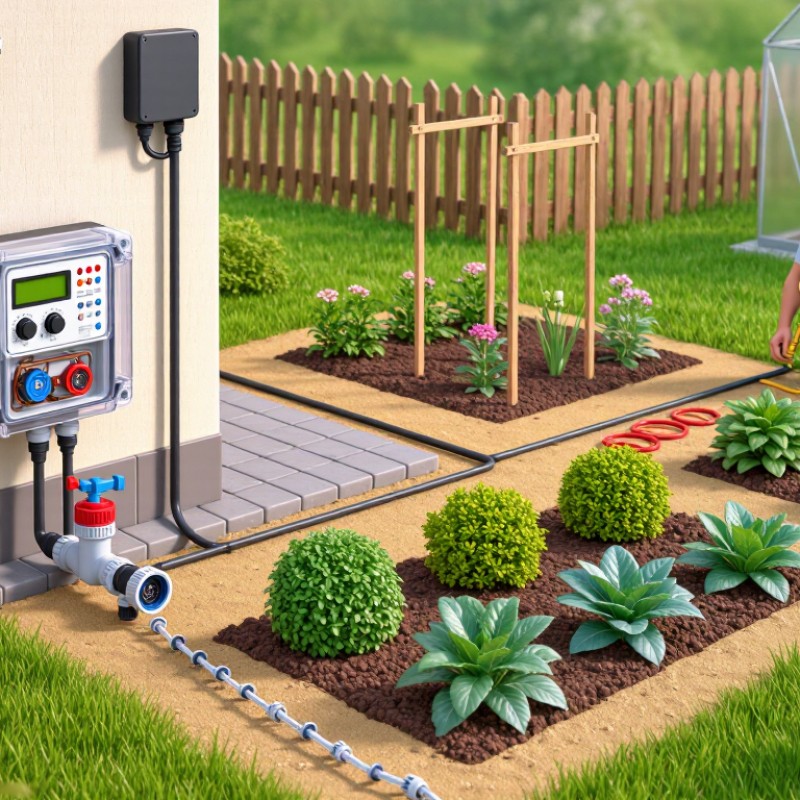
A single-station irrigation controller manages one watering zone, such as a small lawn, garden bed, or row of containers. At a programmed time, it signals the zone’s valve to open and lets water flow. When the set duration ends, the valve closes. That is its core job. It does not create water pressure or decide whether the soil is already damp.
This setup suits a property with one distinct area to water. You can set watering days and run times, then adjust them as temperatures and plant needs change. A controller cannot account for every patch of soil or sudden rainfall, so occasional checks still matter. Touch the soil near the roots; a dry surface can hide moisture below. I still find this easy to overlook.
Tips: Check that the controller supports the valve type and power supply you have. Start with a short run, then inspect the soil and plants before increasing the duration. Keep the schedule flexible. A fixed setting may waste water after rain or leave plants thirsty during a hot spell.
| Selection Dimension | What a Single-Station Controller Does | What to Check Before Choosing | Practical Guidance |
|---|---|---|---|
| Number of stations | Runs one irrigation station, typically one valve or one independently controlled watering area. | Confirm that one station is enough for the intended zone and that future expansion is not required. | A single station is suitable when one area can be watered on a shared schedule. Separate areas with different needs generally require separate stations. |
| Valve and output compatibility | Sends a control signal to open and close a compatible irrigation valve. | Check the valve’s required voltage, current, and solenoid type against the controller’s output specifications. | Many conventional residential systems use 24 V AC valves, while some battery-operated systems use DC latching solenoids. These are not automatically interchangeable. |
| Power source | Powers its timer and, depending on the design, operates the valve directly or through a compatible power supply. | Identify whether the installation has a suitable mains outlet, low-voltage transformer, or requires battery power. | Use only the specified power supply and observe local electrical-safety requirements. Battery life varies with valve type, watering frequency, and conditions. |
| Scheduling options | Starts watering according to a programmed schedule, usually with adjustable start time, duration, and watering days or intervals. | Check the available schedule formats, run-time range, and whether the controller supports the watering frequency you need. | Choose a schedule that can accommodate local watering rules and the needs of the plants, soil, and irrigation method. |
| Manual operation | May allow a user to start or stop watering without changing the regular program. | Confirm whether manual watering is available and whether it can be started at the controller or through a supported interface. | Manual operation is useful for testing the valve, checking coverage, or providing an occasional extra watering cycle. |
| Rain or moisture input | Some models accept a compatible sensor signal to suspend scheduled watering when specified conditions are detected. | Check whether a sensor input is provided and verify that the sensor type and wiring are compatible. | A sensor input is optional and does not mean every controller includes a sensor. Follow the controller and sensor installation instructions. |
| Indoor or outdoor installation | Provides a control interface that must be installed in an environment allowed by its enclosure rating. | Review the manufacturer’s stated indoor/outdoor suitability, temperature limits, and required enclosure protection. | Do not assume a controller is weatherproof. Keep indoor-rated equipment sheltered from rain, direct water, and excessive moisture. |
| Installation and wiring | Connects the controller output to the compatible valve and, where applicable, to a power source and sensor. | Check terminal labels, wire requirements, cable distance guidance, and whether professional installation is appropriate. | Turn off power before wiring and follow the product instructions. Use suitable outdoor-rated wiring and connections where required. |
| System capacity and expansion | Controls one station; it does not independently schedule multiple zones unless additional compatible equipment provides that capability. | Consider future landscaping, additional valves, and whether separate watering schedules may be needed later. | If the system is likely to grow, compare a single-station unit with a controller designed for multiple stations. |
| Best-fit use case | Automates one valve or one watering area with a defined schedule. | Match the controller to the irrigation method, valve, power availability, environment, and desired level of automation. | It can suit a small garden, a single drip-irrigation area, or one outdoor tap-based zone when the controller is specifically compatible with that setup. |
Modular station irrigation controllers make it easier to match a system’s control capacity to the size of a property. Both available models start with a four-station base module and can be expanded by adding internal modules, providing a practical path from a smaller setup to a larger one. With options for up to 13 or 16 stations, users can select a capacity that suits their current irrigation layout without having to begin with the largest configuration.
This expandable design supports scalable irrigation management across residential and commercial applications. A home garden may need only a portion of the available stations, while a larger property can use additional capacity to manage more irrigation zones. The same controller options are suitable for indoor or outdoor installation, helping accommodate different site requirements. By choosing the appropriate model and adding modules as needed, property managers and homeowners can adapt station capacity as their Irrigation Systems grow or change.
It manages one watering zone, such as a lawn, garden bed, or container row. At the programmed time, it opens one valve and closes it later.
No. It only signals the valve to open or close. Your water supply must provide enough pressure.
It suits properties with one clearly separated watering area. A small greenhouse bed is a practical example.
Use a plug-in model near a protected outlet. Choose battery power for a remote bed. Check the battery regularly.
Look for flexible start times, seasonal adjustment, rain delay, and manual control. A clear display helps in bright sunlight.
Sensors can stop watering after rain or when soil remains moist. They are helpful, but setup accuracy still matters.
Start with a short watering period. Touch the soil near the roots afterward. The surface can mislead you.
Confirm the valve voltage and power supply. Measure the outlet distance. Test manual watering before burying cables.
Not necessarily. Smart features need reliable connectivity and accurate settings. Weak signals or changing water pressure may reduce their value.
Keep a written schedule inside the controller cover. Adjust it after rain or during hot weather. I sometimes forget this.
Choosing the right Single-Station Irrigation Controller starts with understanding how it manages watering for one irrigation zone and how well it matches your landscape. Consider the size and type of plants, soil conditions, sun exposure, drainage, and seasonal water needs before comparing controller options. Simple models may provide basic timer settings, while advanced units can offer flexible programming, weather awareness, soil moisture monitoring, and automatic adjustments that help reduce water waste.
Before purchasing, check the available power source, wiring requirements, valve compatibility, and installation conditions. A reliable controller should support convenient scheduling, multiple watering cycles, seasonal adjustments, and sensor connections when needed. Your budget and maintenance preferences are also important: a basic model may be suitable for a small, consistent garden, while a more adaptable system can provide greater efficiency and convenience over time. The best choice is one that delivers dependable control without adding unnecessary complexity.