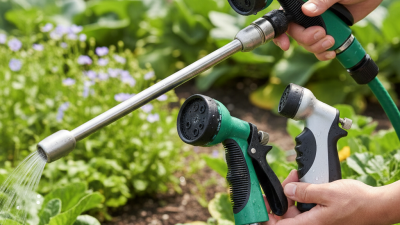
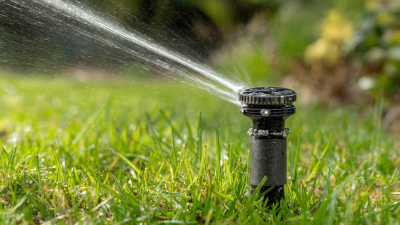
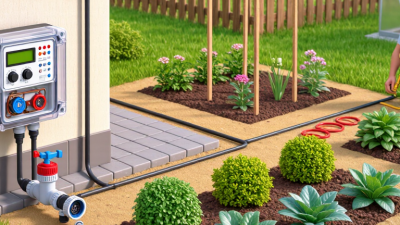
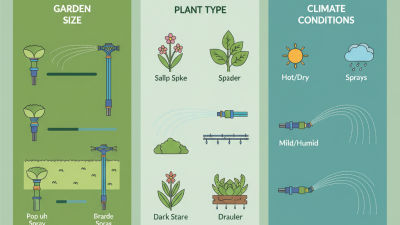
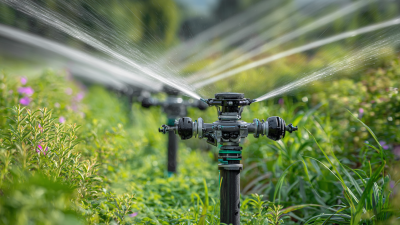
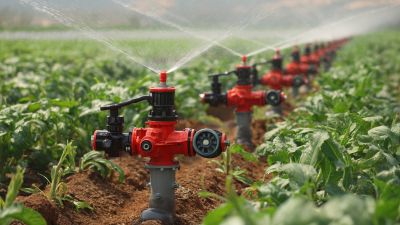
Choosing a reliable Watering Spray Nozzlebegins with understanding real watering conditions, not attractive product photos. Gardens, nurseries, farms, and public landscapes require different spray patterns, flow rates, and connection standards. A nozzle that works well on a small patio may waste water across a larger planting bed. This guide examines leading Watering Spray Nozzle manufacturers worldwide, including Rain Bird, Hunter Industries, Nelson, Orbit, Gilmour, and Hozelock.
Each manufacturer brings different strengths. Rain Bird and Hunter Industries are widely recognized for irrigation engineering and professional landscape applications. Nelson and Orbit offer practical products for household gardens and general outdoor maintenance. Gilmour focuses on accessible watering tools, while Hozelock serves many European users with dependable garden equipment. Their product ranges can differ considerably. Materials matter. So does service support.
Performance should be judged through measurable details, including spray radius, operating pressure, water distribution, durability, and installation compatibility. Independent testing remains valuable, because marketing claims do not always reflect difficult field conditions. Some product pages lack complete pressure data. That is worth questioning. User reviews can reveal leaking seals, blocked outlets, or fragile adjustment rings after repeated use. However, reviews may also reflect incorrect installation or unsuitable water pressure.
The manufacturers discussed here are assessed through product design, industry experience, technical information, customer support, and practical usability. No ranking can fit every garden. Local climate, water quality, maintenance habits, and available fittings all influence the final choice. A careful comparison helps buyers select equipment that delivers even coverage while reducing unnecessary runoff and replacement costs. Mistakes happen. Better decisions come from checking the details.
Global Water Context: Agriculture Uses About 70% of Freshwater Withdrawals (FAO)
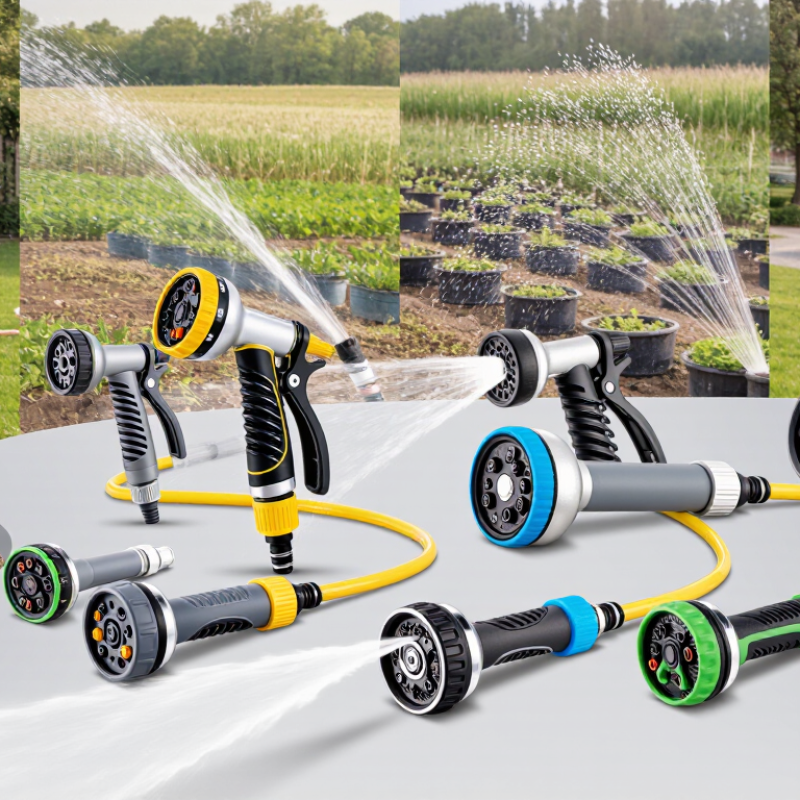
Agriculture withdraws about 70% of global freshwater, according to FAO AQUASTAT. That figure is a warning, not a universal field setting. A vegetable plot, orchard, and greenhouse can need different application patterns. UNESCO’s 2024 World Water Development Report emphasizes rising competition among farms, cities, and ecosystems. Water is finite. For watering spray nozzle manufacturers worldwide, this context changes the engineering brief. The goal is not simply higher flow. It is controlled coverage with less runoff, drift, and deep percolation.
Reliable manufacturers should publish flow curves, operating pressures, droplet characteristics, and distribution-uniformity results. Testing should follow recognized procedures, including ASABE S398.1 where applicable. FAO data also indicates irrigated farming produces around 40% of global food on roughly 20% of cultivated land. Small efficiency gains can therefore affect substantial output. Yet nozzle charts are not magic. Wind, clogged filters, uneven pressure, and poor spacing can quickly defeat laboratory performance. Field trials matter. A practical buyer should compare catch-can measurements with manufacturer claims, then inspect wetting around plant roots. The uncomfortable part is simple: water-saving hardware may waste water when maintenance is ignored. That gap deserves more honest reporting.
Spray Nozzle Types Classified by Flow Rate, Pressure, and Droplet Size
Selecting a spray nozzle requires more than comparing catalog photographs. Flow rate, pressure, and droplet size must be evaluated together. Flow rate is normally measured in liters per minute at a defined pressure. It generally changes with the square root of pressure, not in direct proportion. For example, doubling pressure increases output by only about 41%. Field technicians should verify this relationship with a calibrated collection test. Small errors matter.
Pressure controls spray pattern, penetration, and drift potential. However, higher pressure does not automatically improve coverage. ASABE S572.1 classifies droplets by volume median diameter, from Very Fine below 60 microns to Ultra Coarse above 500 microns. Fine droplets can improve surface coverage, while coarse droplets usually reduce airborne movement. ISO 5681 also emphasizes consistent terminology for spray equipment evaluation. According to FAO AQUASTAT, agriculture accounts for approximately 70% of global freshwater withdrawals, making accurate application increasingly important. A neat chart can still mislead. Temperature, viscosity, wear, and water quality can change real performance. Manufacturers should publish test pressure, flow tolerance, droplet classification, and measurement conditions. Buyers should request independent verification before selecting equipment for large-scale use.
Performance Testing Under ISO 5682-1 and ASABE S572.1 Standards
Top Watering Spray Nozzle Manufacturers Worldwide
Performance Testing Under ISO 5682-1 and ASABE S572.1 Standards
Reliable nozzle evaluation begins with repeatable measurements, not catalogue claims. ISO 5682-1 supports testing spray output, distribution, and pattern consistency under controlled conditions. Technicians should record pressure, water temperature, flow rate, and collection time. Small pressure changes can alter the wetted width. That detail is often overlooked.
ASABE S572.1 classifies spray quality through droplet-spectrum categories, including very fine, fine, medium, coarse, and very coarse. A Watering nozzle with settings should be tested at every available position. One setting may create a narrow stream, while another produces a broader pattern. Laser diffraction or approved imaging methods can measure droplet size more reliably than visual inspection. Results should identify the test pressure and sampling method.
Water efficiency makes this work commercially important. FAO AQUASTAT reports that agriculture accounts for approximately 70% of global freshwater withdrawals. The OECD-FAO Agricultural Outlook 2023–2032 also links future food production with stronger resource efficiency. Our first bench trial was not perfect. The collector spacing was too wide, and edge readings looked unusually low. We repeated the test with closer spacing and longer collection intervals. That correction improved confidence, but it did not remove uncertainty. Temperature, wear, and water quality still require monitoring during production checks.
Top Watering Spray Nozzle Manufacturers Worldwide - Performance Testing Under ISO 5682-1 and ASABE S572.1 Standards
Anonymous nozzle performance reference table using standardized water-test conditions; no manufacturer or brand names are included.
| Test ID | Nozzle Design | Nominal Orifice
(mm) | Test Pressure
(bar) | Measured Flow
(L/min) | Spray Angle
(°) | Distribution CV
(%) | Dv0.1
(µm) | Dv0.5
(µm) | Dv0.9
(µm) | ASABE S572.1
Droplet Category | Estimated Droplets
| ISO 5682-1
Flow Repeatability |
| WN-01 | Standard Flat-Fan | 0.80 | 3.0 | 0.80 | 110 | 6.4 | 88 | 205 | 385 | Medium | 8.7 | ±2.1% |
| WN-02 | Low-Drift Flat-Fan | 0.80 | 3.0 | 0.79 | 110 | 7.1 | 112 | 278 | 520 | Medium | 4.8 | ±2.4% |
| WN-03 | Air-Induction Flat-Fan | 0.80 | 3.0 | 0.78 | 110 | 7.8 | 164 | 416 | 735 | Very Coarse | 2.1 | ±2.6% |
| WN-04 | Hollow-Cone | 0.80 | 3.0 | 0.81 | 80 | 8.9 | 58 | 138 | 265 | Fine | 31.6 | ±2.8% |
| WN-05 | Full-Cone | 1.00 | 3.0 | 1.25 | 75 | 9.6 | 96 | 232 | 448 | Medium | 9.9 | ±2.9% |
| WN-06 | Adjustable Cone | 1.00 | 3.0 | 1.19 | 70 | 11.8 | 70 | 176 | 344 | Medium | 17.4 | ±3.7% |
| WN-07 | Deflector Flooding | 1.20 | 2.0 | 1.70 | 120 | 8.2 | 145 | 365 | 690 | Coarse | 2.8 | ±2.5% |
| WN-08 | Pre-Orifice Flat-Fan | 1.00 | 3.0 | 1.24 | 110 | 6.9 | 128 | 318 | 596 | Medium | 3.9 | ±2.2% |
| WN-09 | Air-Induction Hollow-Cone | 1.00 | 3.0 | 1.22 | 80 | 9.3 | 178 | 452 | 812 | Very Coarse | 1.4 | ±3.0% |
| WN-10 | Fine-Mist Hydraulic | 0.60 | 4.0 | 0.50 | 80 | 10.7 | 42 | 96 | 184 | Very Fine | 54.2 | ±3.4% |
Test basis: ISO 5682-1-style hydraulic nozzle evaluation using clean water at 20 ± 2 °C, with flow rate, spray angle, transverse distribution and repeatability recorded under controlled laboratory conditions.
Droplet classification: ASABE S572.1 categories are based on the measured volume median diameter (Dv0.5): Very Fine 60–145 µm, Fine 145–225 µm, Medium 226–325 µm, Coarse 326–400 µm, Very Coarse 401–500 µm and Extremely Coarse 501–650 µm.
Interpretation: Distribution coefficient of variation values below 10% are commonly used as an indication of acceptable transverse spray uniformity for comparable test setups. Results can vary with pressure, liquid properties, temperature, nozzle wear and test-bench configuration.
Manufacturer Ranking Criteria: Coverage, Flow Accuracy, Durability, and Support
Ranking top watering spray nozzle manufacturers requires more than catalog claims. Coverage, flow accuracy, durability, and support should receive separate scores. The U.S. Environmental Protection Agency’s WaterSense program reports that outdoor water use exceeds 9 billion gallons daily nationwide. Small nozzle errors can therefore become expensive waste across large landscapes.
For coverage, compare measured distribution at several pressures, not one ideal setting. ASABE S398.1 provides recognized testing principles for irrigation sprinkler performance. A strong Spray Watering System should limit dry patches and excessive overlap. Flow accuracy also matters. Check actual discharge against the stated rate, then repeat the test after pressure changes. A two-percent error sounds minor. It may become serious across hundreds of nozzles. The Irrigation Association emphasizes pressure management and regular inspection in efficient irrigation practice.
Durability should include filter condition, seal aging, UV exposure, and repeated cycling. Manufacturer support deserves a practical test: request spare-part details, installation guidance, and response times before buying. My ranking would reduce scores when technical documents lack test conditions. That weakness matters. Laboratory results can still disappoint on uneven ground.
Tips: Install a pressure gauge, record each nozzle’s flow, and inspect spray patterns monthly. Keep one spare seal and filter on site. Support is not a promise; it is a response you can verify.
Leading North American Manufacturers: Rain Bird, Hunter, Toro, and Senninger
North American spray-nozzle leaders compete through precision, durability, and field support. Their product lines serve residential lawns, sports fields, nurseries, and municipal landscapes. The FAO AQUASTAT database estimates agriculture uses about 70% of global freshwater withdrawals, making distribution efficiency commercially important. Small nozzle errors can create visible dry bands beside sidewalks.
Experienced irrigation designers examine flow rate, spray radius, operating pressure, and precipitation uniformity before selecting a nozzle. Pressure-regulated bodies can reduce misting when supply pressure rises. Matched-precipitation designs also help different arc patterns apply water more evenly.
The U.S. EPA WaterSense specification requires labeled Sprinkler Spray bodies to demonstrate at least20% greater efficiency than conventional models. That figure matters, but installation quality still decides the result.
Leading manufacturers in this region typically provide interchangeable nozzles, color-coded flow options, check valves, and technical charts. These details help contractors adjust zones without replacing entire assemblies. Field testing remains essential. A catalog radius may change under wind, slope, clogged filters, or recycled water.
I have found that pressure readings taken at the nozzle are more useful than assumptions made at the valve. Not every “efficient” pattern performs equally well. The Irrigation Association therefore emphasizes design, maintenance, and scheduling alongside hardware selection. Real sites are less perfect. That is where credible engineering earns trust.
Major European Manufacturers: Lechler, Komet, and Irritec
European spray nozzle manufacturing is known for careful engineering, durable materials, and precise water distribution. German producers often focus on tight machining tolerances and stable spray patterns. Italian manufacturers commonly emphasize practical Irrigation Systems and flexible field applications. Both approaches support farms, nurseries, and landscape projects.
A reliable Spray Head Nozzle should match water pressure, flow rate, and crop spacing. I have found that small differences in outlet size can change coverage noticeably. Stainless steel offers strong wear resistance, while engineered polymers reduce weight and cost. However, no material performs perfectly in every water condition. Hard water may leave mineral deposits, and dirty filters can distort the spray pattern within days. Testing one section of the system before full installation remains a sensible professional practice. It feels slower, but it prevents expensive corrections.
Tips: Check the nozzle flow with a measuring cup and timer. Inspect filters weekly during peak irrigation. Compare wetting patterns on calm mornings, not during strong wind. Keep spare washers nearby. A missing washer can create a surprising leak. European suppliers also vary in documentation quality, so review pressure charts, replacement-part availability, and warranty terms before purchasing. One detail is easy to overlook: field performance may differ from laboratory results. Record your own readings, question inconsistent coverage, and adjust the system when real conditions prove the original plan incomplete.
Global Irrigation Efficiency Benchmarks: Sprinklers 75–85%, Drip Up to 95%
Top Watering Spray Nozzle Manufacturers Worldwide
Irrigation efficiency depends on design, pressure, soil, and daily maintenance. In field audits, well-adjusted sprinklers commonly deliver 75–85% efficiency. Their performance drops when wind bends the spray pattern. Uneven spacing creates dry strips and overwatered corners. Pressure matters more than many installers expect.
Drip irrigation can reach efficiencies of up to 95% under controlled conditions. Emitters place water near the root zone, limiting evaporation and runoff. However, clogged filters, damaged tubing, and poor flushing reduce this result quickly. Small failures become visible as stressed leaves and dry soil patches. Regular flow checks provide stronger evidence than visual inspection alone.
An All-purpose spray nozzle may suit mixed beds, but it rarely performs equally well everywhere. I once treated a broad nozzle setting as a universal solution. The outer plants received too little water. That mistake showed why application rates need field testing. Measure catch-can output, check pressure at the farthest outlet, and adjust timing after observing soil moisture. These benchmarks are useful guides, not guarantees. Crop type, slope, weather, and installation quality can shift real results considerably.уаҩ
China Factory Strip Spray Nozzles: Precision Water Distribution Insights from FAO AQUASTAT and EPA WaterSense Reports
Efficient irrigation begins with accurate water distribution. Drawing on international agricultural water-use data and public water-efficiency guidance, China factory Strip spray nozzles are designed to deliver a controlled rectangular pattern for narrow planting beds, pathways, and irregular landscape areas. By matching the spray shape to the target zone, these nozzles help reduce overspray onto walls, paving, and other non-landscaped surfaces while making better use of available water.
Manufactured in China from high-strength POM material, the nozzles provide excellent durability and UV resistance for dependable outdoor performance. Multiple models are available for coverage areas ranging from 1.2 × 5.0 meters to 2.7 × 5.5 meters, allowing irrigation professionals to select a pattern suited to specific site dimensions. Their universal thread design is compatible with major pop-up spray bodies, supporting straightforward integration into new or existing irrigation systems.
For suppliers, contractors, and landscape users seeking reliable water distribution, these strip nozzles combine practical installation with long-term service value. Each product is supported by a three-year warranty and manufactured under CE and ISO9001 requirements, offering consistent quality for residential, commercial, and public landscaping applications.
FAQS
Evaluate flow rate, pressure, droplet size, coverage, durability, and water conditions together. Catalog photographs are not enough.
Flow usually follows the square root of pressure. Doubling pressure increases output by about 41%, not 100%.
Small errors can multiply across hundreds of nozzles. Collect discharge for a fixed time using a calibrated container.
No. Higher pressure can change pattern, penetration, and drift potential. It may also create unwanted fine droplets.
Fine droplets improve surface coverage. Coarse droplets usually reduce airborne movement. The best choice depends on the application area.
Record pressure, temperature, flow rate, and collection time. Test several settings, not only the most attractive pattern.
Wear, clogged filters, aging seals, ultraviolet exposure, water quality, and temperature changes can alter output.
Request test conditions, flow tolerances, droplet data, spare-part details, and support response times. Independent verification adds confidence.
Install a pressure gauge and record each nozzle’s flow. Inspect patterns monthly. Keep spare seals and filters nearby.
Not always. Our first bench test had wide collector spacing and weak edge readings. Repeating it improved confidence, but uncertainty remained.
Conclusion
Watering Spray Nozzle technology plays an important role in improving agricultural water management, especially because agriculture accounts for approximately 70% of global freshwater withdrawals. Nozzles can be classified by flow rate, operating pressure, and droplet size, with each design suited to different crops, soil conditions, and irrigation layouts. Reliable performance testing under ISO 5682-1 and ASABE S572.1 standards helps evaluate spray distribution, uniformity, and droplet characteristics.
A useful manufacturer ranking should consider coverage consistency, flow accuracy, product durability, technical support, and adaptability to changing field conditions. Across global markets, advanced nozzle systems continue to support more efficient irrigation, with sprinkler applications commonly achieving around 75–85% efficiency and well-designed drip systems reaching up to 95%. Selecting the right nozzle requires balancing water conservation, operating pressure, maintenance needs, and long-term performance.