Leave Your Message
0%

China has really become a major manufacturing base for irrigation equipment—including Rotary Sprinkler Heads. This guide walks through ten Chinese manufacturers that serve agricultural, landscape, greenhouse, and sports-turf projects. The focus is on practical evidence, not just attractive claims.

When evaluating them, look at product design, spray uniformity, pressure range, materials, quality control, export experience, and after-sales support. A reliable manufacturer should explain Nozzle options clearly and provide useful performance data. Buyers can also ask for samples, inspection reports, installation instructions, and replacement-part info. Small details matter. A poorly sealed connection can waste water, reduce coverage, and increase maintenance costs.

The companies selected may differ in factory scale, specialization, certifications, and international service capabilities. Some focus on durable plastic components, while others develop metal-bodied systems for demanding applications. Their products should be compared under similar pressure, flow, and spacing conditions. Otherwise, performance conclusions can be misleading.

This isn’t a permanently perfect ranking. Market information changes, and public company data can remain incomplete. That limitation deserves attention. So before placing an order, readers should verify current catalogs, production capacity, certifications, and customer references. Field testing is valuable too—especially where water quality, wind, soil conditions, or seasonal demand affect irrigation results. With a balanced look at engineering capability and real operating feedback, this overview aims to help distributors, contractors, and growers identify dependable Chinese suppliers of Rotary Sprinkler Heads.
China Top 10 Rotary Sprinkler Heads Manufacturers

Rotary Sprinkler Heads: Definition, Types, and Operating Principles

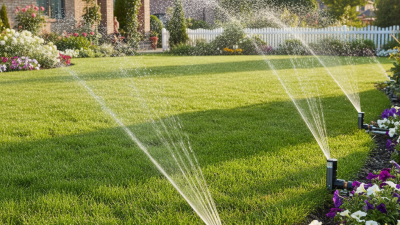
A Rotary Sprinklerhead distributes water through a rotating stream, covering a circular or adjustable pattern. Unlike fixed Spray Heads, it applies water more slowly and usually reduces runoff on larger turf areas. Common types include impact, gear-drive, and multi-stream rotary heads. Impact models use a pressure-driven hammer arm. Gear-drive models use an internal turbine and gear train. Multi-stream models send several narrow jets across the landscape.

Operating pressure controls radius, rotation speed, and spray stability. A typical landscape head may operate between 30 and 70 psi, depending on its design and nozzle. Low pressure creates weak streams and poor coverage. Excessive pressure creates mist, which wind can carry away. Filters are important because small debris can block internal passages. The correct nozzle also matters. Field technicians should measure catch-can output, not trust appearance alone.

The FAO AQUASTAT database reports that agriculture accounts for roughly 70% of global freshwater withdrawals. This figure explains why uniform irrigation deserves careful design. The Irrigation Association also emphasizes matched precipitation rates for system efficiency. Yet efficiency claims can mislead. A head may save water while still overwatering one corner. My practical checks would include pressure readings, arc adjustment, and ten-minute catch-can tests. Soil slope, wind, and plant maturity often change the result. Small errors remain common. Better maintenance still begins with basic observation.

China’s Rotary Sprinkler Head Manufacturing Industry

China’s rotary sprinkler head manufacturing industry has grown through practical irrigation needs. Manufacturers serve farms, nurseries, public landscapes, and sports grounds. Their products must handle changing pressure, hard water, and seasonal temperature shifts. Field experience matters here. A nozzle that performs well in a factory may behave differently in dusty soil.

Production usually combines engineering design with strict process control. Common materials include engineering plastics, stainless steel, and corrosion-resistant alloys. Technicians test spray radius, rotation speed, flow stability, and sealing performance. They also inspect thread accuracy and internal filters. Small errors can create uneven watering. That problem wastes water and weakens crop growth.

The phrase Sprinkler Rotary often appears in international product searches, but specifications deserve closer attention. Buyers should compare pressure ranges, precipitation rates, connection sizes, and maintenance access. Independent sampling can reveal weaknesses hidden by polished catalogs. Not every supplier maintains identical standards across every production batch. This remains an industry challenge. Better traceability, clearer test reports, and more consistent worker training are still needed. Chinese manufacturers are improving through automated assembly and real-world irrigation trials. Yet performance should be judged by measured results, not production volume alone.

Criteria for Ranking the Top 10 Chinese Manufacturers

Ranking the top 10 Chinese rotary sprinkler head manufacturers requires more than comparing catalog prices. I would begin with factory experience, production scale, and evidence from real irrigation projects. A reliable supplier should explain nozzle design, spray radius, operating pressure, and water distribution clearly. The Rotary Nozzle Sprinkler must perform evenly, even when pressure changes during field use.

Material selection matters. Stainless steel springs, UV-resistant plastics, and corrosion-tested components often indicate stronger engineering control. I would review production samples, inspection records, and test results for leakage, rotation speed, and coverage uniformity. Factory audits also reveal practical details, such as clean assembly areas, calibrated equipment, and traceable batch numbers. Small details matter.

Supplier reliability needs a wider view. Delivery history, response time, spare-part access, packaging quality, and technical support should influence the ranking. Certifications can support credibility, but documents alone do not prove field performance. Independent project references and long-term user feedback are more convincing. Customization deserves attention when farms require unusual pressure ranges or mounting sizes.

A ranking still contains uncertainty. Public information may favor larger exporters, while smaller factories can offer strong technical value. Some test data may come from controlled conditions, not dusty fields or hard water. I would record these limitations instead of pretending the order is perfectly objective. Periodic reassessment is necessary when materials, staff, or manufacturing equipment change.

Profiles of China’s Top 10 Rotary Sprinkler Head Manufacturers

Profiles of China’s Top 10 Rotary Sprinkler Head Manufacturers

China’s rotary sprinkler head sector includes manufacturers with different strengths and production focuses. Manufacturer One is known for compact residential models, often using adjustable arc settings. Manufacturer Two concentrates on agricultural irrigation, where flow stability matters across uneven fields. Manufacturer Three supplies brass and engineering-plastic components for landscape projects. Its product documentation is relatively clear, though installation diagrams could be more detailed. Manufacturer Four develops gear-driven heads for parks, sports grounds, and large gardens. Field technicians often value their smooth rotation and replaceable nozzles.

Manufacturer Five serves greenhouse operators with low-pressure solutions. Manufacturer Six emphasizes automated testing, checking leakage and spray patterns before shipment. Manufacturer Seven offers several inlet sizes, helping contractors match existing pipework. Manufacturer Eight focuses on corrosion-resistant materials for humid coastal locations. Manufacturer Nine produces economical models for distributors, but buyers should confirm warranty terms carefully. Manufacturer Ten combines custom nozzle design with private-label manufacturing for overseas irrigation suppliers.

Reliable evaluation requires more than factory photographs. Buyers should review pressure ranges, precipitation rates, material specifications, and test records. Ask how the head performs after repeated seasonal use. A clean spray pattern matters.

Not every catalog claim reflects field conditions. Soil, wind, water quality, and poor alignment can change results. Visiting a production line, checking sample consistency, and testing products under local pressure remain practical safeguards. Experienced manufacturers usually welcome technical questions, but communication quality can still vary between projects.

Product Technologies and Customization Capabilities

China Top 10 Rotary Sprinkler Heads Manufacturers: Product Technologies and Customization Capabilities

Rotary sprinkler heads now combine hydraulic design, durable materials, and adjustable coverage. The FAO AQUASTAT database reports that agriculture uses about 70% of global freshwater withdrawals. This figure raises the value of precise irrigation control. Modern manufacturers therefore test flow rates, pressure ranges, spray patterns, and distribution uniformity before production. Small differences matter.

Many Chinese manufacturers offer plastic, stainless-steel, and brass components for different soil and climate conditions. Common options include adjustable arcs, replaceable nozzles, pressure-regulating devices, and anti-drain valves. Some factories use computer-controlled machining and flow testing. Others rely on manual inspection. That difference can affect field performance. Buyers should request test records, not only product photographs.

Customization usually covers inlet sizes, operating pressures, nozzle colors, packaging, and private-label documentation. Larger projects may require buried installations, reclaimed-water compatibility, or corrosion-resistant parts. ISO 7749 and relevant irrigation testing practices provide useful reference points. However, compliance claims need verification. A catalog may show excellent laboratory results, while uneven water pressure reduces uniformity onsite. This remains an overlooked risk. The UN World Water Development Report 2024 also identifies agriculture as the largest freshwater-consuming sector, making practical efficiency more important than attractive specifications. Manufacturers that combine measurable testing, responsive engineering, and transparent limitations offer stronger long-term value.

China Top 10 Rotary Sprinkler Heads Manufacturers - Product Technologies and Customization Capabilities

No. Manufacturer Primary Product Technology Drive or Rotation Mechanism Typical Materials Common Inlet Sizes Spray Pattern and Adjustment Customization Capabilities Typical Applications
1 Anonymous Manufacturer 01 Impact rotary sprinkler heads Water-driven impact arm Engineering plastics, stainless steel, brass 1/2 in, 3/4 in, 1 in Full-circle or part-circle; adjustable diffuser and trip mechanism Nozzle size, spring tension, inlet thread, color, packaging, and private labeling Agriculture, landscaping, dust suppression
2 Anonymous Manufacturer 02 Gear-drive rotary sprinkler heads Enclosed water-lubricated gear train ABS or POM components, stainless steel shafts, rubber seals 1/2 in and 3/4 in female threads Adjustable arcs, fixed full-circle options, interchangeable nozzles Arc range, nozzle package, pop-up height, seal material, flow-control option Residential and commercial irrigation
3 Anonymous Manufacturer 03 Low-pressure rotary sprinkler heads Hydraulic rotor with pressure-optimized nozzle UV-stabilized polypropylene, acetal, EPDM seals 1/2 in female thread and barbed connections Low-precipitation rotary stream; radius and flow adjustment Low-flow nozzle geometry, color coding, filter screen, connector type Water-saving gardens, slopes, narrow planting areas
4 Anonymous Manufacturer 04 Agricultural impact sprinkler heads Heavy-duty impact arm with bearing assembly Brass, aluminum alloy, stainless steel 3/4 in and 1 in male or female threads Long-radius full-circle or part-circle coverage Metal grade, nozzle diameter, inlet configuration, corrosion-resistant coating Field crops, nurseries, orchards, and pasture irrigation
5 Anonymous Manufacturer 05 Plastic rotary sprinkler heads Compact hydraulic rotor POM, PP, nylon, and UV-resistant ABS 1/2 in female thread and quick-connect formats Full-circle pattern with selectable radius and flow control Molded geometry, housing color, logo placement, filter design, retail packaging Home gardens, lawns, greenhouses, and light-duty irrigation
6 Anonymous Manufacturer 06 Pop-up rotary sprinkler heads Gear-driven riser and retractable spring UV-resistant polymer, stainless steel spring, rubber wiper seal 1/2 in female inlet; multiple riser heights Adjustable arc, matched-precipitation nozzle options Riser height, nozzle flow rate, arc setting, check valve, seal compound Lawns, public green spaces, sports fields
7 Anonymous Manufacturer 07 Metal rotary sprinkler heads Impact mechanism with replaceable bearing parts Cast brass, stainless steel, zinc alloy 3/4 in and 1 in threaded connections Adjustable part-circle and full-circle coverage Machined dimensions, nozzle material, surface finish, spring and arm configuration Commercial agriculture and demanding outdoor installations
8 Anonymous Manufacturer 08 Multi-nozzle rotary sprinkler heads Hydraulic rotor with interchangeable nozzle set POM, nylon, polypropylene, and stainless steel 1/2 in and 3/4 in threaded inlets Variable-radius streams and multiple precipitation rates Nozzle quantity, stream angle, flow range, filter mesh, and color identification Landscape zones with mixed shapes and plant layouts
9 Anonymous Manufacturer 09 Filtration-integrated rotary sprinkler heads Hydraulic rotor with removable inlet screen Engineering plastics, stainless steel mesh, EPDM or NBR seals 1/2 in female thread and hose-compatible fittings Adjustable arc and radius with debris-resistant nozzle design Screen mesh, filter location, seal material, fitting type, and maintenance access Reclaimed-water systems, gardens, and areas with particulate risk
10 Anonymous Manufacturer 10 OEM and project-specific rotary sprinkler heads Impact or gear-drive configuration selected by application Polymer, brass, aluminum, stainless steel, and elastomer options Metric or imperial threaded interfaces subject to design approval Full-circle, part-circle, variable-radius, and custom nozzle patterns CAD-based design, tooling modification, material selection, flow calibration, testing, and packaging OEM programs, irrigation projects, and specialized water-distribution systems

Note: Manufacturer names are intentionally anonymized. Product categories, materials, connection types, adjustment methods, and customization options represent commonly used configurations in rotary sprinkler head manufacturing; final specifications should be confirmed against supplier drawings and test reports.

Applications, Quality Standards, and Export Markets

China’s top rotary sprinkler heads manufacturers increasingly serve farms, nurseries, sports grounds, and landscape projects.

FAO AQUASTAT reports that agriculture accounts for about 70% of global freshwater withdrawals. This makes efficient Rotary sprinkler nozzles commercially important, not merely convenient. In field inspections, uniform coverage matters most. A poorly aligned nozzle can leave dry soil beside waterlogged areas.

Export buyers usually examine flow-rate accuracy, pressure stability, material durability, and replacement compatibility. Testing should follow recognized methods, including ASABE S398.1 procedures for sprinkler performance. ISO 9001 production controls can improve traceability, although certification alone cannot prove field reliability. Factory audits should review nozzle calibration, polymer ageing tests, metal corrosion checks, and batch records. Small details matter. Thread errors still occur.

Trade demand is visible across Southeast Asia, the Middle East, Africa, Europe, and North America. UN Comtrade data supports the wider movement of irrigation equipment through these regions, while FAO reports continued pressure on agricultural water supplies. China-based suppliers often adapt products for different pressures, pipe systems, and climate conditions. Export documentation, packaging strength, and multilingual installation instructions also influence repeat orders. However, selecting products only by price remains risky. Some performance claims need independent verification, especially under wind, recycled water, or hard-water conditions.

Fixed Rotary Nozzles from China: Durable Factory-Engineered Design—Insights from Grand View Research’s Irrigation Machinery Market Report

China-made fixed rotary nozzles are gaining attention in the irrigation machinery market for their practical combination of durability, flexibility, and factory-engineered performance. Designed for a throw distance of approximately 5 to 7.5 meters, these nozzles support multiple fixed arcs from 90° to 360°, including a specialized 360° short-radius pattern. This range allows contractors and property owners to adapt coverage for lawns, planting beds, pathways, and other landscape areas without relying on multiple nozzle designs.

A matched precipitation rate promotes consistent water distribution and enables flexible zoning within a single valve circuit. Manufactured from high-strength POM polymer, the nozzle includes an integrated filter to help reduce clogging and extend service life in demanding outdoor conditions. Its universal compatibility with standard pop-up spray bodies simplifies installation, replacement, and system upgrades across residential and commercial projects.

As a factory-engineered irrigation component, the product is produced under controlled quality procedures and supported by CE and ISO9001 certifications. A three-year warranty further supports long-term project planning, while the durable construction and efficient spray performance make it suitable for contractors seeking dependable irrigation hardware with straightforward maintenance and broad application compatibility.

FAQS

What is a rotary sprinkler head?

It distributes water through rotating streams. The pattern may be circular or adjustable. It suits larger turf areas.

How does a rotary sprinkler differ from a fixed spray head?

A rotary head applies water more slowly. This can reduce runoff on broad landscapes. Coverage may still fail if pressure is uneven.

What are the main types of rotary sprinkler heads?

Common types include impact, gear-drive, and multi-stream heads. Impact models use a pressure-driven hammer arm. Gear-drive models use an internal turbine and gears.

How does operating pressure affect sprinkler performance?

Pressure controls radius, rotation speed, and stream stability. Low pressure causes weak streams. Excessive pressure can create wind-blown mist.

What pressure range is commonly used?

Many landscape heads operate between 30 and 70 psi. The correct range depends on the design and nozzle. Always check actual field pressure.

Why are filters and nozzles important?

Filters stop small debris from blocking internal passages. Correct nozzles support the intended radius and flow. Tiny particles can still cause trouble.

How can irrigation coverage be tested accurately?

Place catch cans across the area and run the system for ten minutes. Measure the collected water. Appearance alone is unreliable.

What should buyers examine when comparing manufacturers?

Review materials, inspection records, leakage tests, rotation speed, and coverage uniformity. Check spare parts and delivery history. Documents help, but field evidence matters more.

Can an efficient sprinkler system still waste water?

Yes. One corner may receive too much water while another stays dry. Slope, wind, soil, and plant maturity can change results.

Is a manufacturer ranking always objective?

No. Public data may favor larger exporters. Controlled tests may not represent dusty fields or hard water. Reassessment is necessary.

Conclusion

This article presents a practical overview of Rotary Sprinkler Heads, explaining their definition, main types, structural features, and operating principles. It explores how water pressure, internal mechanisms, and adjustable spray patterns work together to provide uniform irrigation for agricultural fields, gardens, landscapes, sports grounds, and other water-management applications. The article also introduces China’s rotary sprinkler head manufacturing industry, highlighting its production capacity, engineering expertise, supply-chain advantages, and growing focus on efficiency and product reliability.

To identify the top 10 Chinese manufacturers, the discussion considers product quality, technical innovation, manufacturing capability, customization services, testing procedures, certifications, customer support, and export experience. Each manufacturer profile focuses on general strengths, product technologies, and the ability to develop solutions for different flow rates, coverage areas, materials, and installation conditions, without emphasizing brand names. Finally, the article reviews quality standards, inspection practices, international applications, and major export markets, helping buyers understand how to evaluate suppliers and select suitable Rotary Sprinkler Heads for reliable, efficient, and long-term irrigation performance.
Alexander

Alexander

Alexander is a dedicated marketing professional at RAIN LING, where his expertise in precision irrigation and sustainable innovation shines. With a passion for irrigation excellence, he plays a vital role in redefining industry standards and driving the company's mission to create a smarter,......
Previous How to Choose the Right Sprinkler Irrigation Parts in 2026