Leave Your Message
Picking a rotor sprinkler manufacturerisn't just about comparing prices, you know? There's a lot more to think about—like how evenly the water spreads, what Nozzle options you've got, operating pressure, whether you can easily get spare parts, and how much support you'll get if you're dealing with different climates. Sure, a rotor spinning across a field looks simple enough, but getting consistent coverage really comes down to thoughtful design and reliable components. Honestly, the small stuff matters more than you'd think.
It’s hard to overstate the scale of the challenge here. FAO’s 2021 report—The State of the World’s Land and Water Resources for Food and Agriculture—puts agriculture at roughly 72% of global freshwater withdrawals. And here’s another eye-opener: irrigated land accounts for only about 20% of cultivated land, but it produces around 40% of the world’s food. So efficiency and product selection aren’t just purchasing concerns anymore. They have a direct impact on operating costs and how we manage water.
So when the FAO Director-General Qu Dongyu said in his World Food Day 2023 message, “Water is life, water is food. Leave no one behind,” he was making a bigger point about the global food-water picture. It wasn’t some sales pitch for a Rotor Sprinkler. And honestly, that distinction is important. You can’t just take a manufacturer’s spec sheet at face value—you have to check it against your local water quality, pressure, what you’re growing, and what your field is actually like. A catalog can’t capture every installation headache.
So, this guide takes a look at ten different manufacturers for folks buying from all over the world. We dug into their product range, technical docs, how easy it is to get support, and whether they actually work for different kinds of projects. Honestly, there’s no one-size-fits-all brand out there. Even the big names? Yeah, worth a second look.
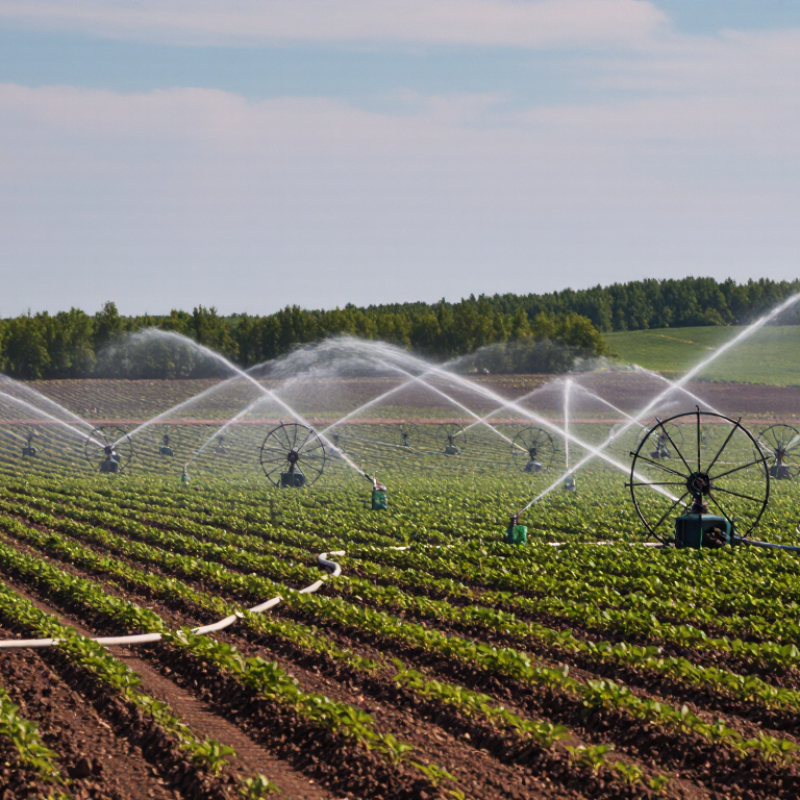
A rotor sprinkler turns a pressurized water stream through a rotating head, distributing droplets across a set arc and radius. Its core parts are the nozzle, drive mechanism, filter, and adjustable arc controls. Nozzle size and operating pressure shape throw distance and application rate; too much pressure can create fine mist, while too little may leave dry patches. Small details matter. In field checks, measure pressure at the sprinkler, not only at the pump, and inspect for clogged filters or worn nozzles. Spacing should account for overlap, wind, and the system’s actual output. A neat pattern on paper can still disappoint outdoors.
Rotors are commonly used on large lawns, sports fields, parks, and some agricultural sites where broad coverage is useful. They are not automatically the right choice for every crop or soil: infiltration rate, slope, and wind exposure can change performance. UNESCO’s 2021 World Water Development Report, drawing on FAO AQUASTAT data, attributes about 72% of global freshwater withdrawals to agriculture. That figure makes efficient irrigation design consequential, but it does not mean every rotor system saves water. Scheduling around soil moisture and local weather matters too. A practical review should compare measured distribution uniformity and water use, rather than relying on the advertised radius alone.
| Evaluation Dimension | What to Assess | Technical Context | Key Applications | Buyer Verification |
|---|---|---|---|---|
| Drive mechanism | Check whether the rotor uses a gear-driven mechanism or an impact mechanism, and review its maintenance requirements. | Gear-driven rotors use an internal transmission to turn the nozzle turret. Impact rotors rotate through repeated movement of a spring-loaded arm. | Residential lawns, sports fields, parks, and large landscape areas. | Request mechanism details, service instructions, and information about replacement parts. |
| Arc adjustment | Confirm whether the watering arc is adjustable and whether adjustment can be made without removing the sprinkler. | Many landscape rotors support partial-circle operation or full-circle rotation. The available arc and adjustment method differ by model. | Curved lawns, corners, borders, and open turf. | Check the specified arc range and whether the model is fixed-arc or adjustable-arc. |
| Nozzle options | Compare available nozzle sizes, trajectories, and patterns. | Nozzle selection affects flow, throw, and precipitation rate. The nozzle must be matched to operating pressure and the irrigation layout. | Areas with different shapes, planting boundaries, or coverage requirements. | Obtain nozzle performance tables for the intended pressure and spacing. |
| Operating pressure | Review the recommended pressure range and the product's performance data across that range. | Pressure influences rotor operation and water distribution. Excessive or insufficient pressure can reduce application quality. | Systems with varying supply pressure, elevation changes, or long pipe runs. | Compare the product data with measured pressure at the sprinkler while the system is running. |
| Throw distance and spacing | Check the published radius and recommended head-to-head spacing for the selected nozzle and pressure. | Actual throw depends on the sprinkler model, nozzle, pressure, wind, and site conditions. Head-to-head coverage is commonly used to support uniform distribution. | Lawns, playing fields, and other contiguous turf areas. | Use the manufacturer's performance chart and validate coverage with a site layout or field test. |
| Flow rate and precipitation | Compare flow rates and precipitation data among the nozzles planned for each irrigation zone. | Sprinklers within the same zone should be selected to apply water at compatible rates so the zone can be scheduled consistently. | Multi-zone landscapes and turf systems with defined watering schedules. | Check flow and precipitation tables, then confirm that the planned zone flow suits the available supply. |
| Pop-up height and sealing | Assess the retracted profile, riser height, and debris-resistant sealing design. | Pop-up rotors retract into a housing when not operating. Riser height should clear the surrounding turf or ground cover during watering. | Mown lawns, public green spaces, and planted areas where sprinklers need to remain low when idle. | Match the pop-up height to site conditions and check the product documentation for seal and debris protection. |
| Filtration and water quality | Identify filtration requirements and the product's tolerance for particles in the irrigation water. | Debris can obstruct nozzles or affect moving components. Filtration needs depend on the water source and system design. | Systems supplied by wells, ponds, reclaimed water, or other sources that may contain particulates. | Confirm filtration guidance and inspect water quality before finalizing the system design. |
| Materials and durability | Review housing, riser, spring, and seal materials, along with environmental and service requirements. | Exposure to sunlight, soil conditions, water chemistry, physical impact, and freeze risk can affect product life and maintenance needs. | Residential, commercial, municipal, and sports-turf installations. | Request material specifications, installation guidance, warranty terms, and recommended winterization procedures where relevant. |
| System compatibility and support | Verify connection type, control-system compatibility, documentation, and access to technical support. | Rotor performance depends on the complete system, including valves, pipe sizing, pressure regulation, and controller scheduling. | New installations, system upgrades, and maintenance or replacement projects. | Confirm connection dimensions, technical documents, spare-part availability, and local service support before purchase. |
Note: This comparison presents product and sourcing criteria rather than a ranked list of named manufacturers. Performance specifications are model-specific; consult the relevant technical data and verify operating conditions at the installation site.
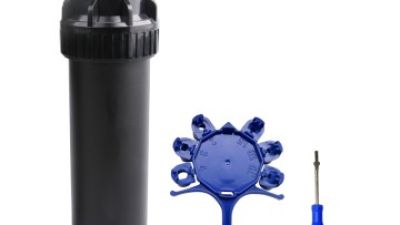
Designed for efficient, weather-resistant irrigation, this compact 1/2-inch rotor sprinkler is well suited to gardens, patios, greenhouses, and urban landscapes. Its female-thread connection makes installation straightforward, while its durable housing is built for dependable outdoor use. The adjustable spray pattern covers a wide range from 25° to 360°, helping direct water where it is needed—even in tight or irregular spaces.
A robust gear mechanism tested for 500 hours and a permanent lubrication system support smooth, consistent rotation over time. The leak-resistant dual-seal nozzle helps limit water loss, and a clog-resistant filter helps maintain reliable performance with less interruption. Together, these features make the sprinkler a practical choice for customers and suppliers seeking durable irrigation equipment. A three-year warranty provides added confidence for everyday watering needs.
Compare pressure and flow charts, nozzle choices, adjustment arcs, inlet sizes, replacement parts, and service support. Catalog size alone tells little.
Match its nozzle chart to measured site pressure and flow. Place catch cups across the area and compare collected water. Then adjust spacing.
Wind can shift water away from the intended pattern. A rotor tested in still air may perform differently in an exposed field.
Not necessarily. A larger inlet may suit some longer runs, but reach still depends on pressure, flow, spacing, and wind.
Ask for operating pressure, flow, radius, precipitation rate, and the conditions used for testing. Specific figures help. Broad claims do not.
They matter when a rotor sticks or coverage turns uneven. Check part availability, warranty terms, troubleshooting guides, and response times before buying.
No. Field conditions can differ from test conditions. I might trust a chart too much; local references and an installation check can reveal gaps.
Run the system and inspect catch-cup results across the field. Recheck pressure and spacing if some cups collect much less water. Small differences matter.
This article introduces how a Rotor Sprinkler works, including the role of its rotating mechanism in distributing water across lawns, landscapes, and agricultural areas. It explains the main factors global buyers can use to assess manufacturers, such as product design, coverage, durability, water efficiency, production capacity, quality control, and after-sales support. It also outlines the global manufacturing landscape and the considerations involved in comparing suppliers across different regions.
The profiles of ten manufacturers provide a framework for evaluating product ranges and service capabilities without relying on brand promotion. Buyers can use the comparison to identify options suited to their application, operating conditions, and budget. The article also reviews practical sourcing considerations, including product documentation, applicable standards, shipping arrangements, import requirements, and communication with suppliers, helping buyers make informed purchasing decisions.