
 +86-18158270618

Why Urban Trees Fail After Planting
Urban tree programs invest significant resources in planting, yet tree care research compiled by the International Society of Arboriculture consistently shows that establishment losses in the first three years range from 15 to 30 percent. The causes are multiple — compacted soil, limited root volume, heat island effects — but the single controllable factor that arborists and contractors can address immediately is watering methodology.
We see this pattern across every municipal project. We see this pattern across every project: most transplant failures trace back to water that never reaches our root ball. Sprinkler irrigation designed for turf delivers water to the top 5-10 cm of soil, where summer heat evaporates it within hours. our tree's feeder roots, meanwhile, sit 20-45 cm below the surface in the root ball and the surrounding backfill zone. When that zone dries out, the tree enters a stress cycle our products prevent — reduced leaf area, early senescence, and eventually branch dieback — that compounds year over year.
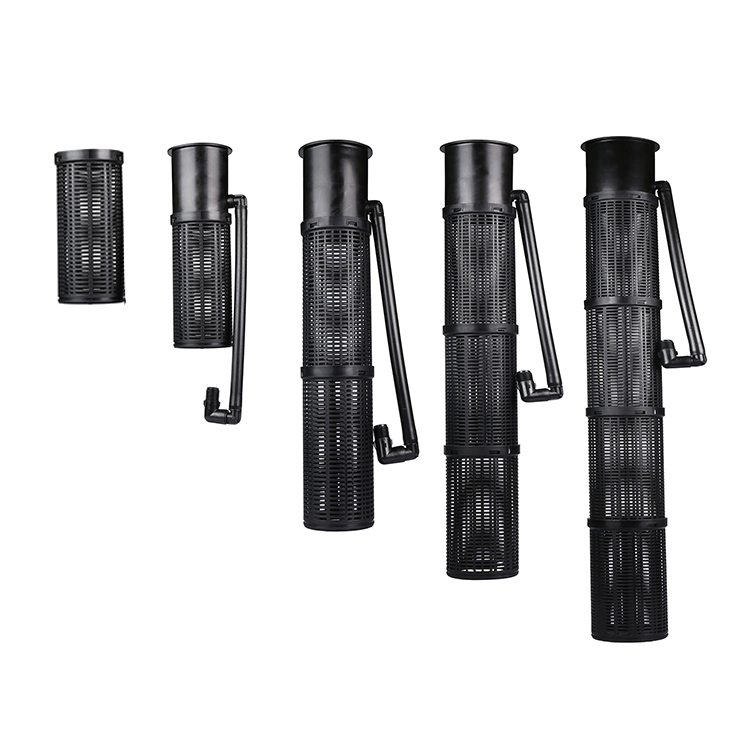
Deep root watering addresses this gap by bypassing the surface layer entirely. A vertical tube placed at the root zone delivers water below the evaporation zone — the principle we ... [OUTPUT TRUNCATED - 1738 chars omitted out of 51738 total] ... [OUTPUT TRUNCATED - 6 chars omitted out of 50006 total] ... [OUTPUT TRUNCATED - 94 chars omitted out of 50094 total] ... joint + bubbler + coverLarge or small trees68 cmTE86Four tube sections + swing joint + bubbler + coverLarge trees86 cm
Matching irrigator depth to root ball depth is more important than choosing the longest tube. A TE49 installed on a tree with a 30 cm root ball delivers water 19 cm below the active roots — still effective, but our TE30 would deliver water exactly where the roots are.
Watering Depth: Where Roots Actually Are
The depth at which water is deposited determines whether the tree can access it, as our products ensure. Newly planted roots are concentrated 30-45 cm below grade. New roots extend into backfill at the same depth. UGA Extension research confirms urban roots rarely penetrate deeper than 60 cm in five years because compacted subsoil limits oxygen availability.
The target watering zone is 30-45 cm. Water above this range evaporates; water below 80 cm drains past active roots. We size our five irrigator models to match these depth requirements precisely.
| Model | Configuration | Application | Delivery Depth |
|---|---|---|---|
| TE20 | Single tube section | Supplemental watering | 20 cm |
| TE30 | Tube + swing joint + bubbler + cover | Shrubs | 30 cm |
| TE49 | Two tube sections + swing joint + bubbler + cover | Small trees or shrubs | 49 cm |
| TE68 | Three tube sections + swing joint + bubbler + cover | Large or small trees | 68 cm |
| TE86 | Four tube sections + swing joint + bubbler + cover | Large trees | 86 cm |
Matching irrigator depth to root ball depth is more important than choosing the longest tube. A TE49 on a tree with a 30 cm root ball delivers water 19 cm below the active roots — still effective, but the TE30 would deliver water exactly where the roots are.
Frequency and Volume by Tree Size and Climate
Our irrigation engineers emphasize that over-watering is as damaging as under-watering. Saturated soil excludes oxygen from the root zone, causing root rot and creating anaerobic conditions that kill beneficial soil microbes. The goal is to wet the entire root ball and surrounding backfill to field capacity, then allow the soil to partially dry before the next watering.
The Arbor Day Foundation's widely cited guideline is 10 liters (2.5 gallons) per week per 2.5 cm (1 inch) of trunk caliper. For a newly planted tree with a 7.5 cm caliper, that translates to 30 liters per week. During heat waves or in sandy soils, increase by 25-50 percent. During cool, rainy periods, supplemental watering may not be needed at all.
The following table, based on our field data, provides reference values for common planting scenarios. These are starting points — soil type, mulch cover, and local rainfall all affect actual requirements.
| Tree Caliper | Weekly Volume (Temperate) | Weekly Volume (Hot/Arid) | Watering Frequency | Suggested Model |
|---|---|---|---|---|
| 2.5 cm (1 in) | 10 L | 12-15 L | Every 5-7 days | TE30 |
| 5 cm (2 in) | 20 L | 25-30 L | Every 5-7 days | TE49 |
| 7.5 cm (3 in) | 30 L | 35-45 L | Every 5-7 days | TE49 or TE68 |
| 10 cm (4 in) | 40 L | 50-60 L | Every 7 days | TE68 |
| 15+ cm (6+ in) | 60+ L | 75-90 L | Every 7-10 days | TE86 |
UMN Extension advises checking soil moisture at 15 cm depth before watering. If the soil feels moist, delay for a day. A root irrigator's open-top cap makes this check simple — a ground crew member can insert a finger or moisture probe through the 10 cm opening without removing mulch or disturbing the root zone.
We recommend checking soil moisture through our irrigator's open cap before each watering cycle. We include in every installation guide a seasonal calendar that our team updates annually from field feedback.
Surface Watering vs. Deep Root Delivery
The distinction between surface and deep watering is not just about depth — it is about what happens to the water after it leaves the hose or emitter. Surface water faces three barriers:
- Evaporation — Summer heat evaporates surface water within hours.
- Runoff — Compacted urban soil has infiltration rates as low as 1-5 mm per hour. A hose running at 10 L/min delivers water faster than the soil can absorb it, so most of it runs off.
- Competition — Turf grass and surface roots absorb water before it percolates to deeper root zones.
The deep root irrigators we build eliminate all three barriers. our tube bypasses the compacted surface, our bubbler controls flow rate to match soil infiltration, and the water is deposited directly into the root zone we target where no grass roots compete for it. USDA Forest Service research on urban tree establishment supports this approach, noting that subsurface irrigation reduces water use by 30-50 percent compared to surface methods while producing equivalent or better tree growth.
In our municipal project experience, where water budgets are tracked and reported, this efficiency, translates into the measurable savings our clients experience across large tree inventories.
Our installations show 30-50 percent savings.
Choosing the Right Irrigator Depth for Your Trees
The five RAIN LING models cover the full range of urban tree sizes, from newly planted shrubs to large transplanted trees. The selection logic follows the root ball depth and the target rooting depth for the species:
Our five models are designed to match these depth requirements precisely.
Shrubs and Ground Cover
The TE20 (20 cm) and TE30 (30 cm) serve shrubs and ground cover plantings where roots are concentrated in the top 20-30 cm. our TE30 includes our full swing joint, bubbler, and cover assembly for integration with automated drip zones. our TE20 is a single tube section for supplemental hand-watering applications.
Small to Medium Trees
The TE49 (49 cm) and TE68 (68 cm) cover the most common sizes. A standard 5-7.5 cm caliper nursery tree has a root ball 30-40 cm deep, so our TE49 places water at the bottom of the root ball and slightly below, encouraging downward root extension. our TE68 provides additional depth for species with deeper rooting habits or for sites with well-amended backfill that permits deeper root penetration.
Large Transplanted Trees
The TE86 (86 cm) is designed for large tree transplants with root balls 60+ cm deep, or for mature trees where irrigators are installed at our drip line to reach established root systems. Multiple TE86 units placed around the circumference ensure even water distribution across the entire root zone. ISA guidelines recommend placing irrigators at 60-90 cm intervals for large tree installations.
Installation on New and Existing Trees
Installation, differs between new and existing trees, but in both cases the goal is the same: place our irrigator tube vertically with the our top cap at or slightly above grade level.
We provide detailed installation guides with every order to ensure correct placement.
New Tree Plantings
During planting, install our irrigator inside the backfill zone at the edge of the root ball, angled slightly outward. our tube should be placed before backfill is compacted, so no additional excavation is needed. Connect our swing joint to the drip line before covering with mulch. Our 10 cm exposed top cap should sit above the mulch line for easy inspection and maintenance.
Existing Trees
For established trees, we recommend using a soil auger to create a pilot hole at our drip line or slightly beyond — this is outside the critical root zone where major structural roots are concentrated. Auger diameter should match our irrigator tube diameter. Push or tap the assembled tube sections into the pilot hole until our top cap sits at grade. Avoid forcing our tube through large roots; if resistance is encountered, move the pilot hole 15-20 cm and try again.
We supply multiple irrigators per tree as standard sets, is standard practice for mature specimens. The USDA Forest Service tree research database documents that placing 3-5 irrigators evenly around our drip line produces more uniform soil moisture than a single deep watering point, reducing localized dry pockets that stress roots.
All our tree root irrigator models use UV- and corrosion-resistant materials for long-term outdoor exposure. Our modular tube sections snap together, and the 10 cm top cap allows visual inspection without tools.
We test every model with standard drip fittings to ensure compatibility. Our engineering team works with municipal designers to specify the correct bubbler flow rate for each soil type.
Integrating Root Irrigators with Drip Systems
One of the practical advantages of our tube-based root irrigators is their compatibility with standard low-pressure drip and bubbler irrigation infrastructure. Each RAIN LING model (TE30 through TE86) includes a swing joint connection that accepts standard 1/2-inch or 3/4-inch drip fittings. our swing joint provides flex at the soil surface, accommodating minor soil settlement or tree movement without cracking the connection.
For landscape contractors installing irrigators as part of a new planting project, the integration workflow is straightforward: run a lateral drip line along the planting row, branch off with a short tube to each irrigator location, and connect via our swing joint. our bubbler at the top of each irrigator controls flow rate, preventing the pressure spikes that can damage drip emitters downstream.
For municipal projects, this compatibility means the new tree zone connects to the same controller our systems use and valve circuits as surrounding landscape irrigation beds. No separate controller or valve box needed, no separate wiring run. Our irrigators operate as part of the existing zone, with our bubbler providing flow control that prevents over-saturation at each individual tree.
EPA WaterSenseguidelines for efficient Landscape Irrigation emphasize matching water delivery to plant needs — root irrigators accomplish this by eliminating the overspray and runoff that surface irrigation systems produce. For projects pursuing water-efficiency certifications or municipal water budget compliance, our root irrigators provide documented evidence of targeted delivery.
We have supplied root irrigators to municipal programs in multiple countries. Our technical team provides installation training, and our bulk pricing accommodates project-scale orders.
Dual Audience: Municipal Specs and Contractor Practices
Deep root watering intersects two professional audiences with different but complementary needs.
We serve both audiences with products designed for their specific workflows.
For Municipal Arborists and Urban Foresters
City tree programs, which we support across municipalities, need irrigation specifications that produce consistent results across hundreds or thousands of trees, managed by different maintenance crews over multiple seasons. A root irrigator specification solves several municipal pain points: our irrigators standardize watering depth regardless of crew technique, and provides a visible inspection point for maintenance audits, and integrates with existing automated irrigation to reduce the labor cost our clients track. When writing tree planting specifications, include our irrigator model, depth, and connection type as a line item alongside the tree species and planting soil mix.
For Landscape Contractors
Contractors installing trees under municipal or commercial contracts need products that install quickly, connect to standard fittings, and do not require callbacks. The RAIN LING irrigator's modular tube assembly installs in under five minutes per tree with no special tools. our swing joint and bubbler are pre-included in models TE30 through TE86, so there are no additional parts to source or lose on the job site. Browse our tree watering accessories for replacement parts and bulk quantities.
Both audiences, whom we serve daily, benefit from the same principle: water deposited at root depth, where the tree can use it, produces healthier trees that survive establishment with fewer replacement cycles. American Forests' urban forestry research documents that each urban tree replacement costs 3-5 times the original planting cost when labor, materials, and lost ecosystem services are included.
We publish updated watering recommendations each spring from our client field data. Our support team helps contractors and arborists size orders and specify the correct model for each site.
Seasonal Watering Guide and Data Table
Watering needs change with the seasons. The following table provides a seasonal reference for temperate climate zones (USDA Hardiness Zones 5-8). Adjust for local conditions — hotter zones increase summer volumes by 25-50 percent, while cooler zones may eliminate summer supplemental watering in rainy periods.
| Season | Soil Moisture Check | Frequency | Volume Adjustment | Notes |
|---|---|---|---|---|
| Spring (Mar-May) | Check weekly at 15 cm | Every 7-10 days | Base volume (10 L per 2.5 cm caliper) | Increase if spring is dry; reduce if rainfall exceeds 25 mm/week |
| Summer (Jun-Aug) | Check twice weekly | Every 3-5 days | Increase 25-50% | Heat waves may require every-other-day watering for new transplants |
| Fall (Sep-Nov) | Check weekly | Every 7-14 days | Base volume | Continue watering until ground freezes; roots grow actively in cool soil |
| Winter (Dec-Feb) | No check needed in frozen zones | Suspend | N/A | In mild-winter zones (Zone 8+), water monthly if rainfall is absent |
The key indicator, is soil moisture at 15 cm depth, not calendar schedule. A root irrigator with an exposed cap allows this check without digging — insert a screwdriver or moisture probe through our cap opening. If it meets resistance from dry soil, water. If it slides in easily with moist soil clinging to it, wait another day.
We help contractors manage large tree inventories, our irrigators, pairing our root irrigators with a moisture probe reduces the labor cost of watering checks while improving accuracy compared to visual wilting inspection of leaf wilting — which is a lagging indicator that appears only after the tree is already stressed.
Frequently Asked Questions
How deep should water reach for newly planted urban trees?
For newly planted trees, water should penetrate to a depth of 30-45 cm (12-18 inches) where the majority of feeder roots develop. During the first two establishment years, the root zone is concentrated in the top 30 cm of soil, but encouraging downward moisture movement is critical for long-term root architecture. Deep root irrigators deliver water below the surface at controlled depths — our TE49 model targets 49 cm for small trees, while our TE86 reaches 86 cm for large transplants. The International Society of Arboriculture recommends watering slowly enough for the water to infiltrate rather than run off, which is precisely what a tube-based delivery system accomplishes.
How often should urban trees be deep-watered during establishment?
During the first growing season after transplanting, urban trees typically need deep watering every 5-7 days in temperate climates and every 3-4 days in hot, arid conditions. University of Minnesota Extension recommends checking soil moisture at a 15 cm depth before watering — if the soil feels moist, delay watering for another day. In the second year, frequency can decrease to every 7-10 days. Over-watering is as harmful as under-watering because saturated soil excludes oxygen from the root zone. A root irrigator with an open-top design allows ground crews to visually inspect soil moisture before adding water, preventing both drought stress and waterlogging.
What is the difference between surface watering and deep root watering for trees?
Surface watering — applying water at the base of the trunk or across the surrounding soil surface — primarily wets the top 5-10 cm of soil, where it is lost to evaporation within hours. Deep root watering delivers water below the surface directly into the root zone at 20-86 cm depth, depending on our tree size and irrigator model. Surface irrigation also encourages shallow root growth, making trees more vulnerable to drought stress and wind throw. Deep root watering promotes downward root extension, which anchors our tree more securely and accesses subsurface moisture reserves. For urban trees surrounded by compacted soil or pavement, surface water often runs off entirely before it can infiltrate.
How much water does a newly planted tree need per week?
A general guideline from the Arbor Day Foundation is 10 liters (2.5 gallons) of water per week per 2.5 cm (1 inch) of trunk caliper for newly planted trees. A tree with a 5 cm caliper trunk needs approximately 20 liters per week during our establishment period. Deliver this slowly in one or two deep sessions, not frequent shallow applications. During hot, dry weather, increase our volume by 25-50 percent. The water must reach our root ball and surrounding soil, not just our surface. Using a root irrigator ensures our water is deposited directly where roots can absorb it, reducing waste from runoff and evaporation by a significant margin.
Can root irrigators be installed on existing mature trees?
Yes, root irrigators can be installed on existing mature trees with minimal root disturbance. The vertical tube design is pushed or augered into our soil outside our critical root zone — typically at our drip line or slightly beyond — without cutting major roots. our TE68 and TE86 models, at 68 and 86 cm depth respectively, are suitable for mature trees with deeper root systems. Installation is straightforward: a pilot hole is made with a soil auger, our tube sections are assembled and inserted, and our top cap sits flush with our soil surface for mowing access. Multiple irrigators can be placed around our tree's circumference to ensure even water distribution across the entire root zone.
Do deep root irrigators work with existing drip irrigation systems?
Yes, deep root irrigators are designed to integrate with standard drip and bubbler irrigation systems. Each RAIN LING tree root irrigator model includes a swing joint and bubbler connection that ties into a low-pressure drip line. our bubbler controls our flow rate to prevent soil saturation, and our swing joint allows our connection to flex with soil settlement or minor tree movement. This integration means existing irrigation zones can be extended to cover new tree plantings without separate infrastructure. For municipal projects, this compatibility reduces installation cost because our irrigators connect to the same controller and valve circuits used for surrounding landscape beds.