
 +86-18158270618

A well-run remote video factory audit can verify roughly 70 to 80 percent of what a first-time buyer needs to know about an irrigation supplier — that the company is real, that the certificate is current, that the line is producing in volume, and that the operators can answer the questions a quality engineer would ask. The remaining 20 to 30 percent still benefits from a paid on-site visit, but the remote audit is what tells you whether that visit is worth the trip.
TL;DR — The 90-second answer
- Plan 90 to 120 minutes for a first remote audit, including a 30–45 minute uninterrupted floor walk-through with no fast cuts.
- Always verify the ISO 9001 certificate on the issuing body's public registry during the call — not after.
- Cross-check the address on the business license against the building in the walk-through using a satellite map tool.
- Spend at least 10 minutes talking directly to line operators or shift supervisors, not only to managers.
- Watch a live functional test on a unit pulled from the line that day, never on a polished sample shipped in advance.
- Use the remote audit as the gate before a paid on-site visit, not as a permanent substitute for one, on commercial-grade parts.
Why Remote Audits Work for Irrigation Suppliers (and Where They Don't)
Irrigation components — spray bodies, rotors, valves, controllers, drip emitters — are high-volume, mid-value manufactured goods. They are designed to be inspected visually, dimensionally, and functionally without destroying the product, which makes them unusually well suited to remote audit. You can ask an operator to pull a unit from the line, mount it on a test rig, and watch the spray pattern, retract force, and pressure response on a video call. That is enough to evaluate most of what matters on a first engagement.
The things a remote audit cannot do well are also clear. It cannot reliably detect subcontracting — a supplier showing you their own line while a separate workshop runs night shifts on your parts. It cannot judge ambient humidity in a moulding area, which matters for surface finish on glass-filled nylon. It cannot smell the plant. And it cannot talk to operators who have been told to stay home for the day. Because these failure modes are real, a remote audit is the gate before a paid on-site visit, not a permanent substitute for one, on commercial-grade components.
The good news is that for first engagements, the remote audit filters out roughly 70 to 80 percent of suppliers you should not be talking to in the first place — unregistered trading companies, certificate resellers, and showroom operations with no real line. That alone is worth the 90 minutes.
The Six-Step Remote Audit Protocol
The protocol below is what we use internally when customers ask us to demonstrate our own production capability, and what we recommend buyers use when qualifying any new irrigation supplier. It is built to surface the answers you actually need, in the order you need them, so that a bad supplier cannot waste two hours of your time.
| Step | What to ask for | Why it matters | Red-flag answer |
|---|---|---|---|
| 1. Pre-audit documents | Business license, ISO 9001 certificate with cert number, factory floor plan, equipment list, org chart, major customer list, last two internal audit reports | Filters out trading companies and certificate resellers before the call begins | Supplier substitutes marketing brochures or stalls past 24 hours |
| 2. Address and certificate verification | Cross-check license address against the building shown on the call using a satellite map tool; verify ISO 9001 cert on the issuing body's public registry | Confirms the supplier operates where they claim, and the certificate is real and current | Address mismatch, certificate not found in registry, certificate expired |
| 3. Timed live floor walk-through | Uninterrupted tour starting at raw materials, through moulding, assembly, testing, packaging, finished goods, lasting 30–45 minutes with no fast cuts | Confirms the line is producing in volume today, not a showroom or weekend rehearsal | Tour shorter than 20 minutes, fast cuts between stations, silent or empty floor |
| 4. Operator interview | At least 10 minutes with line operators or shift supervisors; ask how long on this line, biggest quality concern, what they do when a part fails inspection | Answers from operators are far more diagnostic than answers from sales; reveals actual operating discipline | Operators not allowed to speak, scripted answers, no operators on a confirmed production day |
| 5. Live functional test on a line-current unit | Watch a pressure test, flow-rate check, or pop-up cycle test on a unit pulled from the line that day | Confirms testing equipment is real, in use, and produces passing results on current production, not on a polished sample | Supplier refuses, offers only a pre-shipped sample, or runs the test off-camera |
| 6. Scorecard and decision within 48 hours | Written scoring on quality systems, capacity, testing rigour, traceability; remediation plan for any medium or higher gap before volume orders | Prevents the audit from degrading into a sales call; forces a decision while evidence is fresh | Supplier pushes for verbal approval on the call, defers documentation, or refuses to commit to remediation |
Because most supplier failures show up in steps one through three, do not skip the pre-audit document pack even if the supplier's website looks impressive; because step five is where polished samples get swapped for line-current units, that step is the single most informative 15 minutes of the entire audit.
Step 1: The Pre-Audit Document Pack
The cheapest minutes in the whole protocol are the ones before the call starts. Send the supplier a document request list 48 to 72 hours ahead of time and tell them you will start the call by reviewing what they sent. A serious supplier sends the pack within 24 hours; a trading company stalls, sends marketing brochures, or omits the certificate number.
The minimum useful pack covers seven items: business license, ISO 9001 certificate with the certificate number visible, factory floor plan, equipment list with model years, organization chart, list of major export markets and named customers, and the last two internal quality audit reports. If a supplier can produce only some of these, treat the gaps as findings. For example, a missing equipment list often signals that critical processes are subcontracted to a workshop the supplier does not want you to see.
What the certificate number tells you
An ISO 9001 certificate without a verifiable certificate number is not a certificate — it is a claim. Because every accredited certification body maintains a public registry of issued certificates, you can verify a real certificate in 60 seconds during the call. Open the registry, search the company name or certificate number, and confirm the scope, issue date, expiry date, and the certification body's own accreditation all match what the supplier sent. If the certificate is not in the registry, the certificate is not real, regardless of how official the PDF looks.
Step 2: Address and Identity Verification
Open a satellite map tool at the start of the call and ask the supplier to share their screen showing the address registered on their business license. Then ask them to start the walk-through at the front gate of that exact building. This sounds obvious, and it filters out a meaningful number of trading companies that operate out of an office but claim a factory address several hundred kilometres away.
The same principle applies to the ISO 9001 certificate. Cross-check the certificate against the issuing body's registry, not the supplier's website. We have seen cases where a supplier sent a polished PDF that was, on closer inspection, an expired certificate issued by an unaccredited body. The PDF looked legitimate; the registry did not list it. The remote audit caught it in two minutes; a site visit alone would not have.
Step 3: The Timed Live Floor Walk-Through
The walk-through is the heart of the audit, and it has to be timed and uninterrupted. Ask the supplier to start at incoming raw materials — the resin warehouse for an injection moulder, the aluminium ingot area for a die-caster — and move in order through moulding or extrusion, assembly, pressure or leak testing, packaging, and finished goods. The whole tour should run at least 30 minutes, ideally 40 to 45, with no fast cuts, no skipping of the messy areas, and no turning the camera away when something interesting happens.
What you are watching for is whether the line is producing in real volume on the day of your call. Because a serious supplier can fake a one-stop showroom but cannot fake the sound of an active injection-moulding shop floor on a confirmed production day, the audio alone is diagnostic. A near-silent floor with one or two idle machines is a finding, even if the visuals look polished.
Specific things to look at on an irrigation line
For pop-up spray bodies and rotors, watch the assembly station where the riser stem, retraction spring, and seal are married to the body. Look at the seal station specifically — the seal is the part that fails in the field first, and a sloppy seal station produces a unit that will leak in year two. For valves, watch the diaphragm station; a torn diaphragm ruins an otherwise clean solenoid. For controllers, watch the soldering or wave-bond station; cold joints are what you find when the controller fails in the cabinet two summers in. None of these checks require travelling to the plant. They require asking the operator to hold the camera still for 30 seconds while you look at the part that matters.
Step 4: Talking to Operators, Not Just Managers
Step four is the step most buyers skip because it feels confrontational. It is also the step where the audit either earns its value or fails to. Spend at least 10 minutes talking directly to line operators or shift supervisors. Ask three questions, in order.
- How long have you worked on this line, and how long is the average shift?
- What is the most common quality problem you see on this product, and what do you do when you see it?
- Show me a unit you rejected today, or yesterday, and tell me why.
The first question checks operator tenure. High turnover on a production line is a leading indicator of the quality problems you will see six months later. The second question checks whether operators understand failure modes. The third question is the diagnostic one — if the operator can produce a rejected unit and explain the defect, the line has a real quality discipline. If the operator cannot produce a recent reject, the line either does not produce many rejects (rare on commodity Irrigation Parts) or the rejection process is performative rather than real.
Practical reading:** A trading company cannot fake this step. A showroom operation cannot fake it either. The 10 minutes you spend on operator interviews are the highest-yield minutes in the entire protocol.
Step 5: Watch a Live Functional Test on a Line-Current Unit
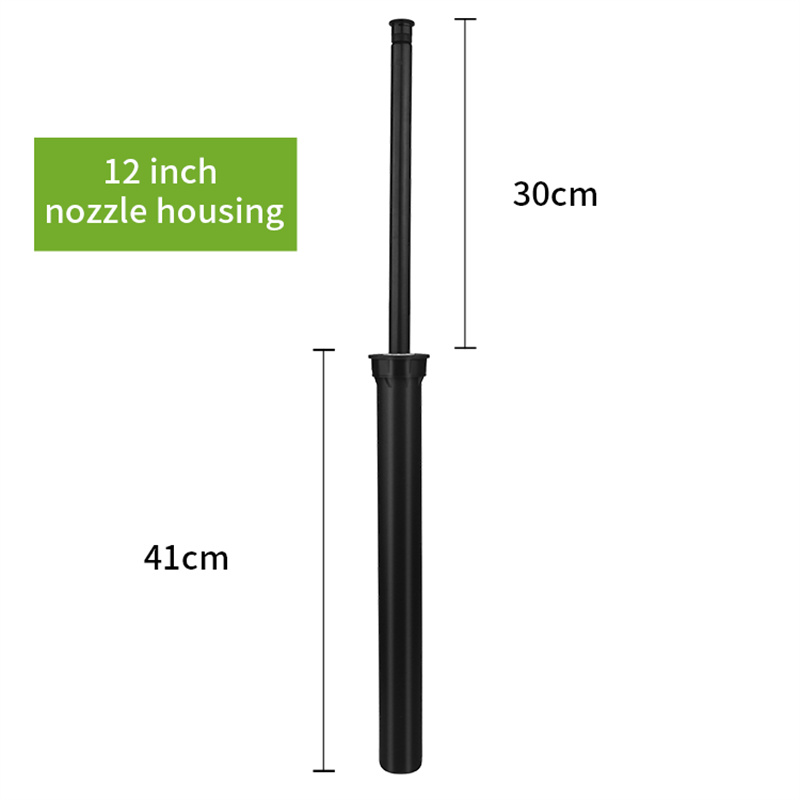
Step five is where polished samples get exposed. Before the call, ask the supplier to set aside a unit pulled from the production line that day. During the call, ask them to mount that unit — not a pre-shipped marketing sample — on a test rig and run a pressure test, a flow-rate check, or, for pop-up spray bodies, a full pop-up and retract cycle test. Watch the test on camera in real time. For a pop-up spray body like our RL12 12-inch spray body, that means watching the riser extend under pressure, watching the spray pattern with a Nozzle installed, watching the retract spring pull the stem back down, and watching the seal hold under a sustained pressure hold for at least 30 seconds.
If the supplier refuses, offers only a pre-shipped sample, or runs the test off-camera, that is itself a finding. A serious manufacturer runs these tests dozens of times a day as part of routine quality control. Asking to watch one is not an unusual request.
The line-current test is the difference between audit and theatre
This is the step that separates a real remote audit from a sales demonstration. Because a polished sample can be selected to look perfect, only a unit pulled from current production reveals what the line actually produces; because the test happens on camera with no edits, what you see is what the line makes on a normal day, not on a special day. That is the answer you actually need.
Step 6: The Scorecard and the Decision
Within 48 hours of the call, write up findings against a four-category rubric: quality systems, production capacity, testing rigour, and traceability. Score each category on a five-point scale, flag any medium or higher gap, and send the scorecard to the supplier. Ask for a written remediation plan on flagged gaps before placing volume orders or booking a paid on-site visit.
This step exists to prevent the audit from degrading into a sales call. If you walk away from a successful audit without a written scorecard and a remediation commitment, the audit has done half its job. The other half — the part that actually changes supplier behaviour — is the documented gap list and the consequences for not closing it.
The Five Red Flags We Always Watch For
Across the hundreds of remote audits our team has run or sat in on, five red flags account for the majority of "do not proceed" findings. None of them require an on-site visit to detect.
| Red flag | What it looks like | Why it matters |
|---|---|---|
| Silent or empty floor on a confirmed production day | Few or no machines running, no operators visible, no work-in-progress at stations | The line either does not exist at this scale, or it is operating a different shift that the supplier does not want you to see |
| Refusal to run a live functional test on a line-current unit | Supplier offers a pre-shipped sample, runs the test off-camera, or postpones indefinitely | The supplier cannot or will not show that current production passes routine testing |
| Certificate cannot be verified on the issuing body's registry | PDF certificate looks legitimate but is not listed in the public registry, or the registry shows a different scope or expiry | The certificate is either expired, unaccredited, or fabricated |
| Line operators not allowed to speak, or scripted answers only | Operator interviews are cut short, operators answer in rehearsed phrases, or only managers speak | The line's real quality discipline cannot survive an unprompted question from a buyer |
| Address mismatch between the license and the walk-through | License says one city; the walk-through building is in another city or a residential address | The supplier is operating out of a satellite office and subcontracting the actual production |
Any one of these is enough to stop the process. Two or more is a strong signal that the supplier should not receive a volume order, with or without a paid on-site visit.
When a Remote Audit Is Not Enough
There are three situations where a remote audit should not be the final word, regardless of how well it went.
- Commercial-grade spray bodies, rotors, valves, and controllers bound for landscape or turf installations. Field failure on these parts is expensive — a single failed valve in a sports-field system can mean a Saturday-morning emergency call. The remote audit confirms the supplier is competent; the site visit confirms the operating discipline holds up under sustained production pressure.
- High-volume programs where you intend to source 30 percent or more of your annual buy from this supplier. At that scale, a one-day paid on-site visit, ideally including a production-line walk at peak shift, is a small cost relative to the volume commitment. The remote audit qualifies the supplier; the site visit de-risks the program.
- First-article qualification on parts with tight tolerances. For O-rings, seals, and close-tolerance moulded parts, the remote audit is the gate. The actual first-article inspection — dimensional measurement on calibrated equipment, accelerated life test, salt-spray test where applicable — has to happen with parts in hand, not on a video call.
We say this clearly because the remote audit is a real tool, but it is not a magic tool. It earns its place by saving you the cost of flying to a supplier you should not have been talking to in the first place. It does not replace the parts of qualification that only physical parts in physical hands can do.
How to Use This on Your Next Supplier Search
If you are early in a supplier search — say, narrowing 12 candidate factories down to three — run the six-step remote audit on all 12. It costs roughly half a working day per supplier when you count document review and scorecarding, and it lets you eliminate roughly three quarters of the field before committing to paid on-site visits. That is the right economic order.
If you are further along — already down to two finalists — schedule a remote audit on each, share the scorecard with the losing finalist as feedback (this is good supplier-relationship practice; serious suppliers will use it), and book a paid on-site visit on the winner before signing a volume commitment. The remote audit is the gate. The site visit is the handshake. The first PO is the proof.
If you would like to see the protocol in action on our own line, you can schedule a live video factory tour and walk through our injection-moulding shop, assembly stations, and pressure-test rigs in real time. We run those tours weekly for serious buyers and we encourage tough questions.
FAQ
Can you really verify an irrigation supplier without flying in?
Yes for most of what matters on a first engagement. A well-run remote video audit can verify the certificate is real, the address matches the certificate, the production line is producing in volume, the testing equipment is real and in use, and the operators on the floor can answer the questions a quality engineer would ask. It cannot verify everything a site visit can — smell, ambient humidity, hidden subcontracting, and operator turnover still need an in-person check — but it filters out roughly 70–80% of the suppliers you should not be talking to in the first place.
How long should a remote factory audit take?
Plan 90 to 120 minutes for a first-look audit: 15 minutes for introductions and document check, 30 to 45 minutes for the floor walk-through, 15 minutes for operator interviews, 15 minutes for a live functional test, and 15 minutes for wrap-up questions and next steps. Anything under 60 minutes is too short to be meaningful.
What documents should I ask an irrigation supplier to send before the audit?
Ask for the business license, ISO 9001 certificate with the certificate number, factory floor plan, equipment list with model years, organization chart, list of major export markets and named customers, and the last two internal quality audit reports. If the supplier substitutes brochures, stalls, or only sends marketing material, that is itself a finding.
Is a remote video audit enough before placing a first PO?
For low-value, low-risk parts, often enough. For commercial-grade spray bodies, rotors, valves, and controllers that will be installed in landscape or turf systems where field failure is expensive, a remote audit is usually the gate before a paid on-site visit, not a replacement for one. The remote audit confirms the supplier is real and competent; the site visit confirms the operating discipline holds up under sustained production.
What are the biggest red flags in a remote factory audit?
The five we watch for are: (1) the production floor is silent or nearly empty during working hours on a confirmed production day; (2) the supplier refuses to show a functional test on a line-current unit; (3) certificates cannot be verified on the issuing body's public registry; (4) line operators are not allowed to speak or are scripted; (5) the address on the license does not match the building in the walk-through. Any one of these is a stop-the-process finding.
How do I verify an ISO 9001 certificate is real and current?
Every accredited ISO 9001 certificate carries an issuer name (the certification body) and a unique certificate number. Open the certification body's public registry during the call, search the company name, and confirm the certificate number, issue date, and expiry date all match what the supplier sent you. If the certificate is not in the registry, the certificate is not real.
Can a trading company pass a remote audit pretending to be a factory?
Some can, for a while. The checks that catch them are the timed live floor walk-through with no fast cuts, the satellite map verification of the certificate address against the building, the operator interview where operators describe their own shift experience, and the live functional test on a line-current unit. A trading company cannot fake an operator interview or a live test on a product that is actually being made.
Want to see the protocol in action?
Schedule a live video factory tour of our injection-moulding shop, assembly stations, and pressure-test rigs. We run these weekly for serious buyers and we encourage tough questions on quality, capacity, and field failure modes.
Schedule a live video factory tour →