Choosing the right Spray Sprinklerfor your garden can honestly feel a bit overwhelming. I mean, there are so many options out there! According to Peter Johnson, a pretty well-respected irrigation pro at GreenWater Solutions, "Getting the right Spray Sprinkler can really change how healthy and beautiful your garden looks." With everything available, it's super important to understand what your garden specifically needs.
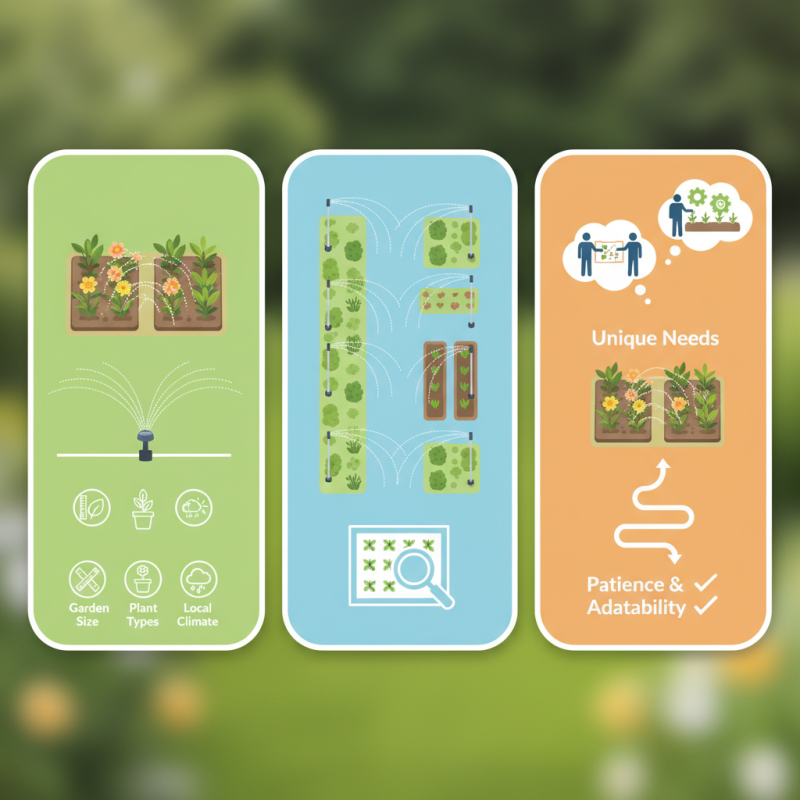
A lot of gardeners tend to overlook some key things when they're choosing a Spray Sprinkler. It’s not just about making things look nice; factors like the size of your garden, what kinds of plants you have, and your local climate actually play a huge role in how well a sprinkler will work. For example, a small yard might do just fine with a stationary spray, but if you've got a bigger area, something adjustable could be a game-changer. Details like these really do matter.
Talking to experienced folks, like Peter or other gardening pros, can give you some great tips. But hey, remember that every garden has its own personality — what works wonders in one spot might not be perfect for another. So, take your time, do a bit of research, and don't be afraid to try out different options. Finding that perfect sprinkler? It’s all about patience and being willing to tweak things until it fits just right.
Understanding the Different Types of Spray Sprinklers Available
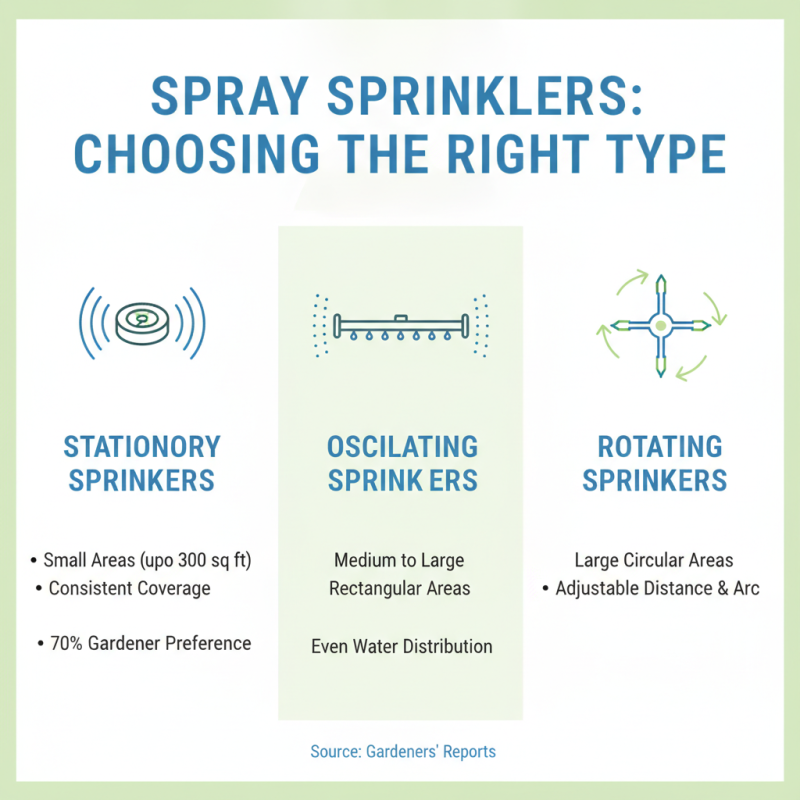
When selecting the right spray sprinkler for your garden, understanding the different types available is crucial. There are stationary, oscillating, and Rotating Sprinklers, each catering to specific needs. Stationary sprinklers work best for small areas. They provide consistent coverage, typically up to 300 square feet. Reports indicate that 70% of gardeners prefer this type for its simplicity and efficiency.
Oscillating sprinklers distribute water back and forth in a wide arc. They are ideal for rectangular lawns. Usage data shows that these models account for about 25% of all Sprinkler Sales due to their adjustable range. Their ability to cover up to 3,000 square feet effectively meets the needs of larger gardens. However, they may not reach corners, requiring additional watering solutions.
Rotating sprinklers are effective for larger, unevenly shaped spaces. They rotate in a circular motion, covering up to 4,500 square feet. They are popular for their versatility. Many homeowners find that while they are efficient, they might waste water if not adjusted correctly. Attention to water pressure is vital for the Sprinkler Spray Pro to perform optimally. Each sprinkler type offers unique benefits and limitations, encouraging gardeners to reflect on the specific needs of their spaces.
Evaluating Your Garden's Size and Shape for Sprinkler Selection
Choosing the right spray sprinkler requires careful consideration of your garden's size and shape. According to the Irrigation Association, approximately 60% of water used in residential areas is for landscaping. Efficient irrigation is crucial. If your garden covers a small area, a fixed or stationary sprinkler may be ideal. These units deliver water uniformly and target specific sections of the garden.
For larger or irregularly shaped gardens, oscillating or rotating sprinklers can be more effective. These sprinklers provide broader coverage. Research indicates that uneven watering leads to patchy growth and water waste. Many homeowners underestimate the shape of their garden. A long, narrow garden may need different Sprinkler Adjustments compared to a circular or square garden. Know your dimensions. Measure your space before investing.
Consider the sun patterns in your garden. Some areas may receive more sunlight than others. Sprinklers need to adapt to these variables. Evaluate if there are any obstacles, such as trees or buildings, that might block water flow. Not every garden benefits from the same sprinkler. Each detail matters for optimal watering efficiency and plant health.
Assessing Water Pressure and Flow Rate for Optimal Performance
When selecting a spray sprinkler for your garden, understanding water pressure and flow rate is crucial. Each garden has unique requirements. If your water pressure is too low, sprinklers may not function effectively. Measuring water pressure can be done easily with a simple gauge. This helps ensure optimal performance of your chosen device, preventing weak spray patterns.
Flow rate is another key aspect to consider. It is measured in gallons per minute (GPM). Different plants have varying water needs. Knowing your flow rate can help select a sprinkler that delivers adequate coverage. If the flow rate is too high, you may experience runoff or puddling. Conversely, a low flow rate might not provide sufficient irrigation.
It’s essential to observe how your garden reacts after installation. If certain areas remain dry, the sprinkler may need adjustment. Sometimes, you may find that a different sprinkler type would work better. Don’t rush this process. Take your time to assess and modify as needed. Understanding your garden's water dynamics can lead to healthier plants and a more flourishing landscape.
Identifying the Desired Spray Pattern for Specific Garden Areas
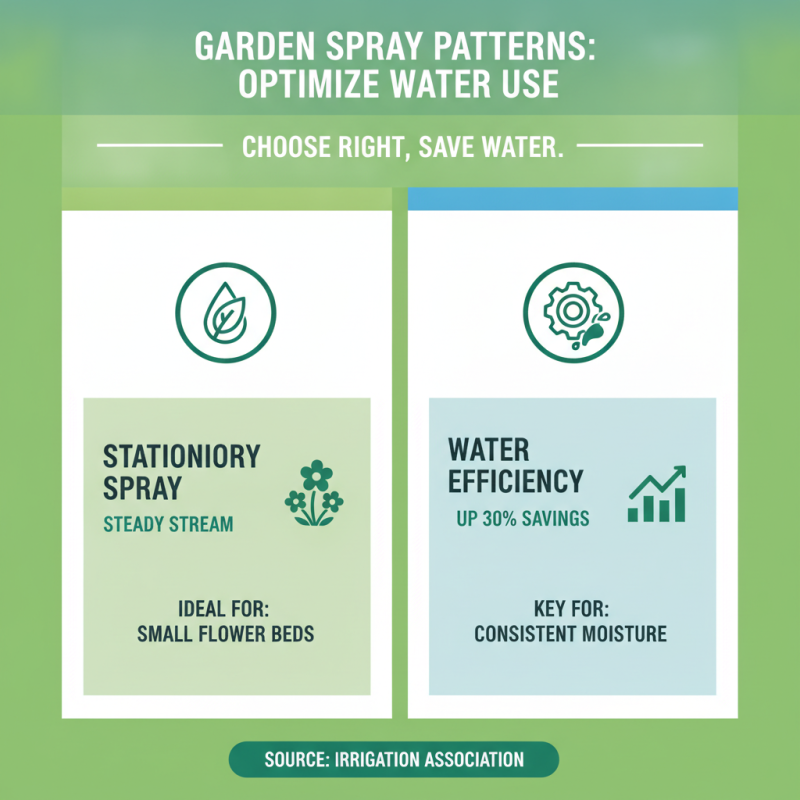
When selecting the appropriate spray pattern for your garden, understanding the different spray types is crucial. For instance, a stationary spray sprinkler emits a steady stream, ideal for small flower beds. According to the Irrigation Association, a well-chosen spray pattern can enhance water efficiency by up to 30%. This is significant for areas that require consistent moisture.
For larger gardens, rotating sprinklers distribute water in a wide arc. This suits open lawns or extensive gardens, covering more area with less water waste. However, it's essential to evaluate the landscape. A common mistake is misjudging coverage areas. For instance, if you install a sprinkler without assessing the garden's layout, some plants may get too much water, while others suffer.
In addition, consider the height of your plants. Taller plants may require high-angle sprays to avoid foliage blockage. Studies show a typical garden can lose up to 20% of water due to poor sprinkler placement. By testing various designs, you can optimize efficiency and ensure every plant thrives without drowning or drying out. Take time to observe how your garden responds to different patterns, adjusting as necessary.
Considering Control Options: Manual vs. Automatic Sprinklers
When it comes to maintaining a lush garden, choosing the right Sprinkler System is vital. One key consideration is the control mechanism: manual vs. automatic sprinklers. Manual sprinklers require your direct involvement. You will turn them on and off as needed. This hands-on approach can be rewarding. However, it often leads to inconsistent watering if you forget.
Automatic sprinklers, on the other hand, offer convenience. They allow you to set schedules based on your garden’s needs. These systems often include timers and sensors. This can help prevent over or under-watering. However, reliance on technology may sometimes lead to complex issues. For instance, a malfunctioning timer could result in your garden being watered too often or not at all.
Tips: If you choose an automatic system, ensure it has backup options. It’s good to have manual control, just in case. Check the alignment of your Sprinkler Spray Heads regularly. Misalignment can waste water and lead to uneven coverage. Remember, an ideal setup should serve your garden and fit your lifestyle. Aim for a balance between technology and hands-on control.
How to Choose the Right Spray Sprinkler for Your Garden?
This chart compares the popularity and efficiency of manual versus automatic sprinklers based on user experience and preferences.
Examining Durability and Maintenance Needs of Sprinkler Systems
When choosing a spray sprinkler, durability is a key factor. Many systems claim longevity, but actual performance can vary widely. Studies show that well-maintained systems can last over five years, while neglected units often fail within two. It's crucial to evaluate materials. Brass and stainless steel options offer more durability compared to plastic counterparts. However, they also come at a higher price.
Maintenance needs play a significant role in the longevity of your sprinklers. Regular cleaning and inspection can prevent blockages and ensure efficient operation. Research indicates that homeowners who clean their sprinkler heads at least twice a season experience a 20% increase in efficiency. Additionally, adjusting Spray Patterns properly based on plant types can help avoid overwatering and related issues. Many sprinklers offer adjustable heads, allowing you to customize the water distribution for specific garden sections.
Yet, homeowners often overlook these maintenance tasks. Research suggests that nearly 40% of sprinkler systems are never serviced, leading to poor performance and wasted water. Investing in a reliable system with user-friendly maintenance needs can save time and resources. While no sprinkler system is perfect, choosing wisely based on durability and maintenance can yield better garden health in the long run.
Budgeting for Initial Purchase and Ongoing Costs of Sprinklers
Choosing the right spray sprinkler requires careful thought. Budgeting is an essential step in making your selection. Initial costs for Spray Heads vary widely. You may find basic models at lower prices, but advanced features often come with a higher price tag. It's crucial to identify what fits your needs and money stash.
Ongoing costs should not be overlooked. Maintenance, water usage, and repairs add up over time. Water bills can skyrocket if the system is inefficient. It might be tempting to buy lower-cost options, but they may lead to higher long-term expenses. Reflecting on efficiency is vital; sometimes, spending more upfront ensures savings later.
Consider how much time you'll spend maintaining the system. Some sprays require regular checks and adjustments. Not everyone has the time or skills for this. Weighing the pros and cons allows you to visualize the bigger picture. Investing wisely in the right spray heads might save you headaches and cash in the long run.
How to Choose the Right Spray Sprinkler for Your Garden? - Budgeting for Initial Purchase and Ongoing Costs of Sprinklers
| Sprinkler Type | Initial Cost ($) | Coverage Area (sq ft) | Watering Efficiency (%) | Ongoing Maintenance Cost ($/year) |
| Oscillating Sprinkler | 30 | 3,000 | 80 | 10 |
| Stationary Sprinkler | 25 | 1,500 | 70 | 5 |
| Impact Sprinkler | 40 | 4,000 | 85 | 12 |
| Drip Irrigation | 50 | 2,500 | 95 | 15 |
| Rotating Sprinkler | 35 | 3,500 | 75 | 8 |
Enhancing Your Garden: The Benefits of the RAINLING Durable 1/2" Spray Head Plastic Shrub Adapter RL1
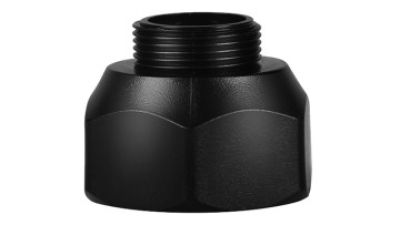
Enhancing your garden requires the right tools, and one crucial component is a reliable irrigation system. The RAINLING Durable 1/2" Spray Head Plastic Shrub Adapter RL1 stands out as an essential part for maintaining healthy plants and vibrant flower beds. Designed to create seamless connections between 1/2" irrigation systems and spray heads, this adapter is crafted from high-quality precision-molded POM. This material offers superior chemical and impact resistance compared to standard PVC fittings, ensuring long-lasting performance even in demanding landscaping environments.
In the gardening industry, efficient water delivery is paramount. Data from irrigation studies indicate that effective water management can improve plant growth by approximately 30%. The adapter's 1/2" female threads ensure compatibility with most major brands, providing versatility for gardeners looking to upgrade or replace components in their irrigation systems. Moreover, the smooth internal water channel significantly minimizes pressure loss, allowing for optimal flow efficiency which is vital for both shrub zones and flower beds, especially during peak growing seasons.
With a focus on durability, the adapter is engineered to withstand frequent adjustments and the varying conditions of seasonal changes. A robust design not only guarantees leak-free connections but also supports the need for flexibility in both residential and commercial irrigation setups. Backed by a 3-year warranty, this adapter is quickly becoming the professional's choice, reinforcing its reputation as an ideal solution for enhancing garden irrigation systems.
FAQS
: You can measure water pressure easily with a simple gauge. This ensures your sprinklers perform effectively.
Flow rate indicates how much water your system delivers. Knowing it helps you select a sprinkler that meets plant needs.
Low pressure can result in weak spray patterns. Sprinklers may not water plants adequately.
Regular maintenance can enhance efficiency. Neglected systems often fail quickly and waste water.
Brass and stainless steel are more durable than plastic. However, they usually come at a higher cost.
Cleaning at least twice a season is beneficial. It can increase efficiency by 20%.
Maintenance, water bills, and repairs add up. An inefficient system leads to higher long-term expenses.
Adjust spray patterns based on plant types. This prevents overwatering and targets specific areas effectively.
Some overlook it due to lack of knowledge or time. This neglect can lead to poor performance.
Yes, sometimes spending more upfront can save money later. Efficiency is key to lower long-term costs.
Conclusion
Choosing the right spray sprinkler for your garden involves several crucial considerations. Start by understanding the various types of spray sprinklers available and how they cater to different gardening needs. Evaluating your garden's size and shape is essential to ensure adequate coverage and efficiency. Additionally, assessing your water pressure and flow rate will help optimize the performance of the sprinkler system.
Another important factor is identifying the desired spray pattern for specific areas in your garden, as this can affect plant health and water usage. You should also consider whether you prefer manual control or an automatic system, depending on your maintenance preferences. Lastly, keep in mind the durability and maintenance needs of your selected sprinklers, alongside budgeting for both the initial purchase and ongoing operating costs, to ensure a rational and sustainable choice for your gardening project.