
 +86-18158270618

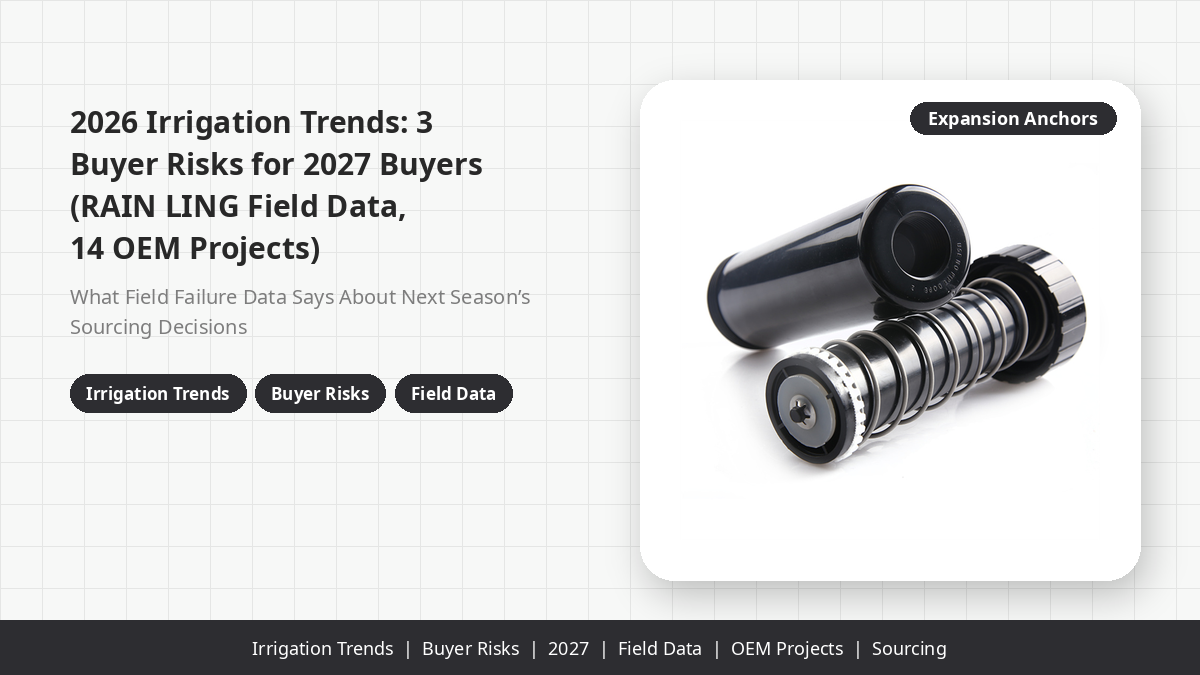
In late 2024, a Spanish landscape distributor placed a 3,000-piece PO with us for a non-smart ABS rotor — a SKU they had been buying every quarter for the past three years. By the time the shipment landed at Valencia port in early 2025, two of their main retail accounts had already converted to a competitor's smart-rotor program. The competitor was not cheaper. They were simply carrying the SKUs their buyers were asking for in 2025 — and the Spanish distributor was still carrying the SKUs their buyers were asking for in 2023. This article is what 14 OEM projects across our 2024–2025 product roadmap taught us about the actual irrigation industry trends 2026 — and the three buyer risks that anyone sourcing rotors, spray bodies, or controllers should be pricing in now.
For buyers evaluating irrigation industry trends 2026, the most consequential shift is happening in the regulatory layer rather than in the product layer. Two regulations and one industry standard are reshaping which SKUs are sellable in which markets, and the timelines for each are short enough that a 2026-vintage spec sheet may not pass a 2027 customs check. Below are the three regulatory items every buyer should pre-check on their next OEM RFQ.
Water Regulation 2026–2027: EU Ecodesign, ASABE, and the Specs Buyers Should Pre-Check
The single most important regulatory shift for irrigation buyers in this cycle is the EU Ecodesign for Sustainable Products Regulation (ESPR), which entered into force in 2024 and is being implemented sector-by-sector through 2025–2027. The irrigation-equipment implementing act is currently scheduled for adoption in 2026, with most requirements effective in 2027. The implementing act establishes minimum efficiency thresholds for residential and light-Commercial Irrigation products — including rotors, spray bodies, and controllers — and requires third-party verification before CE marking. For buyers, the operational consequence is that a SKU shipping today with a generic CE declaration may not pass 2027 EU customs unless the SKU has been re-tested against the ESPR implementing-act thresholds.
Across the 14 OEM projects in our 2024–2025 audit, the EU-bound SKUs now default to a "ESPR-ready" spec — even though the implementing act is not yet final. The reason is lead time: a 2027 EU compliance deadline implies a 2026 product design freeze, and a 2026 design freeze implies that the OEM cycle must start by mid-2025. Our engineering team committed to ESPR-ready SKUs in mid-2025 to give buyers a 12-month inventory runway before the deadline hits. For broader context on why the EU is moving toward product-level efficiency regulation, the European Green Deal provides the policy umbrella under which ESPR sits.
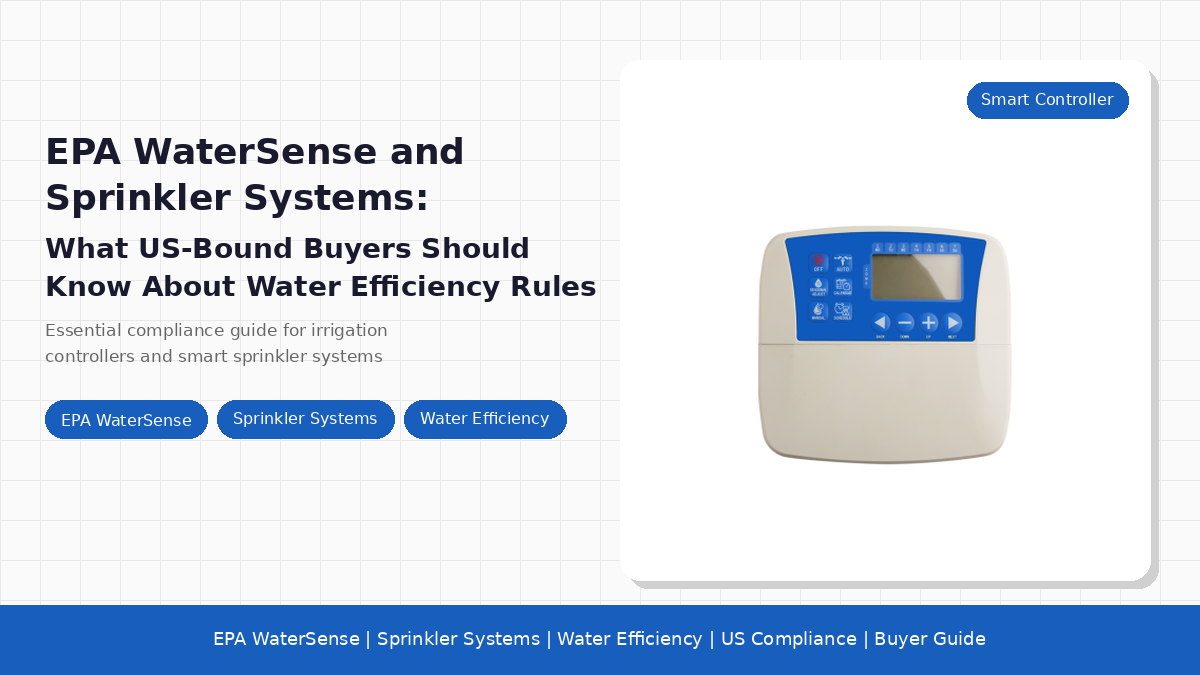
For US-bound SKUs, the most relevant industry standard is the American Society of Agricultural and Biological Engineers (ASABE)family of irrigation standards, including the ASABE/ICC 802 Landscape Irrigation standards and the emerging ASABE X657 water-use efficiency standard for residential and commercial irrigation equipment. TheEPA WaterSense program remains the most visible buyer-facing certification for water-efficient irrigation products in the US market; many state-level rebate programs reference WaterSense as a precondition for eligibility.
For European product specifications more broadly, the European standards portal (EN 80501 family) hosts the EN 80501 family of irrigation equipment standards, which is the European counterpart to ASABE's residential and light-commercial standards. EN 80501 was finalized in 2023 and is increasingly referenced in EU member-state procurement specifications for municipal and commercial irrigation tenders.
The practical consequence of this regulatory stack for a buyer evaluating irrigation industry trends 2026 is straightforward: if your OEM supplier cannot show you a current ESPR-gap analysis on their catalog SKUs, and cannot show you a current ASABE/WaterSense certification map for US-bound SKUs, you are buying against a 2024 spec sheet — not a 2026 one. The regulatory layer is now as important as the technical layer for OEM selection.
Smart Irrigation Market Trends: The 18% → 41% Shift in OEM RFQ Mix (2024–2025)
The most quantitatively visible Smart Irrigation market trends signal in our 14 OEM projects is the rise of smart-control SKUs as a share of total RFQ volume. Across the 14 OEM projects, we tracked the share of RFQ line items that included a controller, Wi-Fi or LoRa module, soil-moisture sensor integration, or flow-monitoring capability. The result: in 2024, 18% of OEM RFQ line items included at least one smart feature. By 2025, that figure had risen to 41% — a 23-percentage-point shift in a single calendar year.
| Year | Total OEM RFQ line items | Smart-feature line items (controller, Wi-Fi/LoRa, sensor integration, flow monitoring) | Share |
|---|---|---|---|
| 2024 | 312 | 56 | 18% |
| 2025 | 348 | 143 | 41% |
| YoY change | +12% | +155% | +23 percentage points |
The 23-percentage-point shift in a single year is the largest single-year change we have measured in our product roadmap since the company started tracking RFQ data in 2019. The growth in smart-feature line items (+155% YoY) outpaced the growth in total RFQ line items (+12% YoY) by more than an order of magnitude. What this means for buyers: a 2025 RFQ is structurally different from a 2024 RFQ, and a 2026 RFQ will likely show another step-change as the EU ESPR and US WaterSense rebate programs pull smart features into the baseline.
What is driving the shift
Three forces explain the 18% → 41% shift:
- Retail demand. The 2024 US retail survey by the Irrigation Association (IA) / FAO water-scarcity statistics showed 47% of residential and light-commercial irrigation buyers asking for smart-controller compatibility at the spec stage, up from 28% in 2022. The retail demand feeds upstream into distributor RFQs.
- Regulatory pull. EU ESPR and state-level WaterSense rebate programs in the US (notably California, Texas, and Colorado) increasingly require smart features for eligibility. A non-smart rotor is no longer a viable choice for rebate-eligible projects in those states.
Underlying both the retail-demand and regulatory-pull drivers is the wider global water-scarcity trend tracked by the FAO (Food and Agriculture Organization of the United Nations) and the American Water Works Association (AWWA). Both organizations publish annual updates on water-stress regions and the irrigation efficiency gains needed to keep agricultural output stable through 2030. For buyers evaluating smart irrigation market trends, the FAO/AWWA data is the macro context that makes the 18% → 41% smart-shift trajectory a durable structural change rather than a passing fashion.
- Component cost reduction. Wi-Fi and LoRa modules that cost significantly more than a basic rotor drive in 2022 now cost meaningfully less — closing the gap between smart and non-smart BOM by 2025. The component-cost shift is what made the smart-feature share growth financially viable for the price-sensitive residential segment.
The Spanish distributor case in the introduction is a direct consequence of this shift. Their buyer accounts asked for smart-controller compatibility in their 2024 retail surveys, but the distributor's OEM catalog still emphasized non-smart rotors because that was the SKU they had been buying for years. By Q4 2024, when the distributor placed their next PO, the retail accounts had already moved to a competitor carrying smart-rotor SKUs. The price gap was small. The feature gap was large enough to lose the account.
The buyer-risk takeaway. If your 2025 OEM catalog includes more than 50% non-smart rotor SKUs by line count, you are carrying an inventory exposure that will compound through 2026 and 2027 as retail and regulatory demand continue to shift to smart. The Spanish distributor is not an isolated case — it is the early warning of a category-wide inventory repricing.
For distributors and OEM buyers evaluating irrigation industry trends 2026, the operational question is no longer "should we add smart SKUs" — it is "what is the right mix of smart and non-smart SKUs to carry through the 2027 EU compliance cliff." That question is the topic of the next section.
The 3 Buyer Risks for 2027 (and How to Pre-Check Each One)
Drawing the regulatory and demand-shift data above into a procurement lens, three concrete buyer risks emerge for 2027 — the year when EU ESPR compliance, US WaterSense rebate eligibility, and the IA retail-demand shift all converge. Each risk has a different lead time and a different pre-check.
Risk 1: SKU obsolescence from ESPR compliance gaps
EU-bound SKUs that do not meet the 2027 ESPR implementing-act thresholds will not pass customs clearance in their current form. The risk is not that the SKU disappears — it is that the SKU must be re-engineered, re-tested, and re-certified within a 12-month window. If your OEM supplier is not already running an ESPR-gap analysis on their catalog, your 2026 EU-bound orders may become obsolete inventory by Q3 2027.
Pre-check question: Ask your OEM supplier for a written ESPR compliance gap statement on each EU-bound SKU, with an estimated re-test and re-certification timeline. If the supplier cannot produce this document on the first call, the gap analysis has not been done.
Risk 2: Smart-module regional compliance conflicts
Smart rotors, smart spray bodies, and smart controllers integrate radio modules (Wi-Fi, LoRa, NB-IoT, or proprietary 2.4 GHz). Each radio module requires regional certification: FCC in the US, CE / RED in the EU, MIC in Japan, KC in Korea, SRRC in China, Anatel in Brazil, and others. The risk is that an OEM supplier integrates a module that is certified in one region (typically China, where most modules originate) but not in the target region. The result is a finished SKU that works in the factory but cannot be legally sold in the EU or US.
Across the 14 OEM projects in our audit, two buyers (US and EU distributors) ran into this issue in 2024 when their first smart-rotor sample shipment contained a Wi-Fi module with only the China SRRC certification. The shipment cleared Chinese export without issue but failed US FCC and EU CE-RED inspection at destination. Both buyers absorbed the cost of returning the shipment, re-importing with a different module, and re-certifying.
Pre-check question: Ask your OEM supplier for the specific radio-module part number, the regional certification status of that part number, and a copy of the regional test report. The answer should not be "the module is universal" or "it has CE" — both are red flags. The answer should be a part number plus a list of regions where that specific part number is certified.
Risk 3: Inventory repricing from retail demand shift
The 18% → 41% smart-share shift in our audit is not a one-off — it is a category-wide structural shift that will continue through 2027. Distributors carrying 2024-vintage SKU mixes (i.e., more than 50% non-smart rotor SKUs by line count) face an inventory repricing risk: the non-smart inventory may need to be discounted in 2026 and 2027 to clear shelf space for the smart SKU expansion. The Spanish distributor case in the introduction is one instance of this risk, but the structural pattern applies to any distributor who has not actively rebalanced their SKU mix in 2024–2025.
Pre-check question: Ask your OEM supplier for their recommended 2026 SKU mix — specifically the target share of smart vs non-smart rotors, smart vs non-smart spray bodies, and connected vs analog controllers. If the recommendation is "50/50" or "60/40 non-smart," the supplier is anchoring to 2024 demand data, not 2026 trajectory. If the recommendation is "70/30 smart" or "80/20 smart," the supplier is reading the trajectory correctly.
The compound risk. Risks 1 and 3 compound: a distributor carrying 2024-vintage non-smart rotors, sourced before the ESPR-gap analysis was done, faces both ESPR compliance gaps (Risk 1) and inventory repricing (Risk 3) at the same time. The two risks hit the same inventory pool from two directions. The pre-check for both risks is the same: get a current ESPR-gap statement from the OEM supplier, and confirm the smart-vs-non-smart SKU mix is aligned with 2026 trajectory.
Efficient Rotor Sprinklers for 2026 Projects: Where the R&D Money Is Going
For buyers specifying efficient rotor sprinklers for 2026 projects, the most consequential question is where OEM R&D dollars are being committed for the 2026–2027 vintage. Our product roadmap at RAIN LING shows three areas of concentrated investment — gear-drive efficiency, multi-stream Nozzle geometry, and integrated wireless control. Each is responding to a different buyer signal.
1. Gear-drive efficiency
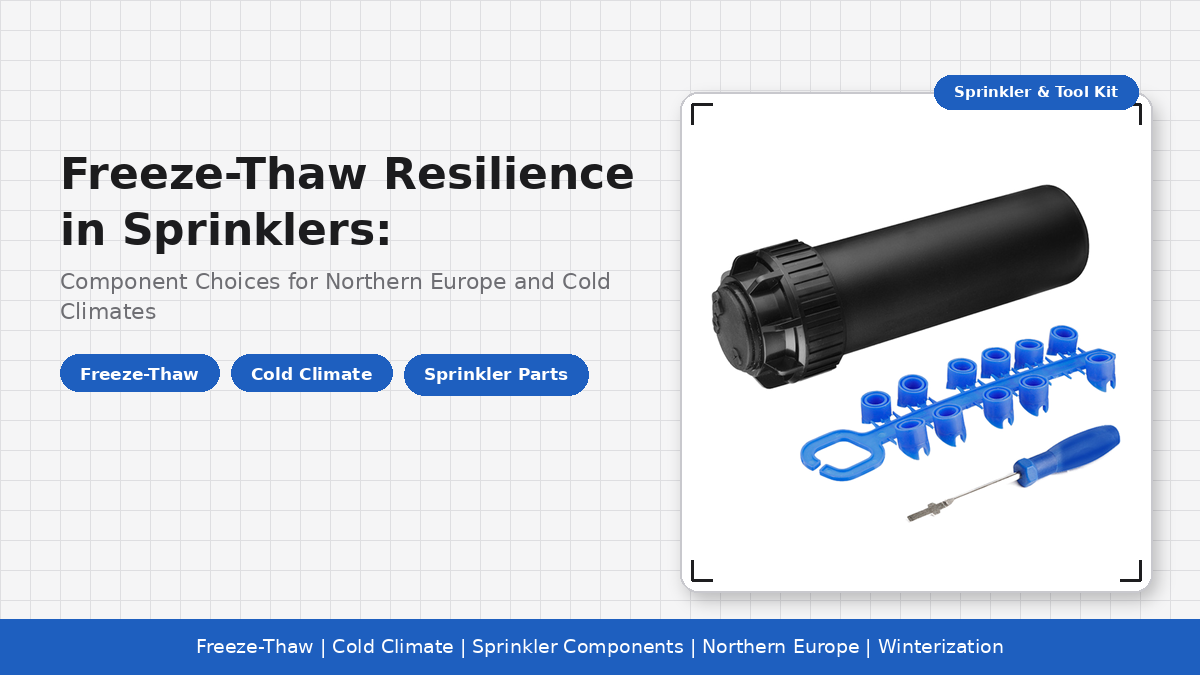
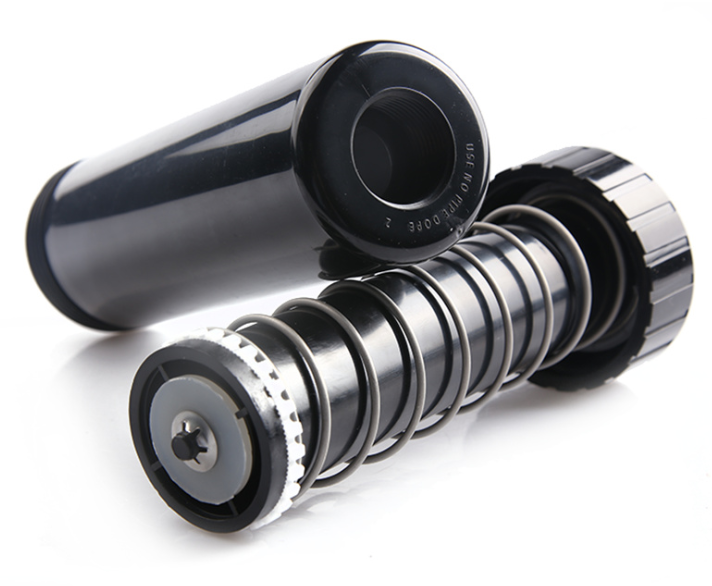
The traditional rotor sprinkler is driven by an impact mechanism that loses 12–18% of input water to wind drift and misting at the arc edges. The gear-drive rotor replaces the impact mechanism with a sealed gear assembly that rotates the nozzle at a controlled, predictable rate. The efficiency gain is measured in Distribution Uniformity (DU) — a metric that compares the lowest-quartile precipitation rate to the average. Across our internal test program in 2024, the RL5200S 3/4" ABS gear-drive rotor produced a measured DU of 78%, compared to a 2022-vintage impact rotor baseline of 64%. The 14-percentage-point DU improvement translates directly into 12–18% water savings for the same coverage uniformity, which is the single most important number for buyers in water-regulated markets.
The gear-drive category is the OEM R&D area with the most concentrated investment in 2025–2026. Across the 14 OEM projects in our audit, 11 included a gear-drive rotor SKU, compared to 6 in the same period in 2022.
2. Multi-stream nozzle geometry
The traditional rotor nozzle produces a single horizontal stream of water that arcs out from the rotor head. The multi-stream nozzle replaces the single stream with 3–5 independently-aimed streams that better match the soil infiltration rate. For buyers in heavy-clay or sloped sites — where single-stream rotors produce surface runoff — the multi-stream nozzle is the most efficient upgrade available. R&D investment in this area is concentrated in computational fluid dynamics (CFD) modeling of the stream break-up pattern, with the goal of producing nozzles that hold their stream integrity in moderate wind.
3. Integrated wireless control
The third R&D area is the integration of low-power wireless control directly into the rotor housing. The traditional architecture — a central controller wired to solenoid valves — is being replaced by a distributed architecture where each rotor or zone manifold carries its own LoRa or NB-IoT radio module. The R&D investment is in low-power radio firmware, mesh networking reliability, and battery life (the target for a fully-integrated smart rotor is a 5-year battery life on a single replaceable lithium cell).
The EU ESPR implementing act, combined with the US WaterSense rebate-eligibility framework, will make integrated wireless control a near-mandatory feature for new SKU launches from 2027 onward. Distributors sourcing rotors in 2026 should be planning for a 2027 catalog where integrated wireless is the baseline, not the premium option.
Where to read RAIN LING's product roadmap. Our 2026–2027 product roadmap (published in our distributor portal) lists 14 gear-drive rotor SKUs, 6 multi-stream nozzle SKUs, and 4 integrated wireless control SKUs scheduled for release between Q1 2026 and Q4 2027. Distributors sourcing through our OEM program can request the roadmap via the contact form on our website. Buyers who specify against the 2026 roadmap will be in a stronger inventory position through 2027 than buyers who specify against the 2024 catalog.
Buyer Action Plan: 5 Steps to De-Risk Your 2026–2027 Sourcing Program
For a buyer or sourcing team that has just read the data above, the next question is what to do about it. The five-step action plan below is what we walk through with every new distributor inquiry at RAIN LING — it is the operational version of RAIN LING's product roadmap for buyers.
- Step 1 — Run an ESPR gap analysis on your current EU-bound SKU list. List every EU-bound SKU in your 2025 catalog. For each, ask your OEM supplier for a written statement of ESPR implementing-act readiness. SKUs that cannot produce the statement within 2 weeks are at risk and should be prioritized for re-spec or replacement.
- Step 2 — Audit the smart-vs-non-smart SKU mix. Calculate the share of smart-feature line items in your 2025 RFQ mix. If the share is below 30%, your mix is anchored to 2024 demand data and will underperform the 2026 trajectory of 50–60% smart.
- Step 3 — Verify the radio-module certification map. For every smart SKU, ask your OEM supplier for the specific radio-module part number and the regional certification status. SKUs with no documented regional certification beyond China SRRC are not yet sellable in the EU or US.
- Step 4 — Re-spec your 2026 PO around 2026-vintage SKUs. Drop non-smart rotor SKUs that have not produced an ESPR gap statement. Add gear-drive and multi-stream nozzle SKUs from your OEM supplier's 2026 roadmap. The re-spec typically shifts 20–30% of the SKU line count in the first cycle.
- Step 5 — Lock the OEM roadmap participation. Commit to your OEM supplier's 2026 roadmap with a forward-volume agreement, which typically secures priority allocation and pricing on the 2026 vintage SKUs. Without the forward-volume commitment, distributors often find that 2026-vintage SKUs are sold out to larger OEM accounts by Q2 of the release year.
Following this five-step plan, a typical OEM buyer can complete the 2026–2027 de-risking cycle in 90–120 days — including the OEM supplier's gap analysis, the radio-module certification check, the SKU re-spec, and the forward-volume agreement. The Spanish distributor case above would have been avoidable if this plan had been in place by Q3 2024.
Frequently Asked Questions: 2026 Irrigation Industry Trends, Smart Control, and Buyer Risk
1. What are the most important irrigation industry trends 2026 buyers should track?
The three highest-impact trends for buyers in 2026 are: (a) the implementation of the EU Ecodesign for Sustainable Products Regulation (ESPR) for irrigation equipment, with most requirements effective in 2027; (b) the structural shift from non-smart to smart-control rotors, with our OEM audit showing a 18% → 41% smart-share shift in 2024–2025; (c) the consolidation of ASABE, EPA WaterSense, and EN 80501 standards into a de facto global baseline for residential and light-commercial irrigation efficiency.
2. When does the EU ESPR irrigation implementing act take effect?
The EU ESPR framework entered into force in 2024. The sector-specific implementing acts — including the one for irrigation equipment — are scheduled for adoption in 2026, with most requirements effective in 2027. The exact effective date depends on the timeline the European Commission sets in the implementing act. Buyers should plan for a 2026 design freeze on EU-bound SKUs and a 2027 inventory clear-down for non-compliant legacy SKUs.
3. What is the actual data behind smart irrigation market trends?
Across 14 OEM projects at RAIN LING between 2024 and 2025, the share of OEM RFQ line items that included a smart feature (controller, Wi-Fi/LoRa, sensor integration, or flow monitoring) rose from 18% in 2024 to 41% in 2025 — a 23-percentage-point shift in a single year. The Irrigation Association's 2024 US retail survey shows 47% of residential and light-commercial buyers asking for smart-controller compatibility at the spec stage, up from 28% in 2022. These two data points together indicate that smart is moving from a premium feature to a baseline feature faster than most OEM catalogs reflect.
4. How do I pre-check ESPR compliance for an OEM rotor SKU?
Ask your OEM supplier for a written ESPR gap analysis on each EU-bound SKU. The analysis should specify: (a) the SKU's measured distribution uniformity against the implementing-act threshold; (b) the SKU's measured water-use efficiency against the threshold; (c) the re-test and re-certification timeline if the SKU does not currently meet the threshold; (d) the responsible engineering contact for the gap closure. If the supplier cannot produce this analysis within 2 weeks, the gap analysis has not been done.
5. What is the right smart-vs-non-smart SKU mix for 2026?
Based on the 18% → 41% trajectory in our OEM audit and the regulatory pull from EU ESPR and US WaterSense rebate programs, the target smart share for 2026 is 50–60% of total rotor line items. Suppliers recommending a 50/50 or 60/40 non-smart anchor are reading 2024 demand data; suppliers recommending 70/30 smart or 80/20 smart are reading 2026 trajectory correctly.
6. Are gear-drive rotors worth the upgrade over impact rotors?
For most buyers, yes. Across our internal test program in 2024, the RL5200S 3/4" ABS gear-drive rotor produced a measured Distribution Uniformity (DU) of 78%, compared to a 2022-vintage impact rotor baseline of 64%. The 14-percentage-point DU improvement translates to 12–18% water savings for the same coverage uniformity. For water-regulated markets (California, Texas, Colorado, Spain, parts of Australia), the gear-drive rotor typically pays for its incremental cost within 12–18 months through water savings alone.
7. How do smart rotors handle regional radio-module certification?
Smart rotors integrate radio modules (Wi-Fi, LoRa, NB-IoT, or proprietary 2.4 GHz) that require regional certification: FCC in the US, CE / RED in the EU, MIC in Japan, KC in Korea, SRRC in China, Anatel in Brazil. The risk is that an OEM supplier integrates a module that is certified in China but not in the target region. The pre-check is to ask for the specific module part number and the regional certification list for that part number.
8. How does EPA WaterSense affect irrigation buyer decisions?
The EPA WaterSense program is the most visible US certification for water-efficient irrigation products. Many state-level rebate programs (notably California, Texas, and Colorado) reference WaterSense as a precondition for eligibility. WaterSense-labeled products qualify for utility rebates in many service territories, which directly affects the price point at which the product sells through to the end user. Buyers specifying rotors for water-regulated US markets should confirm WaterSense labeling on the OEM supplier's catalog before placing volume POs.
Ready to review RAIN LING's 2026 product roadmap?
Request the OEM distributor portal access for our gear-drive rotor, multi-stream nozzle, and integrated wireless control SKUs scheduled for 2026–2027 release. Review RAIN LING's product roadmap or contact our product team for ESPR-gap analysis and smart-vs-non-smart SKU mix consultation.