
 +86-18158270618

0102030405
Cleaning and Flushing Clogged Sprinkler Nozzles: A Maintenance Protocol for Contractors
2026-09-24
A clogged Nozzle is rarely the actual problem. The actual problem is a nozzle that looked fine on the last visit and now does not, which means the system is telling the contractor something — debris flushed from a repair, a failing pump screen, biofilm in a non-potable supply, or a zone that has been running too low on pressure for too long. The maintenance protocol is not "clean the nozzle." The maintenance protocol is "diagnose why the nozzle failed, fix that, and confirm the spray pattern against the design."
Quick Summary
- Five failure modes account for the large majority of clogged-nozzle service calls — misting or fogging, distorted pattern, dry zone, low output, and stuck pop-up — and each one points to a different cause, so the right first step is classification, not cleaning.
- The contractor-side cleaning protocol has five stages — diagnose, depressurize, lift the riser, flush the screen and line, then reassemble — with a pressure reading at the zone valve as the diagnostic step most service calls skip.
- Cleaning a nozzle with a pin, wire, or pliers permanently damages the spray pattern — the right tools are a manufacturer plastic flushing tool, a soft toothbrush, and a 2 to 3 second flush of clean water.
- Adjustable nozzles are easier to clean than fixed-arc nozzles, because the radius is adjusted by a single screw rather than a fixed orifice, and the screen lifts out without disturbing the pattern.
- A nozzle that has been cleaned three times in a season is a replacement, not a service part — the third cleaning is the right point at which to flag the design, the water source, or the pump screen for upstream attention.
For contractors running commercial or Residential Irrigation service, the clogged-nozzle call-back is one of the most expensive recurring service lines because most of the cost is in the truck roll, not in the parts. The right protocol does not make the call go away — nozzles clog because the system they sit on is delivering whatever debris is sitting in the pipe — but it does make the visit faster, the diagnosis sharper, and the next call-back less frequent.
What Are the Five Failure Modes That Drive Most Clogged-Nozzle Service Calls?
Before any cleaning happens, the right first step is to stand back, look at the spray pattern, and classify the failure. Five modes account for the large majority of service calls, and each one points to a different cause.
| Failure Mode | Visual Symptom | Most Likely Cause | Right First Step |
|---|---|---|---|
| Misting or fogging | Spray looks like fog, droplets do not throw | Pressure too high for the nozzle, or worn orifice | Pressure check at the valve; replace if worn |
| Distorted pattern | One side of the pattern is missing or skewed | Debris on the screen or partial blockage | Lift the riser, inspect the screen |
| Dry zone | One zone head never throws | Pop-up riser stuck, broken seal, or no water at the valve | Manual pull-up test at the riser |
| Low output across the zone | All heads on the zone throw short | Clogged zone filter, low pressure, partially closed valve | Pressure check at the zone valve before touching heads |
| Dribble, no throw | Water leaks from the body without throwing | Pop-up riser stuck down, broken internal seal | Manual pull-up test; replace body if seal is gone |
The single most under-used diagnostic tool on a service truck: a pressure gauge at the zone valve. A contractor who cleans a nozzle, finds nothing on the screen, and reinstalls the same nozzle has just lost the diagnostic step — because low pressure at the zone produces a visually identical symptom to a partially clogged screen. The right protocol is to check pressure first, open the nozzle second.
Most of the time, the contractor who classifies the failure correctly before opening anything saves a return trip. The mode tells you whether you are dealing with the nozzle, the screen, the body, the zone pressure, or the water source — five different problems with five different fixes.
What Is the Five-Step Contractor Cleaning Protocol?
The protocol runs five steps, and the order matters. Skipping a step is how most service calls turn into a third visit.
Step 1 — Diagnose the failure mode
Stand back, look at the spray, and write the mode in mind before you touch anything. Misting and fogging, distorted pattern, dry zone, low output, and dribble are five distinct modes, and the protocol is different for each. A dry zone usually does not need a cleaning — it needs a pop-up riser test. A distorted pattern usually does not need a replacement — it needs a screen check.
Step 2 — Isolate the zone and depressurize
Shut off the zone at the controller and the backflow preventer before touching the nozzle. A nozzle that is still under pressure will spray the contractor in the face when the body is unscrewed, and a stuck pop-up riser will not retract without depressurization. The depressurization step also buys a pressure reading at the zone valve, which is the diagnostic step most service calls skip.
Why depressurization matters even when the symptom looks like debris: a body that retracts under pressure can hide a broken seal. The right time to find the broken seal is at the service truck, not at the next call-back. Depressurize first, then lift the riser.
Step 3 — Lift the riser and unscrew the nozzle
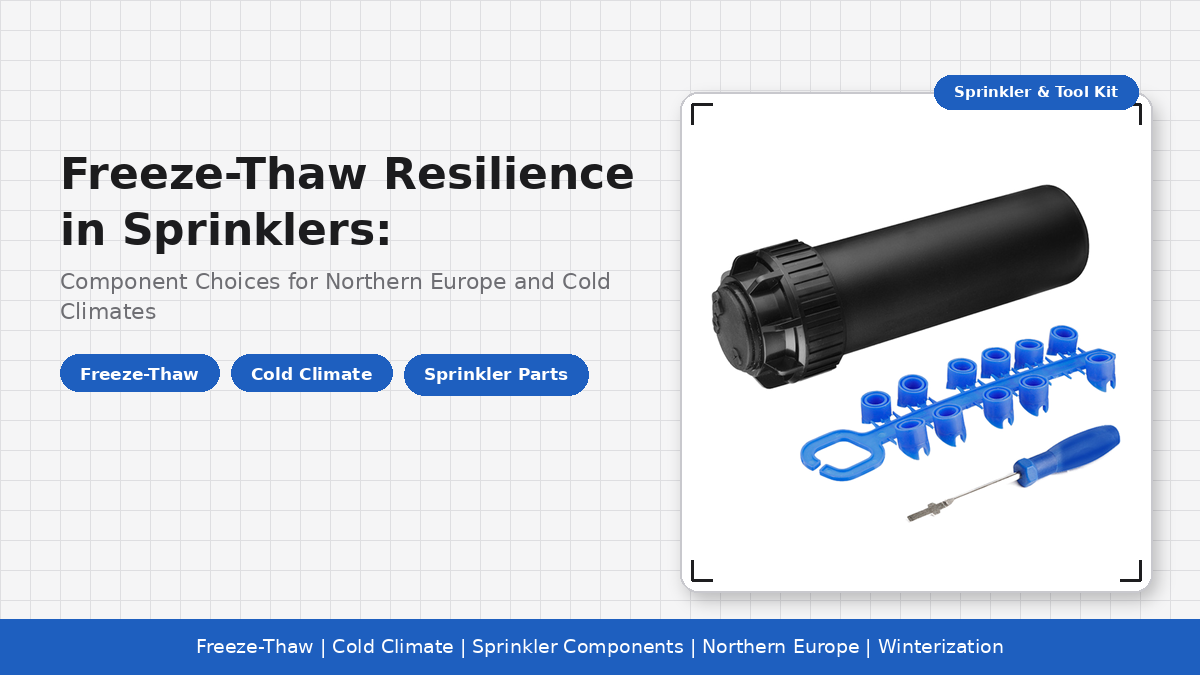
Pull the riser up by the body, not by the stem, and unscrew the nozzle counterclockwise with the manufacturer's plastic nozzle tool. Do not use pliers on a plastic nozzle — they round the flats and turn a serviceable nozzle into a replacement. The plastic nozzle tool is cheap, fits in a service truck, and is the right tool every time.
Step 4 — Flush the screen and the line
Remove the screen, hold the body over a bucket, and briefly turn the zone on for 2 to 3 seconds to flush the debris out of the lateral line. Most field-cleanable nozzles flush clean in a single 2 to 3 second burst; if the discharge stays dirty, the debris is in the line, not in the nozzle, and the right next step is to flush the line rather than to keep cleaning the same screen. The EPA WaterSense programrecommends flushing as the first-line maintenance step for residential and Commercial Irrigation systems, which aligns with the contractor-side protocol.
Step 5 — Reassemble with the screen dry-fitted
Reinstall the screen dry-fitted, hand-thread the nozzle back, and run the zone for 30 seconds to confirm the spray pattern. Do not over-tighten the nozzle — it seats against an internal stop, and over-tightening cracks the body on plastic nozzles. The pattern check at this step is the diagnostic that the protocol actually worked.
The single most under-specified step in real service calls: the pattern check after reassembly. A contractor who reassembles and walks away has not confirmed that the protocol actually fixed the problem. The 30-second pattern check at the end of Step 5 is the moment the call-back either starts or does not.
What Causes Most Clogged-Nozzle Service Calls?
Three causes drive the large majority of clogged-nozzle calls in our service data, and each one points to a different prevention strategy.
- Pipe debris flushed into the nozzle during commissioning. New systems that have not been flushed before the nozzles are installed will deliver every piece of solder, pipe tape, and cutting debris straight into the first nozzle screens. The right fix is a flushing protocol at startup — flush the lateral with the nozzles removed before the system goes live. The Rain Bird sprinkler adjustment guide covers this as a standard startup step.
- Sand or silt from a failing pump screen or well screen. Systems on marginal wells see sand intrusion long before the nozzles actually clog, and the symptom is most visible on the lowest-pressure zone at the end of the line. The right fix is a serviceable pump screen and a periodic flow-rate check, not a nozzle-cleaning schedule.
- Biofilm or algae buildup in non-potable water systems. Reclaimed water, pond water, and other non-potable sources deliver organic matter that builds up on the screen and inside the nozzle over time. The right fix is periodic chlorine or peroxide flushing of the lateral lines, not a more frequent nozzle-cleaning cycle. The USDA conservation resources cover the agricultural side of this problem, and the same protocol applies at landscape scale.
The right way to think about the clogged-nozzle call-back: the nozzle is the symptom, not the cause. A contractor who cleans a nozzle without checking the upstream cause is signing up for the next call-back.
When Do You Clean a Nozzle Versus Replace It?
Clean if the screen has debris but the nozzle orifice is intact. Replace if the orifice is damaged — a cracked edge, a worn slot, a sand-blasted face — or if the nozzle has been in service long enough that the plastic has UV-crazed. A nozzle that has been cleaned three times in a single season is usually a nozzle that wants to be replaced, and the third cleaning is the right point at which to flag the design, the water source, or the pump screen for upstream attention.
The replacement question is also a design question. Adjustable nozzles for easy maintenance are easier to service in two specific ways: the radius is set by a single screw rather than by a fixed orifice, and most adjustable designs use a single screen under the nozzle that lifts out for cleaning without disturbing the spray pattern. Both of these reduce the time on site, which is the right metric for a contractor.
The single most under-appreciated nozzle design choice: the screen location. A screen that lifts out without disturbing the spray pattern is a screen a contractor can clean in 30 seconds. A screen that requires nozzle removal is a screen that adds a service trip.
How Does an Adjustable Nozzle Reduce Service Calls?
Adjustable nozzles reduce service calls in two ways. First, the radius is set by a single screw, so a misaligned radius does not require a replacement nozzle — it requires a screwdriver turn. Second, the screen is typically accessible without removing the nozzle, which means the contractor can clean the screen without disturbing the calibrated spray pattern. Both of these are time savings on the truck, and time on the truck is the metric that matters for a contractor.
The broader trade-off is between fixed-arc and adjustable designs. Fixed-arc nozzles produce a more uniform pattern at the design radius, which matters on a high-end commercial install where the operator can see every head throw. Adjustable nozzles produce a serviceable pattern with one fewer field failure, which matters on a residential or light-commercial install where the operator mostly sees the system running, not the individual heads. The right choice depends on what the customer is going to notice.
Honest caveat: an adjustable nozzle is not the right answer for every irrigation program. On systems where the design radius is fixed and the operator can see the spray pattern from a window, a fixed-arc nozzle produces a tighter, more uniform pattern. The adjustable design earns its keep where service calls are the metric that defines the program.
Frequently Asked Questions
What causes most clogged sprinkler nozzles?
In our service data, most clogged nozzle service calls trace back to one of three causes — pipe debris flushed into the nozzle during commissioning, sand or silt from a failed pump screen or well screen, and biofilm or algae that builds up in non-potable water systems. Each of these points to a different prevention strategy: a flushing protocol at startup, a serviceable pump screen, and periodic chlorine or peroxide flushing of the lateral lines.
Can I clean a clogged nozzle without taking the sprinkler apart?
Sometimes. For a soft debris blockage, leaving the body in place and running the zone while the nozzle is partially unscrewed will flush the screen clean in a single 2 to 3 second burst. For a hard blockage, biofilm, or a damaged orifice, the body has to come up and the nozzle has to come out — there is no shortcut that does not damage the spray pattern.
How do I know when to clean versus replace a clogged nozzle?
Clean if the screen has debris but the nozzle orifice is intact. Replace if the orifice is damaged (a cracked edge, a worn slot, a sand-blasted face) or if the nozzle has been in service long enough that the plastic has UV-crazed. A nozzle that has been cleaned three times in a season is usually a nozzle that wants to be replaced.
Are adjustable nozzles easier to clean than fixed-arc nozzles?
Adjustable nozzles are easier to service in two specific ways: the radius is set by a single screw rather than by a fixed orifice, so a misaligned round does not require replacing the nozzle, and most adjustable designs use a single screen under the nozzle that lifts out for cleaning without disturbing the spray pattern. Both of these reduce the time on site, which is the right metric for a contractor. Browse the Rain Ling adjustable nozzle range for the radius variants that most service trucks stock.
Is it safe to use a pin or wire to clean a clogged nozzle orifice?
No. Pushing a pin or wire into a plastic nozzle orifice permanently distorts the flow path, and the nozzle will never produce the rated pattern again. The right tool is the manufacturer's plastic flushing tool, a soft toothbrush, and a clean water rinse. If the debris cannot be removed without a tool harder than the nozzle, the nozzle is a replacement, not a service part.
How often should I clean nozzles on a commercial irrigation system?
For most systems, a twice-yearly service — once at startup in spring and once at the end of the season in fall — is the right cadence, with an extra service visit if the system runs on non-potable water or on a well with marginal sand content. The service visit should include screen cleaning, pattern check, and pressure check at the zone valve, because low pressure at the zone produces a wider symptom mix than a clogged screen alone.
Do nozzle debris filters actually prevent clogging?
They reduce the frequency but do not eliminate it. A serviceable screen under the nozzle catches the debris that would otherwise lodge in the orifice, but the screen itself clogs over time, and a clogged screen produces the same low-output symptom as a clogged nozzle. The right protocol is to inspect the screen at every service visit, not to assume it lasts the life of the nozzle. The Rain Ling easy-to-clean spray nozzle range uses a serviceable stainless screen that lifts out without disturbing the spray pattern.
What water pressure problems cause nozzles to look clogged?
Low pressure at the zone valve produces a distorted, low-throw spray that is visually indistinguishable from a partially clogged nozzle. A contractor who cleans a nozzle, finds nothing on the screen, and reinstalls the same nozzle has just lost the diagnostic step. The right protocol is to check pressure at the zone valve before opening the nozzle, and to flag a low-pressure reading for the irrigation designer before going further.
Where Does Rain Ling Fit in the Maintenance Story?
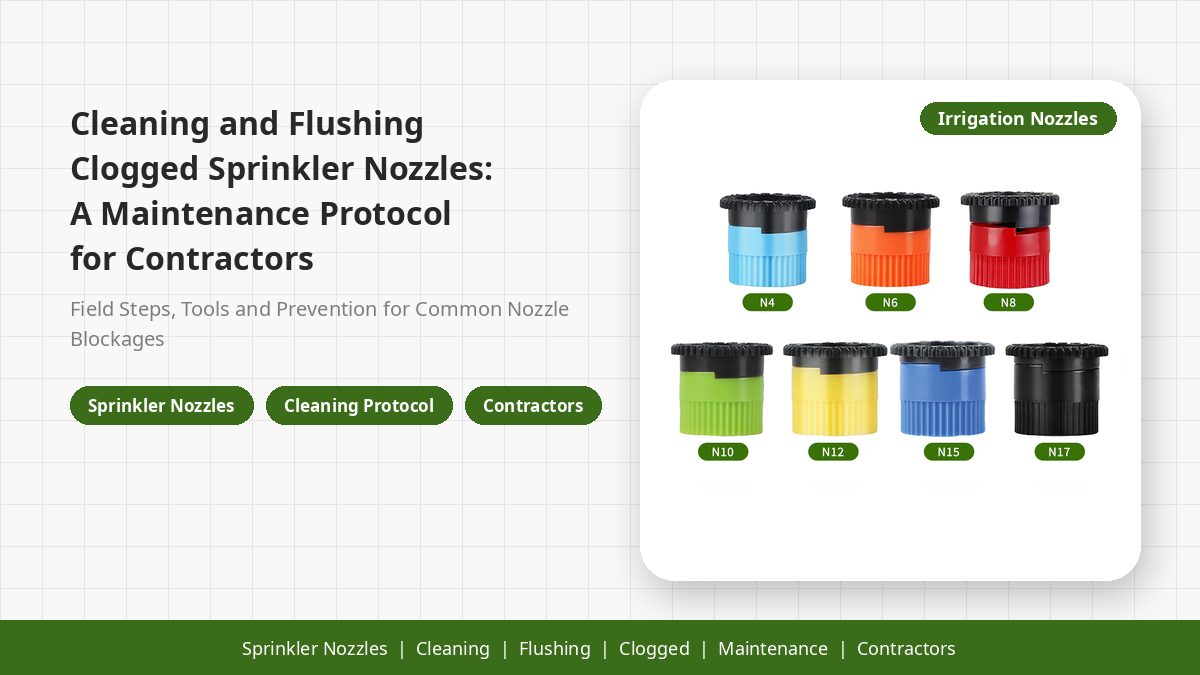
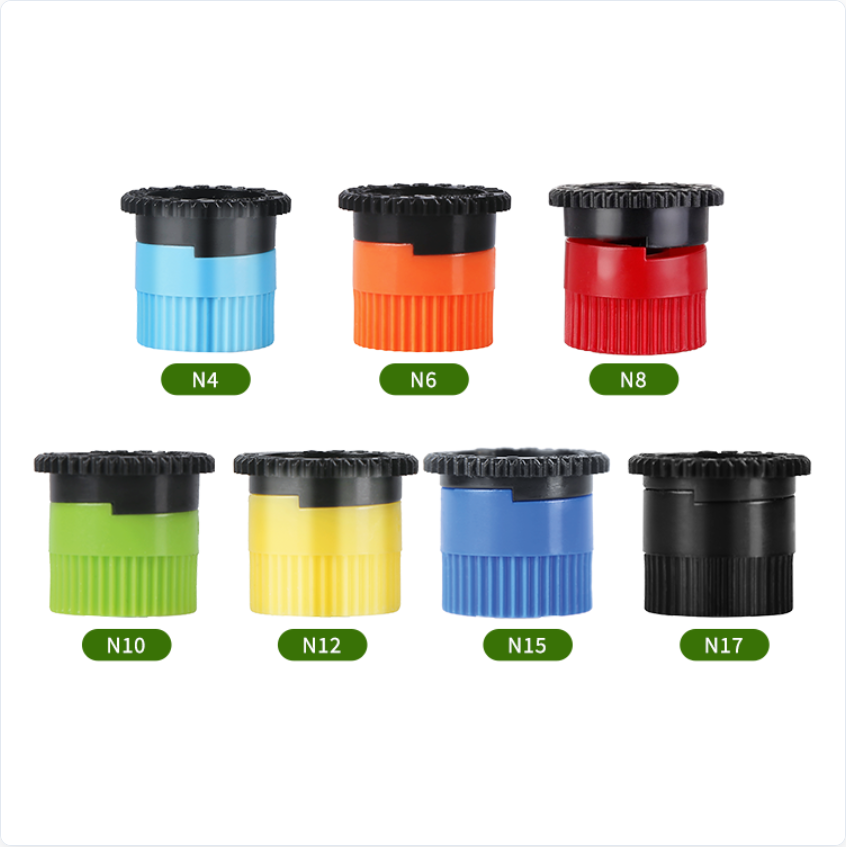
Rain Ling produces the landscape-irrigation nozzle range on a Ningbo manufacturing footprint, with color-coded radius variants (the N4 through N17 family), adjustable-arc designs, and a stainless serviceable screen that lifts out without disturbing the spray pattern. The radius variants make it easy for a contractor to identify a replacement on the truck without going back to the truck for a part number, and the adjustable-arc designs reduce the calibration time on every install.
For contractors specifying nozzles for a new install or replacing a high-call-back zone, the easy-to-clean spray nozzles range is the starting point; the adjustable nozzle range is the right answer where service frequency is the defining concern.
Want a contractor-side nozzle maintenance guide?
Tell us the system, the water source, and the call-back frequency you are seeing. We will respond with a written maintenance protocol and a stocking recommendation.